-
Shop
- Adidas
- Advanced Technologies
- Bathroom
- Best-Sellers
- Car Accessories
- Dating & Social Skills
- Digital Resources
- AI & Technology
- AI Skills
- Beauty
- Budgeting & Saving
- Car Buying & Ownership
- Cozy Feast Collection
- Electronics & Technology
- Emotional Intelligence
- Entrepreneurship & Business Growth
- Financial Education
- Financial Independence
- Financial Mindset & Psychology
- Goal Setting
- Home Styling & Organization
- Kitchen & Recipes
- Leadership
- Mindfulness
- Mindset
- Motivation
- Online Business
- Parenting & Child Development
- Personal Style & Fashion
- Pet Lifestyle & Wellness
- Positive Thinking
- Productivity
- Self Confidence
- Sleep Improvement
- Smart Life with AI
- Stress Management & Relaxation
- Travel Planning
- Wellness
- Yoga & Fitness
- Yoga & Mind-Body Practices
- Easter Products
- Education & Learning
- Family & Parenting
- Fashion
- Alexander McQueen
- Bags
- Bags & Wallets
- Balenciaga
- Belts
- Blazers
- Bottega Veneta
- Brunello Cucinelli
- Burberry
- Chanel
- Chloé
- Dior
- Dolce & Gabbana
- Dresses
- Etro
- Fendi
- Gucci
- Hats & Hair Accessories
- Jewelry
- Jil Sander
- Keychains
- Kiton
- Luggage
- Miu Miu
- Off-White
- Outerwear
- Prada
- Rick Owens
- Saint Laurent
- Shoes
- Socks & Tights
- The Row
- Tom Ford
- Valentino
- Valentino Garavani
- Versace
- Vivienne Westwood
- Watches
- Furniture
- Gadgets
- Health & Beauty
- Health & Wellness
- Home & Garden
- Home Electronics
- Kids & Babies
- Kitchen
- Lighting
- Patio, Lawn & Garden
- Personal Growth
- Pet Care
- Pet Supplies
- Pets
- Smart Home Living Guides
- Sport & Outdoors
- Stress Relief & Relaxation
- TikTok Growth & Monetization Mastery
- Travel
- Wealth
- Wealth Building
- Popular
- Best deals
Vacuum Anxiety in Pets: 7-Day Calm Plan for Dogs & Cats
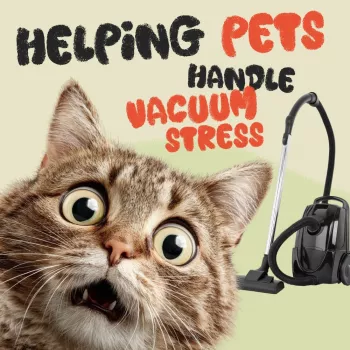
Helping Pets Handle Vacuum Stress: A Calm, Step-by-Step Routine for Dogs and Cats
Many pets react to vacuums with hiding, barking, lunging, trembling, or attempts to escape. The sound, movement, and airflow can feel unpredictable and threatening—especially for noise-sensitive animals. A calmer approach combines preparation, gradual training, and smart management so cleaning can happen without panic.
Why vacuums upset some pets
A vacuum can look and sound “wrong” to an animal in several ways, even when nothing bad is happening.
- Loud, sudden noise: The volume and shifting pitch can trigger a startle response.
- Fast movement: A vacuum rolling toward a pet can feel like being chased.
- Airflow and vibration: The breeze, rumble, and floor vibration can be unsettling, especially on hard surfaces.
- Past scary moments: Slipping, getting bumped, or feeling cornered can create a lasting fear memory.
- Accidental reinforcement: Vacuum appears → pet panics → vacuum stops/changes direction, which can teach the pet that “panic makes it go away.”
Stress signals to watch for before it escalates
Noticing early signals gives you a chance to lower intensity before fear turns into full-blown panic.
- Dogs: panting when not hot, lip licking, yawning, “whale eye,” pacing, barking, growling, lunging, tail tucked, refusal of treats.
- Cats: crouching low, ears back, dilated pupils, tail flicking, hiding, growling, swatting, sudden bolting.
- Timing matters: Intervene when mild signals appear—not after the pet is already over threshold.
- Get help when needed: If there’s bite risk or severe phobia, involve a qualified behavior professional and a veterinarian.
For position statements and guidance on humane behavior approaches, the American Veterinary Society of Animal Behavior (AVSAB) is a strong reference point.
Set up a calmer cleaning environment (management that helps immediately)
Management prevents rehearsing fear while you work on training. It’s also the fastest way to reduce stress today.
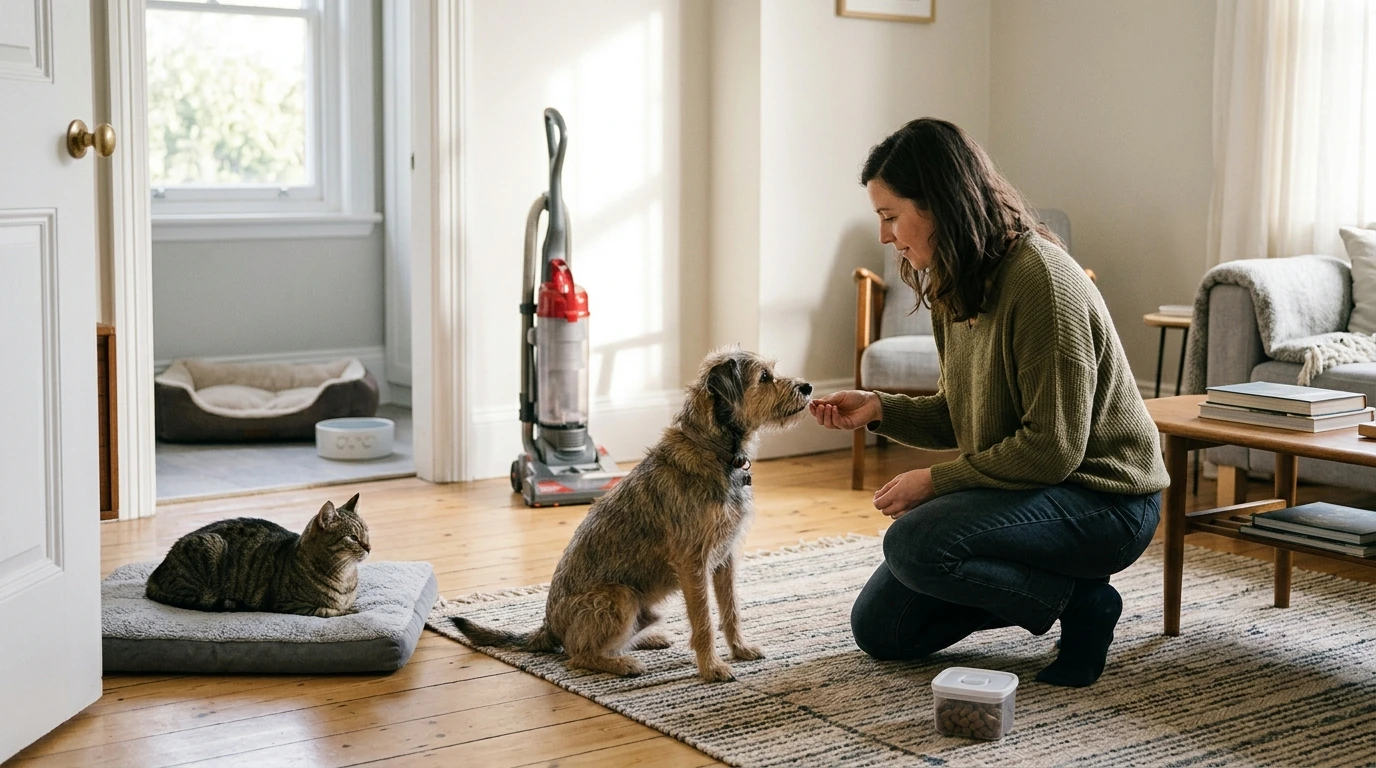
- Create a safe room: Choose a quiet space away from the vacuum route with a closed door, a comfortable bed, water, and a long-lasting chew or food puzzle.
- Add a predictable cue: Use a simple phrase like “vacuum time,” then guide your pet to the safe room before switching anything on.
- Reduce intensity: Use a lower power mode if available, vacuum in short bursts, and avoid moving the vacuum directly toward the pet.
- Buffer the sound: Close windows, add a draft stopper at the door, and run a fan or white noise inside the safe room.
- Improve traction: Rugs or runners can help pets feel stable. Slipping can rapidly worsen fear.
A 7-day gradual training plan (desensitization + positive association)
The goal is to teach that vacuum sights and sounds predict good things, while keeping your pet under threshold (alert but able to eat and recover quickly). If your pet can’t take treats, you’ve likely moved too fast.
Day 1: Vacuum present, powered off
Leave the vacuum out and stationary. Reward calm looks, sniffs, or relaxed body language from a comfortable distance. End while your pet is still doing well.
Day 2: Tiny movements, still powered off
Move the vacuum a few inches, then stop. Treat immediately. Keep sessions very short (often under 1–2 minutes).
Day 3: Handling sounds and motion cues
Touch the hose, roll the wheels, or click attachments while feeding treats. If your pet freezes or backs away, increase distance and make the movement smaller.
Day 4: Micro sound exposure (separate room)
Day 5: Slightly longer sound, still separated
Day 6: Vacuum on in the same room, far away
Day 7: Add gentle movement patterns
| What happens | What it likely means | Adjustments that help |
|---|---|---|
| Pet refuses treats or won’t take food | Too close/too loud; over threshold | Increase distance, shorten sound duration, switch to higher-value rewards, try again later |
| Pet hides and won’t come out | Fear is escalating or the safe space isn’t secure | Pause training; improve safe room comfort; restart at an easier step |
| Dog barks/lunges at the vacuum | Defensive behavior or herding/chasing instinct triggered | Use barriers/leash for safety, increase distance, reinforce calm behaviors, avoid direct approaches with the vacuum |
| Cat swats or bolts | Startle + escape attempt | Confine to safe room during cleaning; reintroduce training with quieter, shorter exposures |
| Progress stalls for several days | Steps are too big or schedule is inconsistent | Reduce criteria (smaller changes), add more sessions, keep a consistent cue and routine |
What to do during real vacuuming days
For additional fear-and-anxiety behavior tips, the ASPCA’s guidance on fearful dogs can help you recognize when to slow down and rebuild confidence.
When extra support is needed
A practical resource for building calmer vacuum habits
If you want a clear routine for preparation, gradual exposure, and safer cleaning days, Helping Pets Handle Vacuum Stress is a dedicated option designed around consistency: safe-room setup, predictable cues, and step-by-step progressions.
For caregivers who also want simple relaxation ideas for themselves on stressful training days, How Essential Oils Can Ease Stress and Anxiety | Relaxation eBook Guide can be used as a general self-care companion (separate from pet training and always used safely around animals).
FAQ
Should a scared pet be comforted during vacuuming?
Calm, steady reassurance is fine, but the biggest improvement usually comes from increasing distance, creating safety, and pairing the sound with rewards. Avoid frantic soothing or forcing proximity to the vacuum.
How long does it take for pets to get used to the vacuum?
It depends on temperament and past experiences. Mild fear may improve in 1–3 weeks with short daily sessions, while severe phobias can take months and may require professional and veterinary support.
Is it better to train with the vacuum or just keep the pet in another room?
Management (a separate room) prevents distress and is essential on cleaning days. Training helps long-term tolerance, and many households use both: separate during real cleaning, then practice brief, controlled sessions later.
Recommended for you

Waterproof 17-Inch Laptop Backpack for Work & Travel
Sep 17, 2026













Leave a comment