-
Shop
- Adidas
- Advanced Technologies
- Bathroom
- Best-Sellers
- Car Accessories
- Dating & Social Skills
- Digital Resources
- AI & Technology
- AI Skills
- Beauty
- Budgeting & Saving
- Car Buying & Ownership
- Cozy Feast Collection
- Electronics & Technology
- Emotional Intelligence
- Entrepreneurship & Business Growth
- Financial Education
- Financial Independence
- Financial Mindset & Psychology
- Goal Setting
- Home Styling & Organization
- Kitchen & Recipes
- Leadership
- Mindfulness
- Mindset
- Motivation
- Online Business
- Parenting & Child Development
- Personal Style & Fashion
- Pet Lifestyle & Wellness
- Positive Thinking
- Productivity
- Self Confidence
- Sleep Improvement
- Smart Life with AI
- Stress Management & Relaxation
- Travel Planning
- Wellness
- Yoga & Fitness
- Yoga & Mind-Body Practices
- Easter Products
- Education & Learning
- Family & Parenting
- Fashion
- Alexander McQueen
- Bags
- Bags & Wallets
- Balenciaga
- Belts
- Blazers
- Bottega Veneta
- Brunello Cucinelli
- Burberry
- Chanel
- Chloé
- Dior
- Dolce & Gabbana
- Dresses
- Etro
- Fendi
- Gucci
- Hats & Hair Accessories
- Jewelry
- Jil Sander
- Keychains
- Kiton
- Luggage
- Miu Miu
- Off-White
- Outerwear
- Prada
- Rick Owens
- Saint Laurent
- Shoes
- Socks & Tights
- The Row
- Tom Ford
- Valentino
- Valentino Garavani
- Versace
- Vivienne Westwood
- Watches
- Furniture
- Gadgets
- Health & Beauty
- Health & Wellness
- Home & Garden
- Home Electronics
- Kids & Babies
- Kitchen
- Lighting
- Patio, Lawn & Garden
- Personal Growth
- Pet Care
- Pet Supplies
- Pets
- Smart Home Living Guides
- Sport & Outdoors
- Stress Relief & Relaxation
- TikTok Growth & Monetization Mastery
- Travel
- Wealth
- Wealth Building
- Popular
- Best deals
Non-Stress Sleep Positions: 1-Minute Night Checklist
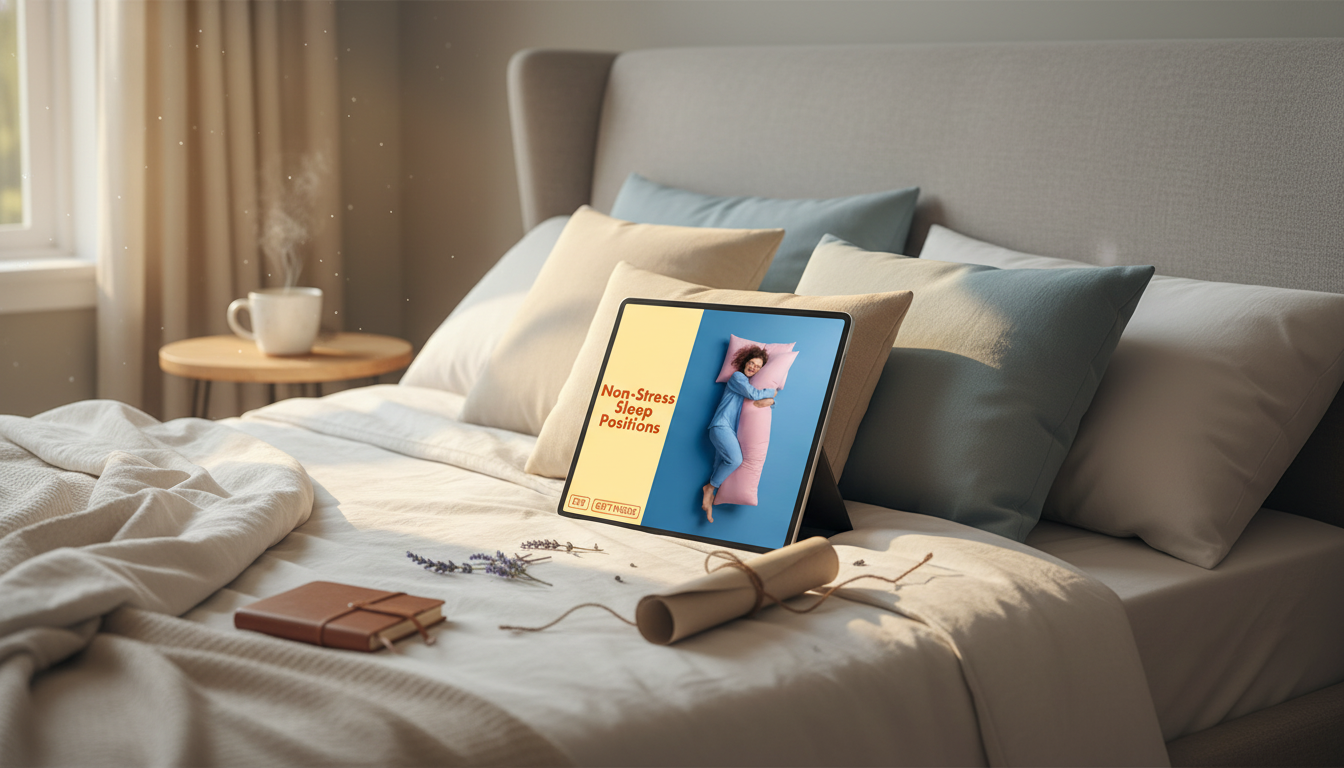
Non-Stress Sleep Positions: A Simple Checklist for Restful Nights
Restful sleep often comes down to small, repeatable choices: how the body is supported, where pressure builds up, and whether the spine can stay in a neutral line. A position that feels “comfortable” at first can still strain the neck, shoulders, low back, or hips for hours. The goal is simple: reduce pressure points, let muscles stop bracing, and make it easier for breathing to stay slow and steady as you drift off.
Below is a practical set of non-stress sleep positions plus a quick pre-sleep checklist you can run in under a minute. If you like having a repeatable setup, you can also keep a one-page guide on your nightstand or phone: Non-Stress Sleep Positions: Your Simple Checklist for Restful Nights (digital download).
What “non-stress” sleep looks like
- A neutral spine from head to tailbone: ears stacked over shoulders, shoulders over hips (as close as the position allows).
- Pressure spread across larger areas (torso, hips) instead of concentrated at the neck or low back.
- Muscles can “switch off” instead of bracing: jaw unclenches, shoulders drop, belly softens.
- Breathing stays easy: ribs can expand without the chest being compressed or twisted.
- It stays comfortable most of the night: frequent wake-ups, numbness, or morning stiffness are useful signals that support needs adjusting.
For general sleep health guidance and common sleep challenges, reputable references include the American Academy of Sleep Medicine’s Sleep Education resources and the Mayo Clinic’s sleep tips.
Quick checklist before lights out
- Pillow height test: neck feels long and supported (not bent up, and not dropped down).
- Shoulders: no pinching at the top shoulder; arms aren’t forced forward.
- Low back: no sharp arching; abdomen and ribs feel settled.
- Hips and knees: supported so the top leg doesn’t pull the pelvis forward.
- Feet and ankles: relaxed, not pointed or twisted.
- Temperature and tension reset: warm hands/feet, unclench jaw, release tongue from the roof of the mouth.
Position support cheat sheet
| Sleep position | Best for | Add support here | Common stress sign | Simple fix |
|---|---|---|---|---|
| Side (neutral) | Back/hip comfort, snoring reduction for some people | Pillow between knees; small pillow or towel at waist gap | Top shoulder numbness | Hug a pillow; slightly lower pillow height |
| Back (neutral) | Even pressure, easier spinal neutrality | Small pillow under knees; neck-support pillow | Low-back tightness | Raise knees slightly with a pillow |
| Side (fetal, gentle) | Lower-back easing for some people | Knee pillow; avoid extreme curl | Neck strain | Uncurl slightly; keep chin neutral |
| Stomach (modified) | Only if it’s the only way to fall asleep | Thin pillow or none; pillow under hips; one knee bent | Neck rotation pain | Rotate torso slightly; switch to side-leaning stomach |
| Reclined (propped) | Reflux support, pregnancy comfort (with medical guidance) | Wedge or stacked pillows under upper back and knees | Sliding down or neck flexion | Add knee bolster; adjust pillow to keep ears over shoulders |
Side sleeping without shoulder and hip strain
- Stack the joints: aim for a straight line from ear to shoulder to hip; avoid rolling the top shoulder forward.
- Keep hips from twisting: use a pillow between the knees so the top leg doesn’t drag the pelvis forward. If hips feel achy, try extending the bottom leg slightly instead of keeping both knees deeply bent.
- Fill the waist gap: if your waist “hangs” above the mattress, add a small rolled towel or thin pillow at the gap to prevent side-bending through the low back.
- Support the arms: hugging a pillow can reduce upper-back tension and help prevent hand numbness from the top arm falling forward.
- Reduce jaw/face tension: if you wake up clenching, slightly reduce pillow height and keep the chin from tucking toward the chest.
Back sleeping for calmer breathing and spine alignment
If stomach sleeping is hard to quit: safer modifications
Mini wind-down routine to match the position
If nighttime worries spill into daytime interactions, a separate, quick-to-use printable can help build steadier routines beyond sleep: Social Confidence in Any Situation (printable checklist).
Printable support: a simple checklist for repeatable nights
For a ready-to-use version, see Non-Stress Sleep Positions: Your Simple Checklist for Restful Nights (digital download).
FAQ
What is the healthiest sleep position for spinal alignment?
Neutral alignment matters more than one “perfect” position. Back sleeping with a small knee bolster or side sleeping with a knee pillow often keeps the spine closest to neutral, but factors like pregnancy, reflux, pain patterns, and snoring can change what’s healthiest for you.
How do pillows help reduce stress on the neck and lower back at night?
Pillows fill gaps so your joints don’t hang or twist: the right head pillow height keeps the neck neutral, a knee pillow stacks the hips on the side, and a small towel at the waist prevents low-back side-bending. On the back, a pillow under the knees reduces the low-back arch so muscles can relax instead of bracing.
When should sleep pain or snoring be checked by a professional?
Get evaluated if pain, numbness/tingling, or weakness persists or worsens, or if you have severe morning headaches. Loud snoring with daytime sleepiness, witnessed breathing pauses, or reflux that doesn’t improve with positioning are also good reasons to check in with a clinician.
















Leave a comment