Handing someone your car keys is simple. Transferring responsibility for the loan can take more work. Before you make an agreement, you’ll need to understand whether your lender permits a transfer, how much is owed, and what must happen to the title.
Our eBook is a practical starting point for organizing those decisions. Whether you’re considering a transfer to a family member or selling to someone who needs financing, start with the lender and keep ownership paperwork separate from the loan discussion.
Giving another person the car or allowing them to make the monthly payments does not automatically transfer your debt. If the loan remains in your name, you generally remain responsible for it—even if someone else has promised to pay.
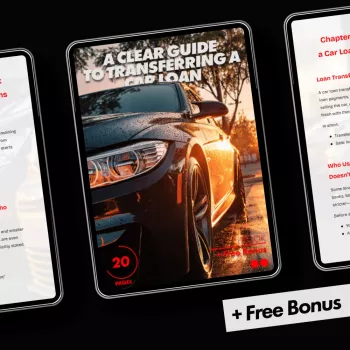
Our A Clear Guide to Transferring a Car Loan eBook offers a step-by-step starting point for navigating the process. It is listed at $11.99 and can help you approach the decisions in order before you commit to an arrangement.
Begin by gathering your loan agreement, a recent statement, and your vehicle information. These can make your conversation with the lender more productive and help you identify the questions that need answers.
A loan assumption is an arrangement in which a lender approves another borrower to take over an existing loan. Not every lender offers one, so review your agreement and contact the lender directly rather than assuming it is available.
The proposed borrower may have to apply and meet the lender’s credit and income requirements. Approval is not guaranteed, and the lender may require additional documents or charge fees.
When you call, ask:
Keep making required payments while the loan remains your responsibility. An application or a verbal agreement alone should not be treated as a completed transfer.
If an assumption is unavailable or unsuitable, selling the car may be another path. In a sale with buyer financing, the buyer obtains a new loan and the existing loan is paid off as part of the transaction. That is different from taking over your current loan.
Request a current payoff amount from your lender. It may differ from the balance shown on your statement because interest and other applicable amounts can affect the payoff. If the payoff exceeds the sale price, you and the buyer must address the difference as part of the transaction.
| Option | How it works | What to confirm |
|---|---|---|
| Loan assumption | The lender approves another borrower to take over the existing loan. | Eligibility, fees, and release of the original borrower |
| Sale with buyer financing | The buyer obtains financing and the existing loan is paid off as part of the sale. | Payoff amount, funding, and title-release process |
| Informal payment arrangement | Another person pays, but the loan remains in the original borrower’s name. | The original borrower may remain liable; lender approval is needed for a formal transfer |
For more background on borrowing and repayment, visit the Consumer Financial Protection Bureau’s auto loan resources.
Once you know which path is available, coordinate the details before handing over the vehicle. A useful sequence is:
The loan and title are separate matters. State requirements vary, and a lien release may be needed before ownership paperwork can be completed. Ask your lender how it handles the release, then check with your local motor vehicle agency about the documents and timing.
Both parties should coordinate insurance so the vehicle has appropriate coverage during the handoff. Keep copies of signed documents, payment records, and written confirmation of the loan’s status and completed transactions.
Our team offers the transfer guide as a companion for organizing questions and approaching the process in order. It can help you prepare for conversations with the lender and the other person, but your actual options depend on your agreement and the lender’s approval.
Before making commitments, verify current terms with your lender and title requirements with your local motor vehicle agency. You can also review the Federal Trade Commission’s car-buying guidance if a sale is part of your plan.
If you are considering donation instead of a transfer, our car donation checklist eBook covers a different route. Confirm any outstanding loan and lien requirements before donating, and consult a tax professional about your circumstances.
Ready to prepare? View A Clear Guide to Transferring a Car Loan on Tupira.
Sometimes, if the lender permits an assumption and approves the new borrower. Otherwise, a sale and payoff using the buyer’s financing may be an option.
Generally, yes, unless the lender formally releases you from the obligation. An informal payment arrangement does not itself change the loan contract.
Not automatically. Ownership paperwork is separate, and the lender’s lien and state title requirements must be handled as applicable.




Leave a comment