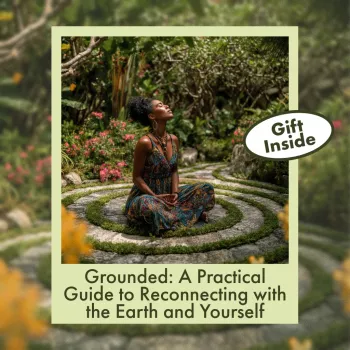
A grounded moment can be as simple as stepping outside, noticing the air on your skin, and giving yourself permission to pause. You don’t need a perfect garden or a long stretch of free time. A few attentive minutes can create space in a busy day to notice where you are and how you feel.
Grounding can mean different things, from making direct contact with the earth to using your senses to return your attention to the present. Our digital guide, Grounded: A Practical Guide to Reconnecting with the Earth and Yourself, is an option for exploring earthing alongside mindfulness and daily practices. Whether you’re curious about getting outside or looking for a gentler way to approach a break, you can start with what feels comfortable.
Earthing generally refers to direct physical contact with the ground. Standing barefoot on grass is one example; sitting with your hands or feet on the earth is another. People may use the word “grounding” for the same practice, but it can also describe something different.
Psychological grounding techniques help bring your attention back to the present. For example, you might name things you can see, listen for nearby sounds, or notice the feeling of your feet in your shoes. You can use these techniques indoors or outdoors, with no direct contact with the ground.
Research into specific health claims about earthing is limited, so it should not be presented as a proven treatment. Mindfulness is a broader area of study; the National Center for Complementary and Integrative Health explains that research findings vary by practice and condition.
Start by choosing a place where you feel reasonably comfortable. That might be a garden bench, a quiet corner of a park, or a spot just outside your door. Listen for a sound close by, then one farther away. Notice the temperature of the air or the way your clothing feels against your skin.
You might also take a few slow breaths without trying to control them. Time outdoors and mindful attention may feel calming, though your experience can vary from day to day. There’s no need to make a particular feeling happen.
If going outdoors isn’t convenient or accessible, sit near a window instead. Notice the sensations of breathing, the support of your chair, or the changing light. You can keep your shoes on and make the pause as brief as you need.
| Practice | How to begin | Practical consideration |
|---|---|---|
| Stand on grass | Notice the ground beneath your feet | Check for hazards before going barefoot |
| Sit outdoors | Observe nearby sounds and sensations | Choose a comfortable, accessible spot |
| Pause by a window | Take a few slow breaths | Keep footwear on if preferred |
A short routine can give your attention somewhere to land without adding another demanding task to your list. Try these steps for a minute or two, or longer if you enjoy them:
You could try this during an existing morning break or as part of an evening wind-down. If your schedule changes, let the practice change with it. Adapt the position, location, and length to your mobility, environment, and comfort. An attentive pause counts whether you’re on a trail, on a balcony, or beside a window.
If you’d like to explore the topic further, our in-stock digital guide, Grounded: A Practical Guide to Reconnecting with the Earth and Yourself, is $7.99. It’s an option for readers interested in grounding or earthing alongside mindfulness and daily practices. Visit the product page to explore the guide and decide whether it suits your interests.
If you’re also curious about aromatherapy as a separate relaxation topic, we offer the in-stock How Essential Oils Can Ease Stress and Anxiety digital guide for $16.99. It explores a different subject from earthing, so choose the guide that matches what you want to learn.
Before going barefoot, look for sharp objects, hot or freezing surfaces, insects, and other hazards. Shoes are a sensible choice whenever you need protection or feel more comfortable wearing them. You can still notice your surroundings and practice mindful attention without touching the ground directly.
Grounding practices are not a substitute for medical or mental health care. If stress or anxiety persists or disrupts your daily life, consider reaching out to a qualified professional. A personal routine may complement other support, but you don’t have to manage difficult symptoms on your own. For more information about approaches to relaxation, see the NCCIH guide to relaxation techniques.
Earthing usually means direct contact with the earth. Grounding can also refer to mental exercises that bring attention back to the present.
No. Sitting, walking in shoes, or noticing your surroundings can all be mindful activities; direct skin contact is associated specifically with earthing.
No. A calming routine may complement other support, but it should not replace professional care when needed.






Leave a comment