-
Shop
- Adidas
- Advanced Technologies
- Bathroom
- Best-Sellers
- Car Accessories
- Dating & Social Skills
- Digital Resources
- AI & Technology
- AI Skills
- Beauty
- Budgeting & Saving
- Car Buying & Ownership
- Cozy Feast Collection
- Electronics & Technology
- Emotional Intelligence
- Entrepreneurship & Business Growth
- Financial Education
- Financial Independence
- Financial Mindset & Psychology
- Goal Setting
- Home Styling & Organization
- Kitchen & Recipes
- Leadership
- Mindfulness
- Mindset
- Motivation
- Online Business
- Parenting & Child Development
- Personal Style & Fashion
- Pet Lifestyle & Wellness
- Positive Thinking
- Productivity
- Self Confidence
- Sleep Improvement
- Smart Life with AI
- Stress Management & Relaxation
- Travel Planning
- Wellness
- Yoga & Fitness
- Yoga & Mind-Body Practices
- Easter Products
- Education & Learning
- Family & Parenting
- Fashion
- Alexander McQueen
- Bags
- Bags & Wallets
- Balenciaga
- Belts
- Blazers
- Bottega Veneta
- Brunello Cucinelli
- Burberry
- Chanel
- Chloé
- Dior
- Dolce & Gabbana
- Dresses
- Etro
- Fendi
- Gucci
- Hats & Hair Accessories
- Jewelry
- Jil Sander
- Keychains
- Kiton
- Luggage
- Miu Miu
- Off-White
- Outerwear
- Prada
- Rick Owens
- Saint Laurent
- Shoes
- Socks & Tights
- The Row
- Tom Ford
- Valentino
- Valentino Garavani
- Versace
- Vivienne Westwood
- Watches
- Furniture
- Gadgets
- Health & Beauty
- Health & Wellness
- Home & Garden
- Home Electronics
- Kids & Babies
- Kitchen
- Lighting
- Patio, Lawn & Garden
- Personal Growth
- Pet Care
- Pet Supplies
- Pets
- Smart Home Living Guides
- Sport & Outdoors
- Stress Relief & Relaxation
- TikTok Growth & Monetization Mastery
- Travel
- Wealth
- Wealth Building
- Popular
- Best deals
Cut Gas & Electric Bills: A Home Energy Checklist
Why Your Home Bills Keep Climbing (and Where the Waste Hides)
Higher utility costs can feel like a fact of life, but most households are paying for energy they never really use—heat that leaks into the attic, hot water that cools in the pipes, and electronics that quietly sip power 24/7. The easiest way to stop the bleed is to replace random “tips” with a repeatable routine: audit what’s happening, fix the highest-impact issues first, then maintain the wins so they stick.
This checklist-driven approach helps you prioritize quick, low-cost changes (often the biggest bang for your buck) and then decide which upgrades are worth planning for later—without sacrificing comfort.
What Drives Most Gas and Electric Costs at Home
Most home energy spending clusters into a few categories. When you know where the money goes, it’s easier to target the right fixes.
- Heating and cooling: Often the largest share of usage. Small issues—air leaks, clogged filters, poor schedules—can add hours of runtime each week.
- Hot water: Costs rise with high temperature settings, heat lost from uninsulated pipes, and high-flow habits like long showers and hot-water laundry.
- Lighting and plug loads: Old bulbs, aging appliances, and “vampire” standby power from chargers, TVs, set-top boxes, and game consoles.
- Rate plans and peak pricing: Time-of-use and tiered rates can change what’s “expensive,” even if your kWh stays similar.
- Your context: Climate, home size, insulation, and equipment age determine which checklist items pay back fastest.
Fastest Payback Areas to Check First
| Area | What to Check | Typical Effort | Why It Matters |
|---|---|---|---|
| Thermostat & schedules | Setbacks at night/away, smart scheduling | Low | Cuts runtime without new equipment |
| Air leaks | Doors/windows, attic hatch, outlets on exterior walls | Low–Medium | Stops paid-for heat/AC from escaping |
| HVAC maintenance | Filter changes, vents unblocked, coil cleanliness | Low | Improves airflow and efficiency |
| Water heating | Temperature setting, short showers, aerators | Low | Reduces both gas/electric and water use |
| Standby power | Power strips, unplug rarely used devices | Low | Eliminates constant background draw |
The Pro Checklist Method: Audit, Fix, Maintain
- Audit: Walk room-to-room and note thermostat settings, drafty rooms, old bulbs, and “always-on” devices. If it helps, snap a few photos so nothing gets forgotten.
- Fix: Start with no-cost and low-cost moves (schedule changes, sealing small gaps, filter replacement) before spending on upgrades.
- Maintain: Turn savings into routines—monthly filter reminders, seasonal tune-ups, periodic draft checks.
- Track: Compare month-to-month usage (kWh/therms). When possible, consider weather differences so you’re watching the trend, not just the total bill.
- Prioritize: Focus first on the top three items that affect comfort and runtime—usually HVAC behavior, air leaks, and hot water.
Heating and Cooling Checklist (Biggest Bill Impact)
- Thermostat schedule: Set a consistent plan for sleeping hours and time away. Frequent manual swings can trigger longer “catch-up” runs.
- Air filters: Replace or clean on a steady cadence. A clogged filter restricts airflow and makes your system work harder.
- Airflow basics: Keep registers and returns open and unblocked by rugs, furniture, or drapes. Closed vents can increase pressure and reduce efficiency.
- Duct check (accessible areas): Look for disconnected runs or obvious leaks. Seal where safe and appropriate (especially in attics or basements).
- Ceiling fans: Use the right direction for the season and turn them off when you leave—fans cool people, not empty rooms.
- Windows and shades: Block summer sun during peak heat, and keep curtains closed on cold winter nights to reduce heat loss.
- Attic hatch and doors: Weatherstrip common leak points; door sweeps and attic hatches are frequent culprits.
For deeper guidance on home heating/cooling efficiency, the U.S. Department of Energy’s Energy Saver resources are a reliable reference point.
Hot Water and Laundry Checklist (Quiet Cost Centers)
Lighting and Plug-Load Checklist (Easy, Room-by-Room Wins)
For appliance and lighting guidance, ENERGY STAR’s home energy tips are a solid baseline.
Bill-Savvy Moves: Rates, Rebates, and Simple Tracking
If you want a simple way to benchmark progress, the EPA/ENERGY STAR Home Energy Yardstick can help you compare usage and spot improvement opportunities.
Downloadable Checklist: Put the Routine on Autopilot
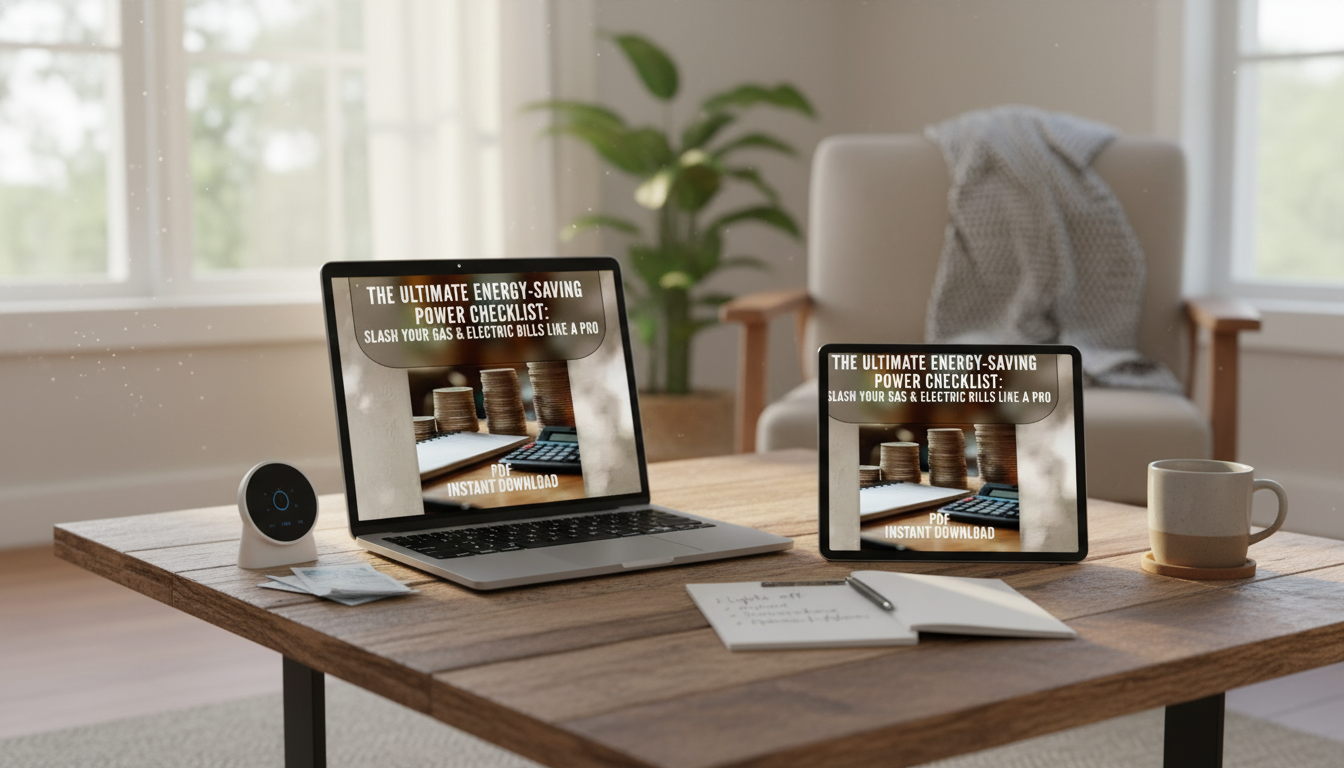
If you want a ready-to-use format, consider the Energy-Saving Power Checklist digital download for a structured, repeatable routine you can revisit each season.
For households that like pairing savings with a more comfortable-feeling space, the AI-Made Cozy Decor Mood Boards Checklist can help plan room-by-room changes thoughtfully—useful when you’re rethinking curtains, shading, and layout while improving comfort.
FAQ
What are the fastest ways to lower gas and electric bills without buying new equipment?
Start with thermostat scheduling, sealing obvious drafts, changing HVAC filters, reducing hot-water use, swapping the most-used bulbs to LEDs, and cutting standby power using power strips.
How long does it take to see results after making changes?
Standby power and lighting changes can reduce usage right away, while heating/cooling improvements usually show on the next bill cycle and become most noticeable during hot or cold weather. Track usage for 1–3 months to see a clearer trend.
Is a smart thermostat worth it if schedules are inconsistent?
It can be, especially if occupancy sensing, learning features, and remote control match your household’s routine. Savings are stronger when it’s paired with air sealing and consistent HVAC maintenance.
















Leave a comment