-
Shop
- Adidas
- Advanced Technologies
- Bathroom
- Best-Sellers
- Car Accessories
- Dating & Social Skills
- Digital Resources
- AI & Technology
- AI Skills
- Beauty
- Budgeting & Saving
- Car Buying & Ownership
- Cozy Feast Collection
- Electronics & Technology
- Emotional Intelligence
- Entrepreneurship & Business Growth
- Financial Education
- Financial Independence
- Financial Mindset & Psychology
- Goal Setting
- Home Styling & Organization
- Kitchen & Recipes
- Leadership
- Mindfulness
- Mindset
- Motivation
- Online Business
- Parenting & Child Development
- Personal Style & Fashion
- Pet Lifestyle & Wellness
- Positive Thinking
- Productivity
- Self Confidence
- Sleep Improvement
- Smart Life with AI
- Stress Management & Relaxation
- Travel Planning
- Wellness
- Yoga & Fitness
- Yoga & Mind-Body Practices
- Easter Products
- Education & Learning
- Family & Parenting
- Fashion
- Alexander McQueen
- Bags
- Bags & Wallets
- Balenciaga
- Belts
- Blazers
- Bottega Veneta
- Brunello Cucinelli
- Burberry
- Chanel
- Chloé
- Dior
- Dolce & Gabbana
- Dresses
- Etro
- Fendi
- Gucci
- Hats & Hair Accessories
- Jewelry
- Jil Sander
- Keychains
- Kiton
- Luggage
- Miu Miu
- Off-White
- Outerwear
- Prada
- Rick Owens
- Saint Laurent
- Shoes
- Socks & Tights
- The Row
- Tom Ford
- Valentino
- Valentino Garavani
- Versace
- Vivienne Westwood
- Watches
- Furniture
- Gadgets
- Health & Beauty
- Health & Wellness
- Home & Garden
- Home Electronics
- Kids & Babies
- Kitchen
- Lighting
- Patio, Lawn & Garden
- Personal Growth
- Pet Care
- Pet Supplies
- Pets
- Smart Home Living Guides
- Sport & Outdoors
- Stress Relief & Relaxation
- TikTok Growth & Monetization Mastery
- Travel
- Wealth
- Wealth Building
- Popular
- Best deals
Build a 3-Bag Handbag Wardrobe with a 3-in-1 Bundle
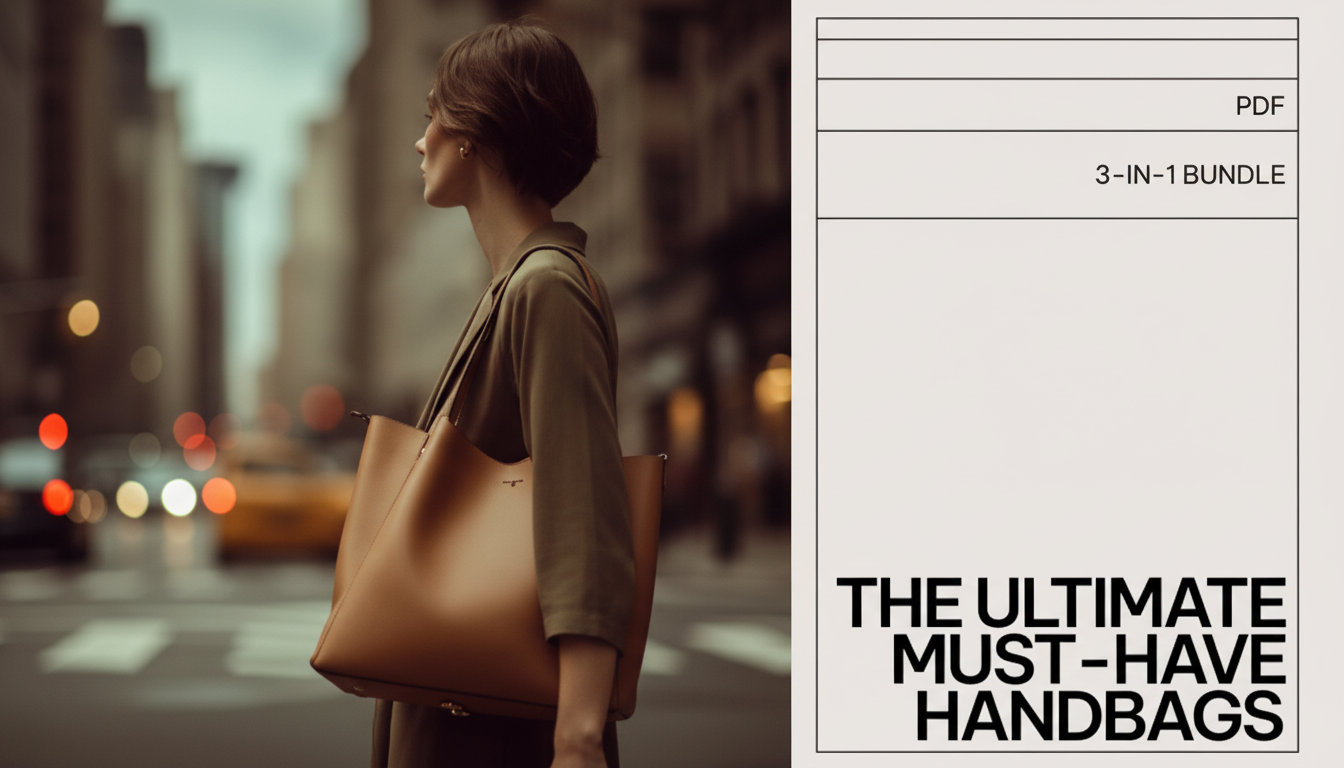
Build a Smarter Handbag Wardrobe with a 3-in-1 Bundle
A well-planned handbag lineup makes getting dressed faster, cuts down on repeat purchases, and keeps the right bag ready for real life—workdays, weekends, travel, and events. The key is a simple system: identify the core bag types, map them to your routine, then use a practical checklist (size, straps, closures, pockets, weight, and care) before buying.
If you’re ready to streamline, The Ultimate Must-Have Handbags Bundle: 3-in-1 Guide & Checklist is designed to make decisions clearer and collections more intentional—without guesswork or overbuying.
What’s inside the 3-in-1 bundle
Guide: the framework
A clear structure for spotting the essential handbag categories and defining what each one should do (capacity, comfort, security, and polish).
Checklist: the buying filter
A step-by-step evaluation for size, strap length, closure type, pockets, weight, and comfort—so a bag looks good and functions well once it’s packed.
Planning tool: the lifestyle map
A quick way to match bags to how days actually run (work, weekends, travel, events), helping prevent gaps (no event option) and repeats (three similar casual bags).
The core handbag lineup that covers most lifestyles
Most wardrobes run smoothly with three anchor bags: one for daily life, one for work-heavy days, and one for evenings. From there, add only what’s truly used.
Everyday crossbody
Hands-free, secure, and comfortable for errands, commuting, and casual plans. Look for an adjustable strap range and enough space for phone, wallet, keys, and sunglasses.
Work or large tote
A dependable carryall that fits daily essentials plus a notebook/tablet (or a laptop if that’s part of the routine). Prioritize sturdy straps, a structured base, and easy-access pockets.
Evening or event bag
Compact and polished with minimal bulk. A detachable chain/strap makes it more flexible, and it should still fit a phone and a few must-haves.
Optional add-ons (only if frequently used)
A belt bag for travel days, a small shoulder bag for casual dinners, or a structured top-handle for formal settings can be useful—when they match a recurring calendar need.
| Bag type | Best for | What to look for | Common mistakes to avoid |
|---|---|---|---|
| Everyday crossbody | Errands, commuting, weekend plans | Secure closure, adjustable strap, light weight, exterior slip pocket if desired | Too small for real carry; strap that digs in; hardware that feels flimsy |
| Work/large tote | Office, school, daily carry | Reinforced handles, protective feet/base, internal organization, zipper top if commuting | Overstuffing; unstructured shape that collapses; no pocket for keys |
| Evening/event bag | Weddings, dinners, parties | Neutral or metallic option, smooth closure, fits phone, comfortable carry in hand or on shoulder | Beautiful but unusable size; stiff closure that scratches nails; chain too short/too long |
Pick the right size by mapping to what’s actually carried
Instead of buying by “small/medium/large,” size your bag to your habits. Start by writing three carry lists: daily essentials, work essentials, and event essentials. Your bag doesn’t need to hold everything—just what you’ll realistically bring for that role.
- Create three carry lists: daily, work, and event essentials.
- Confirm interior dimensions fit the largest non-negotiable item (often today’s phone size).
- Plan for “one extra” (lip balm, tissues, compact) so the bag stays useful without turning into clutter.
- If shoulder or neck pain is common, prioritize lighter materials, wider straps, and balanced weight distribution.
Materials and construction that hold up over time
The “best” material depends on climate, commute conditions, and frequency of use. Leather can age beautifully, coated canvas resists scuffs, and nylon often wins for lightness and weather-friendly wear. If you’re prioritizing responsible sourcing, resources like the Leather Working Group can help explain supply-chain standards.
- Check stress-point reinforcement: handle bases, strap anchors, bottom corners, and zipper ends.
- Inspect lining and seams: clean stitching, no puckering, and consistent finishing along edges.
- Test hardware: zippers should glide, clasps should close confidently, and finishes should match how hard you’ll use the bag.
For broader fashion industry context and craftsmanship education, the CFDA is a solid reference point for designers and industry standards.
Color strategy: build a cohesive bundle without boredom
A smart color plan keeps a small collection feeling versatile. Begin with one go-with-everything neutral that works with most shoes and outerwear (black, taupe, tan, or navy). Then add a second neutral in a different depth—light versus dark—to expand outfit range without adding visual noise.
Use the checklist before buying: a fast decision flow
For general consumer guidance on return policies and shopping protections, the FTC provides practical, plain-language tips.
Care and storage that protect the investment
Gifting and sharing: making the bundle easy to use
To reduce returns and hesitation, pair the checklist with a short wish list: preferred colors, strap styles, and hardware finishes. For frequent networking, conferences, or dinners, adding a confidence and conversation tool can be surprisingly useful alongside outfit planning—consider Social Confidence in Any Situation printable checklist as a small, practical add-on.
FAQ
How many handbags are enough for a functional collection?
A practical baseline is 2–3 core bags (everyday, work/tote, and an event option). Add more only when there’s a consistent lifestyle need—like frequent travel, formal events, or heavy daily work carry that demands a dedicated bag.
What should an everyday bag fit at minimum?
At minimum, it should fit a phone, wallet, and keys—plus one small extra like lip balm or tissues. A secure closure and an adjustable, comfortable strap make the bag easier to use day after day.
How can handbags be stored to prevent creasing and loss of shape?
Lightly stuff the bag to support its structure and store it upright when possible. Avoid hanging by straps for long periods, use a dust bag if available, and keep it away from heat and direct sun.













Leave a comment