-
Shop
- Adidas
- Advanced Technologies
- Bathroom
- Best-Sellers
- Car Accessories
- Dating & Social Skills
- Digital Resources
- AI & Technology
- AI Skills
- Beauty
- Budgeting & Saving
- Car Buying & Ownership
- Cozy Feast Collection
- Electronics & Technology
- Emotional Intelligence
- Entrepreneurship & Business Growth
- Financial Education
- Financial Independence
- Financial Mindset & Psychology
- Goal Setting
- Home Styling & Organization
- Kitchen & Recipes
- Leadership
- Mindfulness
- Mindset
- Motivation
- Online Business
- Parenting & Child Development
- Personal Style & Fashion
- Pet Lifestyle & Wellness
- Positive Thinking
- Productivity
- Self Confidence
- Sleep Improvement
- Smart Life with AI
- Stress Management & Relaxation
- Travel Planning
- Wellness
- Yoga & Fitness
- Yoga & Mind-Body Practices
- Easter Products
- Education & Learning
- Family & Parenting
- Fashion
- Alexander McQueen
- Bags
- Bags & Wallets
- Balenciaga
- Belts
- Blazers
- Bottega Veneta
- Brunello Cucinelli
- Burberry
- Chanel
- Chloé
- Dior
- Dolce & Gabbana
- Dresses
- Etro
- Fendi
- Gucci
- Hats & Hair Accessories
- Jewelry
- Jil Sander
- Keychains
- Kiton
- Luggage
- Miu Miu
- Off-White
- Outerwear
- Prada
- Rick Owens
- Saint Laurent
- Shoes
- Socks & Tights
- The Row
- Tom Ford
- Valentino
- Valentino Garavani
- Versace
- Vivienne Westwood
- Watches
- Furniture
- Gadgets
- Health & Beauty
- Health & Wellness
- Home & Garden
- Home Electronics
- Kids & Babies
- Kitchen
- Lighting
- Patio, Lawn & Garden
- Personal Growth
- Pet Care
- Pet Supplies
- Pets
- Smart Home Living Guides
- Sport & Outdoors
- Stress Relief & Relaxation
- TikTok Growth & Monetization Mastery
- Travel
- Wealth
- Wealth Building
- Popular
- Best deals
Clutter-Control Toolkit: Declutter Fast and Keep It Clear
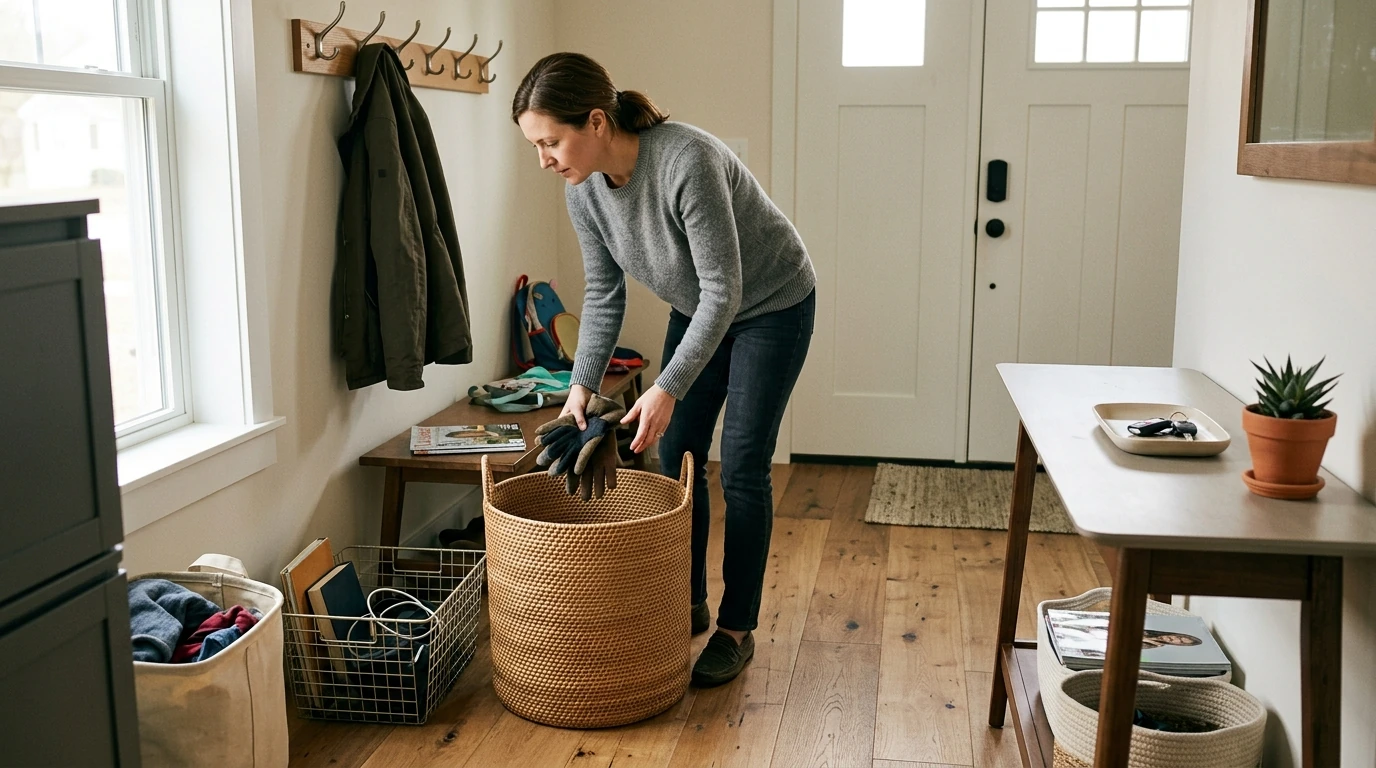
Clutter-Control Toolkit for Real Life: A Practical System to Declutter and Keep Your Home Clear
A decluttered home is less about a one-time purge and more about setting up simple decisions that repeat well on busy days. When clutter is treated like a system problem (too much incoming + no easy exits), the fix becomes practical: reduce friction, limit “stuff creep,” and create small routines that hold the line even when you’re tired. Research also suggests that visual clutter can make it harder to focus, which is a good reason to prioritize the spaces you see and use most often. Princeton University’s research overview is a helpful starting point if you want the “why” behind the work.
What “clutter control” looks like in real life
Real-life clutter control is not color-coded perfection; it’s steady progress that reduces daily friction. Start by removing the most disruptive clutter first—floors, counters, and the entryway—because those visible wins create momentum.
Use a repeatable decision rule that moves every item forward: keep, relocate, donate/sell, recycle, or trash. Skip “maybe” piles unless they come with a next action and a deadline. Storage should match your habits (where items naturally land), not an idealized version of you. And when clutter pops back up, treat it as a flow issue: too much coming in, not enough leaving, and no clear homes—not a personal failure.
Meet the Clutter-Control Toolkit for Real Life
The Clutter-Control Toolkit for Real Life: Declutter Your Home, Stop Clutter from Coming Back is built for everyday households that need a guided system instead of random tips. It’s especially useful for common pain points like paper piles, kitchen overflow, bedroom “drop zones,” kids’ items, and sentimental clutter—places where decision fatigue usually hits hardest.
| What it helps with | What to expect | Who it’s for |
|---|---|---|
| Decluttering rooms and surfaces | Guided steps and repeatable routines | Busy households, overwhelmed organizers, anyone resetting their home |
| Stopping clutter from coming back | Simple rules for incoming items and storage limits | People tired of re-cluttering after big cleanouts |
| Reducing decision fatigue | Clear categories and next actions | Those who get stuck on “where does this go?” |
The core method: clear, contain, and maintain
Clear
Remove what doesn’t support the space’s purpose. A kitchen counter isn’t a mail station; a bedroom chair isn’t a closet. Start with visible wins (like one counter or one floor zone) so you feel the payoff quickly.
Contain
Give the remaining items a home with physical limits—bins, drawers, shelves, or baskets. Limits are the secret weapon because they turn “too much” into an obvious signal, not an ongoing debate.
Maintain
A realistic room-by-room game plan (without turning your weekend into a marathon)
Entryway
Kitchen
Living areas
Bedrooms
Bathrooms
Toss expired items, limit backups, and group by routine (morning, night, first-aid). Pair this with basic household hygiene guidance so your reset is both tidy and clean; the CDC’s home cleaning guidance is a solid reference.
| Area | Starter task | Time box |
|---|---|---|
| Entryway | Clear floor + set hooks/tray | 15–30 minutes |
| Kitchen | One drawer or one cabinet category | 20–40 minutes |
| Living room | Remove items that belong elsewhere | 15–25 minutes |
| Bedroom | Clear one surface + laundry boundary | 20–30 minutes |
| Bathroom | Purge expired + group essentials | 15–25 minutes |
Stopping clutter from coming back: simple rules that work on tired days
If stress makes decision-making harder, build the routine so it’s mostly automatic. The APA’s overview of stress effects on the body is a good reminder that “easy mode” systems aren’t laziness—they’re smart design. For a calming add-on to your reset routine, pair decluttering sessions with simple relaxation practices from How Essential Oils Can Ease Stress and Anxiety | Relaxation eBook Guide for Natural Stress Relief, Aromatherapy, and Anxiety Support.
Handling the hardest categories (paper, sentimental items, and “aspirational” clutter)
Paper
Sentimental items
Aspirational clutter
If a major category is taking up space (like an unused vehicle), an organized exit can be part of your declutter plan—see Turn an Old Car Into a Smart Tax Move: A Complete Checklist for Donating Your Car to Charity for a Tax Write-Off.
Making it work for families, roommates, and shared spaces
How the toolkit fits into a 7-day reset
| Day | Focus | Win to aim for |
|---|---|---|
| 1 | Hotspots | Clear floors/counters in one zone |
| 2 | Paper | One inbox, no loose stacks |
| 3 | Kitchen | One cabinet/drawer simplified |
| 4 | Living room | Everything has a home |
| 5 | Bedroom | Clear one surface + hamper rule |
| 6 | Bathroom | Expired items removed, grouped storage |
| 7 | Maintenance | Two small routines scheduled |
If you want the guided structure behind this approach, keep the steps consistent with Clutter-Control Toolkit for Real Life: Declutter Your Home, Stop Clutter from Coming Back: clear what doesn’t belong, contain what stays, then protect your progress with tiny resets.
FAQ
How long does it take to declutter a home without feeling overwhelmed?
It can take a few hours for visible hotspot wins, and a few days to a few weeks for a full-home reset, depending on volume and schedule. Time-boxing 15–40 minutes per session keeps momentum without burnout, especially when you start with floors, counters, and the entryway.
What if family members keep bringing clutter back into shared spaces?
Set shared standards for what “clear” means, then make it easy to comply with simple zones (like one basket per person for items that belong elsewhere). Reduce “drop surfaces” where piles form, and run a quick scheduled reset so the shared space never drifts too far.
How can paper clutter be controlled when mail keeps coming in?
Create a single inbox and use immediate action sorting: recycle, file, act, or scan—no second pile. A weekly paper-processing appointment prevents backlog and keeps paper from spreading across rooms.
Recommended for you



Wool-Silk Check Blazer: Fit, Styling & Care Guide
Sep 15, 2026
10-Minute Brain Dump Routine for Clarity and Focus
Sep 16, 2026













Leave a comment