-
Shop
- Adidas
- Advanced Technologies
- Bathroom
- Best-Sellers
- Car Accessories
- Dating & Social Skills
- Digital Resources
- AI & Technology
- AI Skills
- Beauty
- Budgeting & Saving
- Car Buying & Ownership
- Cozy Feast Collection
- Electronics & Technology
- Emotional Intelligence
- Entrepreneurship & Business Growth
- Financial Education
- Financial Independence
- Financial Mindset & Psychology
- Goal Setting
- Home Styling & Organization
- Kitchen & Recipes
- Leadership
- Mindfulness
- Mindset
- Motivation
- Online Business
- Parenting & Child Development
- Personal Style & Fashion
- Pet Lifestyle & Wellness
- Positive Thinking
- Productivity
- Self Confidence
- Sleep Improvement
- Smart Life with AI
- Stress Management & Relaxation
- Travel Planning
- Wellness
- Yoga & Fitness
- Yoga & Mind-Body Practices
- Easter Products
- Education & Learning
- Family & Parenting
- Fashion
- Alexander McQueen
- Bags
- Bags & Wallets
- Balenciaga
- Belts
- Blazers
- Bottega Veneta
- Brunello Cucinelli
- Burberry
- Chanel
- Chloé
- Dior
- Dolce & Gabbana
- Dresses
- Etro
- Fendi
- Gucci
- Hats & Hair Accessories
- Jewelry
- Jil Sander
- Keychains
- Kiton
- Luggage
- Miu Miu
- Off-White
- Outerwear
- Prada
- Rick Owens
- Saint Laurent
- Shoes
- Socks & Tights
- The Row
- Tom Ford
- Valentino
- Valentino Garavani
- Versace
- Vivienne Westwood
- Watches
- Furniture
- Gadgets
- Health & Beauty
- Health & Wellness
- Home & Garden
- Home Electronics
- Kids & Babies
- Kitchen
- Lighting
- Patio, Lawn & Garden
- Personal Growth
- Pet Care
- Pet Supplies
- Pets
- Smart Home Living Guides
- Sport & Outdoors
- Stress Relief & Relaxation
- TikTok Growth & Monetization Mastery
- Travel
- Wealth
- Wealth Building
- Popular
- Best deals
How to Water Indoor Plants: Deep Soak, Then Drain
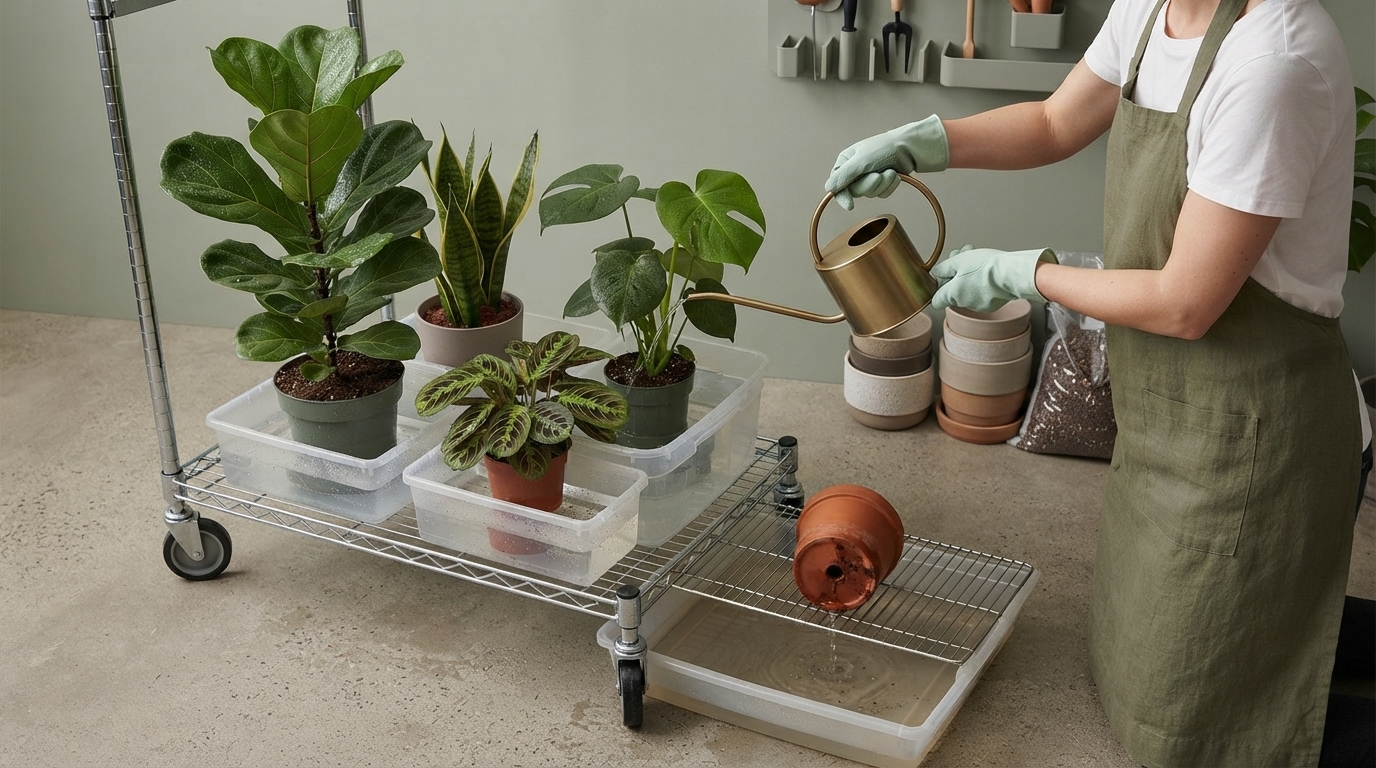
What is the best method for watering indoor plants?
The best method for watering indoor plants is to water deeply and only when the plant actually needs it—then let excess water drain away. This approach hydrates the full root zone, reduces the risk of root rot, and encourages stronger roots compared to frequent light sips.
Start by checking moisture, not the calendar
Before grabbing the watering can, check the potting mix. For many common houseplants, inserting a finger 1–2 inches into the soil is a quick test: if it feels dry at that depth, it’s usually time to water; if it’s still damp, wait. Moisture meters can help, but a simple touch test plus observing leaf firmness and growth is often enough.
Water slowly until it drains
Take the plant to a sink or use a saucer. Pour water evenly over the soil surface until a steady stream comes out of the drainage holes. Pause for a moment, then water a little more to ensure the mix is fully saturated. Always empty the saucer after 10–15 minutes so the pot isn’t sitting in pooled water.
Match the method to the plant and pot
Pot type, soil structure, and plant species change how fast moisture moves and evaporates. Fast-draining mixes (often used for succulents) may need thorough watering less often, while dense mixes can hold water longer and require extra caution. If your plant is in a decorative cachepot (no drainage), use a measured amount of water and consider repotting into a container with drainage for easier, safer watering.
Adjust for light, season, and humidity
Indoor plants typically need less water in winter or in low light, and more during active growth in brighter conditions. Dry indoor air can increase watering needs, but it’s still better to confirm soil moisture than to water automatically.
For a deeper look at how soil type affects watering frequency and plant health, visit this soil type and watering guide.
FAQ
How do I know if I’m overwatering my indoor plants?
Common signs include consistently wet soil, a musty smell, yellowing leaves, and soft or blackened roots. Let the mix dry more between waterings and make sure the pot drains freely.













Leave a comment