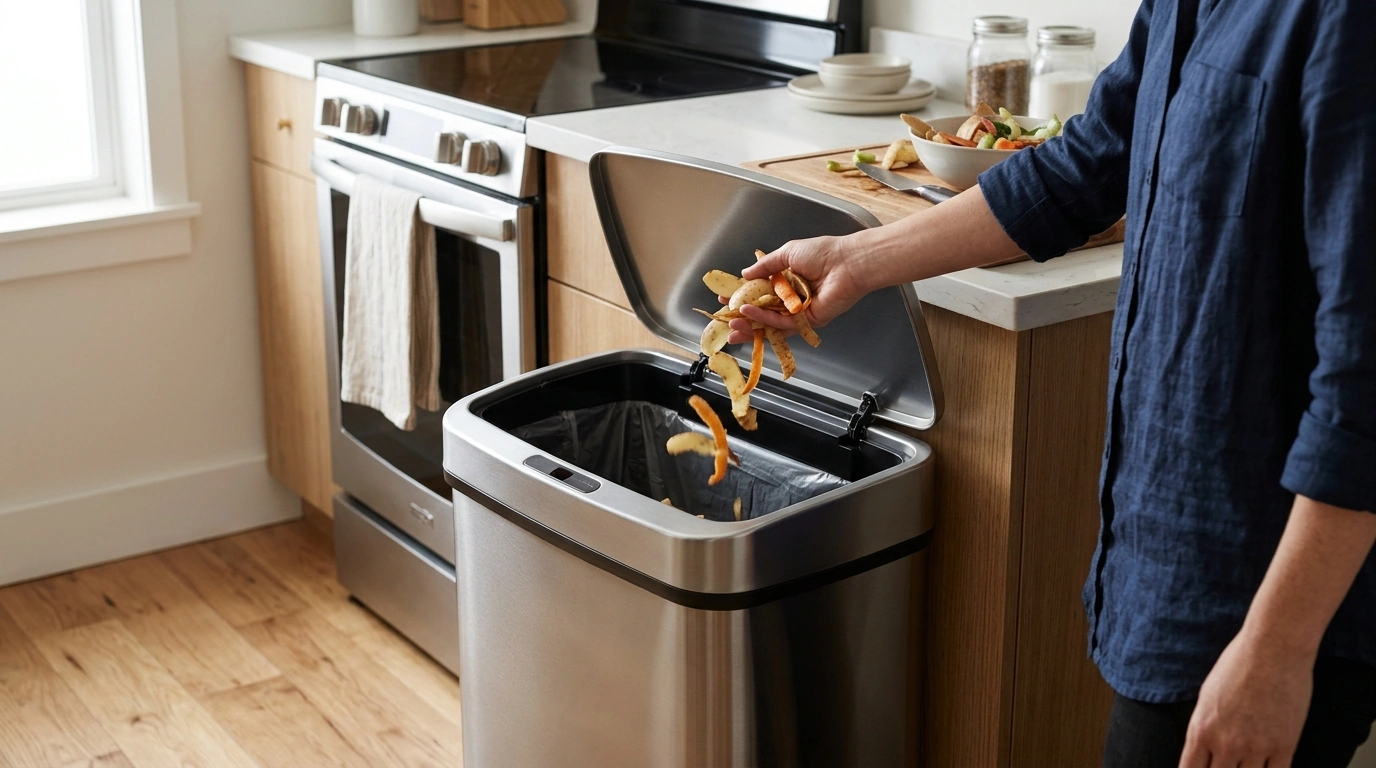
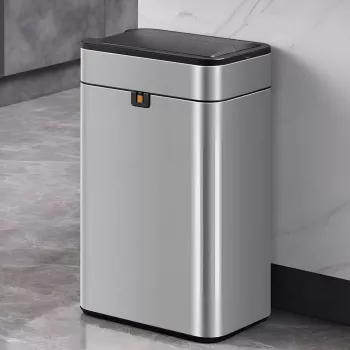
A practical waste station can make everyday cleanup feel a little more manageable. Our Touchless Stainless Steel Sensor Trash Can combines sensor operation with a high-capacity design and a stainless steel exterior, giving you a convenient place to collect household waste without manually touching the bin.
Whether you’re preparing a meal, tidying a utility area, or organizing a shared space, the right location and a consistent cleanup routine can help you get more from a larger trash can.
Disposing of waste is often a small task performed in the middle of another one. You might be holding food scraps while preparing dinner or carrying a handful of packaging after unpacking groceries. Sensor operation offers a way to dispose of those items without manually touching the bin, which can be especially convenient when your hands are full or messy.
A high-capacity bin can also be a useful choice for busy households and shared spaces where waste accumulates throughout the day. Keeping a larger collection point within reach can reduce the need to move between several small bins during routine cleanup. How often you need to empty it will still depend on what you discard and how many people use the space.
The stainless steel exterior adds a clean-lined look that can work alongside a variety of interiors. It is a practical option if you want an everyday necessity to sit comfortably among kitchen appliances, utility-area storage, or shared-room furnishings.
Start by considering where waste is generated most often. In a kitchen, a location near food preparation and cleanup areas can keep disposal within easy reach. In a utility area, the bin can provide a central place for packaging and other everyday waste. A shared space may benefit from a spot that is easy for everyone to find.
Before settling on a location, measure the available floor space and consider how you will approach and empty the bin. Leave enough clearance for comfortable access, and avoid placing it where it narrows a doorway or interrupts a common walking route.
| Space | Placement consideration |
|---|---|
| Kitchen | Keep the bin accessible from food preparation and cleanup areas. |
| Utility area | Allow enough room to reach and empty the bin comfortably. |
| Shared space | Choose a convenient location that does not obstruct walkways. |
If you share the area with others, consider a location that makes sense to everyone who uses it. A bin that is easy to reach and empty is more likely to support a tidy routine than one tucked into an inconvenient corner.
A larger bin gives you one accessible place to collect everyday waste, from meal-preparation scraps to nonrecyclable packaging. It can be particularly helpful when several people use the same kitchen or shared room. A consistent disposal spot also makes it easier to see when the liner needs attention.
Before buying bags, check the bin’s capacity and liner requirements so you can choose a suitable fit. A bag that fits properly is easier to secure and remove, and keeping spare liners nearby can make the changeover more convenient.
Consider setting up a separate container for recyclable materials where local collection rules allow. Requirements vary by community, so check which materials your local program accepts and whether they need to be emptied or rinsed. The EPA’s recycling basics guide offers a helpful starting point.
Even with a high-capacity bin, regular emptying matters. Remove waste before it becomes difficult to lift or develops an unwanted odor, and clean the surrounding floor as needed. If a bag leaks or spills, address the mess promptly rather than waiting for your next scheduled cleanup.
Follow the product’s care instructions for the stainless steel surface and sensor components. Using the recommended cleaning approach can help you maintain the exterior while avoiding unnecessary contact with sensitive parts. Keep cleaning supplies and replacement liners somewhere convenient, but out of the way of regular foot traffic.
Touchless disposal does not replace handwashing. After handling waste or changing a liner, wash your hands with soap and water. You can find guidance on when and how to wash in the CDC’s handwashing resources.
Our Touchless Stainless Steel Sensor Trash Can is listed at $806.99. Price and availability can change, so visit the product page for current purchasing information. If you’re planning a more convenient waste station, our team invites you to consider how its touchless operation and high-capacity design could fit your space.
For a different kind of everyday routine, you can also explore our Essential Oils Relaxation eBook Guide.
Sensor operation lets you dispose of waste without manually touching the bin, which is convenient when your hands are full or messy.
Check the bin’s capacity and liner requirements before buying bags so you can select a suitable fit.
Choose an accessible location with enough floor space and room to empty the bin comfortably, while keeping walkways clear.



Leave a comment