-
Shop
- Adidas
- Advanced Technologies
- Bathroom
- Best-Sellers
- Car Accessories
- Dating & Social Skills
- Digital Resources
- AI & Technology
- AI Skills
- Beauty
- Budgeting & Saving
- Car Buying & Ownership
- Cozy Feast Collection
- Electronics & Technology
- Emotional Intelligence
- Entrepreneurship & Business Growth
- Financial Education
- Financial Independence
- Financial Mindset & Psychology
- Goal Setting
- Home Styling & Organization
- Kitchen & Recipes
- Leadership
- Mindfulness
- Mindset
- Motivation
- Online Business
- Parenting & Child Development
- Personal Style & Fashion
- Pet Lifestyle & Wellness
- Positive Thinking
- Productivity
- Self Confidence
- Sleep Improvement
- Smart Life with AI
- Stress Management & Relaxation
- Travel Planning
- Wellness
- Yoga & Fitness
- Yoga & Mind-Body Practices
- Easter Products
- Education & Learning
- Family & Parenting
- Fashion
- Alexander McQueen
- Bags
- Bags & Wallets
- Balenciaga
- Belts
- Blazers
- Bottega Veneta
- Brunello Cucinelli
- Burberry
- Chanel
- Chloé
- Dior
- Dolce & Gabbana
- Dresses
- Etro
- Fendi
- Gucci
- Hats & Hair Accessories
- Jewelry
- Jil Sander
- Keychains
- Kiton
- Luggage
- Miu Miu
- Off-White
- Outerwear
- Prada
- Rick Owens
- Saint Laurent
- Shoes
- Socks & Tights
- The Row
- Tom Ford
- Valentino
- Valentino Garavani
- Versace
- Vivienne Westwood
- Watches
- Furniture
- Gadgets
- Health & Beauty
- Health & Wellness
- Home & Garden
- Home Electronics
- Kids & Babies
- Kitchen
- Lighting
- Patio, Lawn & Garden
- Personal Growth
- Pet Care
- Pet Supplies
- Pets
- Smart Home Living Guides
- Sport & Outdoors
- Stress Relief & Relaxation
- TikTok Growth & Monetization Mastery
- Travel
- Wealth
- Wealth Building
- Popular
- Best deals
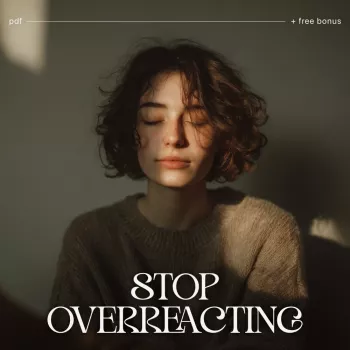
Stop Overreacting: Printable 90-Second Calm Checklist

How to Stop Overreacting with a Simple, Printable Emotional Control Checklist
Overreacting often arrives like a flash flood: a tight chest, racing thoughts, a sharp reply you can’t “unsend,” and then the heavy drop of regret. Emotional control doesn’t mean never feeling anything. It means catching the early signals, creating a brief pause, and choosing a response that actually fits what’s happening. A printable checklist turns that pause into a routine you can repeat—especially when emotions rise faster than your best intentions.
What “Overreacting” Really Looks Like (and Why It Happens Fast)
Overreacting isn’t just “getting mad.” It can look like catastrophizing, assuming someone meant harm, escalating your tone, replaying old grievances, or going silent while resentment builds. These patterns feel automatic because the body’s threat response is fast—often faster than thoughtful decision-making.
Another common driver is emotional stacking: lack of sleep, hunger, caffeine, time pressure, and earlier conflicts can lower your threshold so a small moment feels huge. A realistic goal isn’t to eliminate emotions, but to reduce the intensity and shorten the duration of reactions so you recover faster and communicate with more respect.
For a deeper overview of how emotion regulation works, the American Psychological Association’s resources on emotion regulation provide a helpful foundation.
Spot the Early Warning Signs Before Words and Actions Take Over
The earlier you catch the surge, the easier it is to steer. Many people wait until they’re already arguing, defending, or firing off messages. Instead, learn your cues in three categories:
- Body cues: jaw clenching, heat in your face, shallow breathing, clenched fists, stomach drop, trembling.
- Thought cues: “always/never” language, mind-reading, worst-case predictions, looping on one sentence.
- Behavior cues: interrupting, rapid texting, raising your voice, rushing to “fix” or “prove a point.”
A quick micro-check that works well under pressure: rate intensity from 0–10. Anything 6+ is your signal to run a pause routine before you speak or type.
The 90-Second Pause: A Simple Calm-Response Routine
When intensity is high, your job is to buy time and lower arousal—not to “win” the moment. A practical 90-second routine:
- Name it: label the emotion (“anger,” “embarrassment,” “fear,” “hurt”). Labeling reduces mental chaos.
- Breathe low and slow: inhale 4–6 seconds, exhale 6–8 seconds for 6–10 rounds.
- Unhook from the story: swap “This is a disaster” for “This is uncomfortable and solvable.”
- Choose a response goal: understand, set a boundary, ask a question, or postpone.
- Use a delay phrase: “I want to respond well—give me a minute.”
For more breathing options that calm the nervous system, Cleveland Clinic’s overview of controlled breathing (including box breathing) can be a useful reference.
Quick Calm Response Checklist (Printable Flow)
| Step | What to Do | Example Phrase |
|---|---|---|
| 1) Notice | Identify body/thought signals; rate 0–10 | “I’m at a 7 right now.” |
| 2) Pause | Stop talking/typing; soften posture | “Hold on—one moment.” |
| 3) Regulate | Slow breathing; relax jaw/shoulders | “Breathe out longer than in.” |
| 4) Clarify | State what you need or ask one question | “What did you mean by that?” |
| 5) Choose | Respond with boundary, request, or repair | “I’m not okay with that. Please stop.” |
| 6) Review | Afterwards, note trigger + what helped | “Next time: pause before texting.” |
Mindful Reactions in Real Life: Scripts for High-Trigger Moments
Having a few short scripts reduces the chance you’ll default to defending, accusing, or escalating.
- When criticized: “I’m listening. Can you tell me one specific example so I can understand?”
- When feeling ignored: “When messages go unanswered, I feel dismissed. Can we agree on a time to check in?”
- When conflict escalates: “I’m getting flooded. I need a 20-minute break, then I’ll come back at 7:30.”
- When tempted to send a reactive message: draft it, wait 10 minutes, reread for tone and assumptions, then edit or delete.
- When shame appears: “That didn’t go how I wanted. What’s the next helpful step I can take?”
If stress has been running high overall, consider basic coping supports like sleep, movement, and recovery time. The National Institute of Mental Health offers practical guidance on coping with stress and supporting your mental health.
Rewire the Pattern: Daily Habits That Lower Reactivity
Overreactions become less frequent when your baseline stress is lower. Small daily habits can raise your “reaction threshold” so you have more choice in the moment:
Using a Printable Checklist So the Calm Response Becomes Automatic
Recommended Tools (Digital Downloads)
- How to Stop Overreacting | Emotional Control Checklist | Printable Guide for Calm Responses and Mindful Reactions | Digital Download for Self-Improvement and Emotional Intelligence
- How Essential Oils Can Ease Stress and Anxiety | Relaxation eBook Guide for Natural Stress Relief, Aromatherapy, and Anxiety Support
FAQ
Why do emotions feel so intense so quickly?
The body’s threat response can activate in seconds, especially when stress, fatigue, hunger, or prior conflict has lowered your tolerance. Labeling the emotion and slowing your breathing helps signal safety to the nervous system, which reduces escalation and restores clearer thinking.
What can be said in the moment without making things worse?
Use short phrases that create space and clarity: “I want to respond well—give me a minute,” “What did you mean by that?” or “I’m not okay with that—please stop.” If intensity is high, call a brief timeout and name a specific time to return.
How long does it take to stop overreacting?
Change is usually gradual, and consistency matters more than perfection. Track improvements like lower intensity, shorter recovery time, and fewer regretted responses; using a checklist regularly turns calm choices into a more automatic habit.
Recommended for you


Instagram vs TikTok: Which Platform Wins for Brands?
Jun 28, 2026
Instagram or TikTok: Which Is Better for Your Brand?
Jun 28, 2026












Leave a comment