A stronger lower-body routine does not have to begin with a complicated plan. Squats can be practiced at home with no equipment, and a little structure can make it easier to return to them week after week. Our Smart Squat Training Bundle brings together squat workout guidance, eBooks, and guides for toned legs to help you organize your practice around your goals.
Squats work several major lower-body muscle groups, including the quadriceps, glutes, and hamstrings. They also engage your core as you stabilize your body through the movement. Practiced consistently at an appropriate level, squats can support lower-body strength and help you become more comfortable with a movement used in everyday activities.
Our Smart Squat Training Bundle, listed at $9.99, offers resources for organizing squat-focused workouts. Use it alongside a schedule that fits your life rather than expecting a particular result on a particular timeline.
Consistency does not mean pushing through a hard workout every day. A short session you can repeat comfortably, followed by time to recover, is a more useful starting point than a demanding plan you cannot maintain.
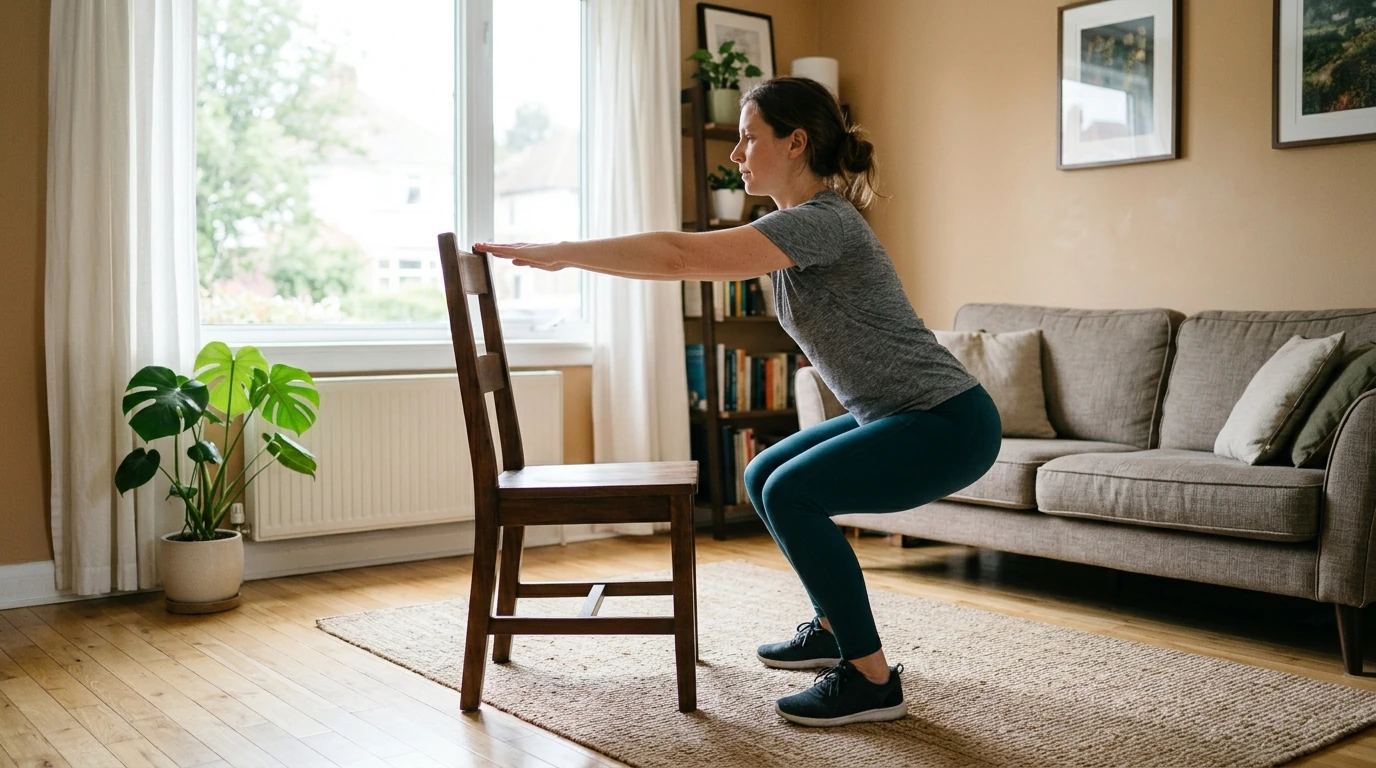
Begin with bodyweight squats so you can focus on how the movement feels. Stand with your feet comfortably apart and your toes pointing in a natural direction. Brace your core, then bend at your hips and knees as you lower yourself. Stand back up with control, keeping your feet grounded throughout the movement.
Lower only as far as feels comfortable while keeping your knees aligned with your feet. You do not need to reach a specific depth to begin practicing. Keep your movements steady instead of rushing through repetitions, and pause between them if you need to reset your balance.
A sturdy chair can provide a helpful depth reference. Place it behind you, lower toward the seat, and stand up again with control. You can touch the chair lightly or sit down before standing if that makes the movement more manageable. Stop if the movement causes pain, and seek qualified advice if pain persists or you are unsure how to proceed.
Two or three nonconsecutive strength sessions per week can be a reasonable starting point for beginners. Leave a recovery day between sessions, and adjust the number of repetitions to your ability. The following schedule is an example from our team, not a description of the bundle’s contents.
| Day | Activity | Approach |
|---|---|---|
| Monday | Bodyweight squats | 1–2 sets of 8–12 comfortable repetitions |
| Tuesday | Recovery | Rest or gentle walking |
| Wednesday | Bodyweight squats | Repeat Monday’s approach |
| Thursday | Recovery | Rest or gentle walking |
| Friday | Bodyweight squats | Repeat if recovered; otherwise rest |
If eight repetitions feel like too many, start with fewer. Rest between sets, and make Friday a recovery day if you are still fatigued. As the movement becomes more comfortable, progression can be as simple as using better control or adding a few repetitions. Consider resistance only when bodyweight squats feel manageable and adding it is appropriate for you.
For broader activity recommendations, the Physical Activity Guidelines for Americans offer guidance on strength and other types of movement. The NHS also provides examples of strength exercises you can explore as you build a balanced routine.
The squat routine, eBooks, and guides named in the Smart Squat Training Bundle can give you a starting point for a more organized workout practice. Choose a level you can manage now, then make a simple note after each session: how many sets you completed, how the movement felt, and whether you maintained control.
Those notes can help you notice progress beyond a number on a scale. You might find that you can squat more smoothly, need less time to settle into position, or can complete an additional comfortable repetition. These are useful observations when deciding whether to stay at your current level or gradually do more.
Squats can strengthen leg muscles, but changes in muscle appearance vary with training, nutrition, and individual factors. “Toned” is not a guaranteed outcome, so focus on a routine that supports your own priorities and feels sustainable.
If you also enjoy setting aside quiet time outside your workouts, our essential oils and relaxation eBook is a separate resource you can explore. It is optional and not needed for a squat routine.
Explore our Smart Squat Training Bundle, choose a manageable starting point, and make room for recovery in your schedule. If you have an injury or health concern, consult a qualified professional before starting a new exercise program.
Two or three nonconsecutive days per week can be a reasonable starting point. Adjust your sessions to your ability and allow more recovery time when needed.
Squats can strengthen your leg muscles, but visible changes vary with training, nutrition, and individual factors. A particular appearance is not guaranteed.
No. Bodyweight squats are a useful way to practice the movement, and you can gradually add resistance when appropriate.






Leave a comment