-
Shop
- Adidas
- Advanced Technologies
- Bathroom
- Best-Sellers
- Car Accessories
- Dating & Social Skills
- Digital Resources
- AI & Technology
- AI Skills
- Beauty
- Budgeting & Saving
- Car Buying & Ownership
- Cozy Feast Collection
- Electronics & Technology
- Emotional Intelligence
- Entrepreneurship & Business Growth
- Financial Education
- Financial Independence
- Financial Mindset & Psychology
- Goal Setting
- Home Styling & Organization
- Kitchen & Recipes
- Leadership
- Mindfulness
- Mindset
- Motivation
- Online Business
- Parenting & Child Development
- Personal Style & Fashion
- Pet Lifestyle & Wellness
- Positive Thinking
- Productivity
- Self Confidence
- Sleep Improvement
- Smart Life with AI
- Stress Management & Relaxation
- Travel Planning
- Wellness
- Yoga & Fitness
- Yoga & Mind-Body Practices
- Easter Products
- Education & Learning
- Family & Parenting
- Fashion
- Alexander McQueen
- Bags
- Bags & Wallets
- Balenciaga
- Belts
- Blazers
- Bottega Veneta
- Brunello Cucinelli
- Burberry
- Chanel
- Chloé
- Dior
- Dolce & Gabbana
- Dresses
- Etro
- Fendi
- Gucci
- Hats & Hair Accessories
- Jewelry
- Jil Sander
- Keychains
- Kiton
- Luggage
- Miu Miu
- Off-White
- Outerwear
- Prada
- Rick Owens
- Saint Laurent
- Shoes
- Socks & Tights
- The Row
- Tom Ford
- Valentino
- Valentino Garavani
- Versace
- Vivienne Westwood
- Watches
- Furniture
- Gadgets
- Health & Beauty
- Health & Wellness
- Home & Garden
- Home Electronics
- Kids & Babies
- Kitchen
- Lighting
- Patio, Lawn & Garden
- Personal Growth
- Pet Care
- Pet Supplies
- Pets
- Smart Home Living Guides
- Sport & Outdoors
- Stress Relief & Relaxation
- TikTok Growth & Monetization Mastery
- Travel
- Wealth
- Wealth Building
- Popular
- Best deals
Pink Cat Wireless Mechanical Keyboard: Cute, Fast, Cozy
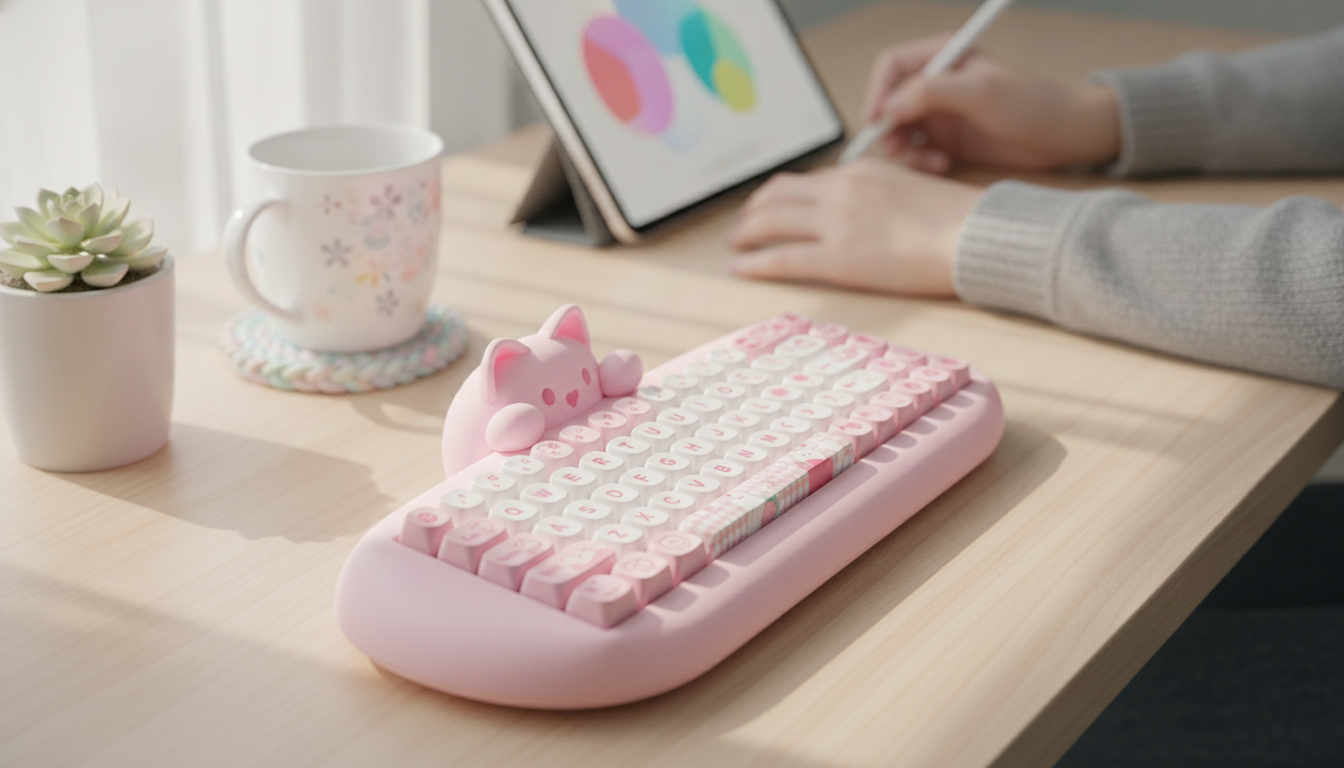
Pink Cute Cat Wireless Mechanical Keyboard for Cozy Setups and Fast Typing
A cat-themed mechanical keyboard can be both a statement piece and a daily driver for work, study, and gaming. The best ones balance charm with fundamentals: reliable wireless performance, a switch feel that fits your typing style, a layout that doesn’t cramp your workflow, and practical details like battery routines and easy cleaning. If your desk leans pastel, kawaii, or “soft and cozy,” a pink cat design can tie everything together—without giving up the crisp feedback that makes mechanical boards so enjoyable.
What makes this cat-themed mechanical keyboard stand out
A pink, cat-inspired keyboard is more than decor when it’s built around real typing comfort. The cat motif and pastel colorway naturally complement warm ambient lighting, soft desk mats, and coordinated accessories, so your setup looks intentional instead of cluttered.
- Cat-inspired pink aesthetic that pairs well with pastel desk setups, kawaii rooms, and cozy workspaces.
- Mechanical key feel for clearer feedback than many membrane keyboards—helpful for long writing, study, and coding sessions.
- Wireless convenience to reduce desk clutter and make it easier to switch between laptop, tablet, and desktop use.
- Gift-friendly personality for students, remote workers, and gamers who want fun styling without losing everyday function.
Quick specs at a glance
Before buying, it helps to confirm a few “fit” details from the product page: layout size, connectivity, switch type, keycap material/profile, lighting behavior, and OS compatibility. If the keyboard will travel, weight and battery expectations matter more; if it lives on your desk, comfort and stabilizer quality tend to matter most.
| Feature | Why it matters | What to look for |
|---|---|---|
| Layout/size | Determines portability and muscle-memory comfort | Full-size, TKL, 75%, 65%, or 60% |
| Wireless mode | Affects latency and stability | 2.4GHz dongle vs Bluetooth; multi-device support if needed |
| Switch type | Controls feel and sound | Linear (smooth), tactile (bump), clicky (loud) |
| Battery/charging | Impacts daily convenience | USB-C charging; auto-sleep; battery indicator |
| Keycaps | Wear and feel over time | Thick PBT for durability; legends that won’t fade quickly |
| Compatibility | Avoids mapping headaches | Windows/macOS support; easy FN-layer access |
Wireless performance and daily use
Wireless is where cute keyboards either shine or frustrate. Bluetooth is convenient for tablets and laptops, while 2.4GHz dongles often feel more immediate for gaming and fast, rhythmic typing. Under the hood, wireless stability depends on distance, nearby interference, and how aggressively the keyboard saves power.
- Pick the right connection for your routine: Bluetooth is great for multi-gadget desks; 2.4GHz tends to feel snappier when you want consistent responsiveness.
- Reduce interference: crowded USB hubs (especially USB 3.0) can introduce noise near a receiver. If drops happen, moving the receiver closer can help.
- Multi-device switching (if supported): handy for laptop + desktop workflows or study setups with a tablet on the side.
- Realistic latency expectations: for everyday typing and casual gaming, modern wireless mechanical boards are typically solid when the signal is clean.
For a deeper technical overview of how Bluetooth devices are standardized, the Bluetooth Core Specification is a helpful reference point.
Typing feel: switches, sound, and comfort
The biggest day-to-day difference comes from switch feel and how the keyboard sounds in your room. Linear switches are smooth and can feel effortless for long sessions. Tactile switches add a noticeable bump that helps many typists avoid accidental presses. Clicky switches are the loudest option and bring a crisp, “typewriter-like” vibe that not everyone around you will appreciate.
- Sound is a whole system: switches, keycaps, and even case shape affect tone; a desk mat can reduce sharp echoes immediately.
- Stabilizers matter: spacebar, enter, and shift feel better with less rattle when stabilizers are well-tuned.
- Ergonomics basics: if the front height feels tall, add a wrist rest and keep your elbows near a 90-degree angle for long sessions.
For general workstation comfort guidance, the CDC’s NIOSH ergonomics resources are a reputable starting point: NIOSH Ergonomics and Musculoskeletal Disorders.
Set it up to match a cute desk aesthetic
A cat-themed pink keyboard looks best when the rest of the desk supports it—without becoming overly busy. Start with a simple foundation, then add one or two matching accents.
Care, cleaning, and keeping it looking new
If you’re curious how keyboards identify themselves to computers and why most work plug-and-play, the USB-IF’s overview is a solid primer: USB HID (Human Interface Device) Overview.
Who this keyboard is best for
Product option available now
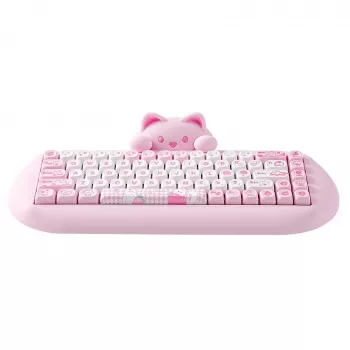
- Pink Cute Cat Wireless Mechanical Keyboard — a themed wireless mechanical option suited for pastel desk setups and everyday typing.
- How Essential Oils Can Ease Stress and Anxiety | Relaxation eBook Guide — a simple add-on for winding down after long study or work sessions.
- Elegant French Burgundy Velvet Long-Sleeve Banquet Dress for Autumn — a polished gift pick for someone who loves curated aesthetics beyond the desk.
FAQ
Is a wireless mechanical keyboard good for gaming?
Yes—many are great for gaming, especially models using a 2.4GHz receiver, which often feels more responsive than Bluetooth. Receiver placement and local interference can affect stability, and highly competitive players may still prefer wired for maximum consistency.
How loud is a mechanical keyboard compared to a normal keyboard?
It varies by switch type: clicky switches are the loudest, tactile switches are moderate, and linear switches are often quieter. Keycap material and your desk surface also change the sound, and a desk mat can noticeably reduce sharp noise.
How do you clean a mechanical keyboard without damaging it?
Power it off first, then use compressed air or a soft brush to remove debris, and wipe the case gently with a lightly damp cloth. If you remove keycaps, clean them separately and let them dry fully before reinstalling—never soak the keyboard body.
Recommended for you
Gen Z’s Top Beauty Brands: What “No. 1” Means
Jul 13, 2026













Leave a comment