-
Shop
- Adidas
- Advanced Technologies
- Bathroom
- Best-Sellers
- Car Accessories
- Dating & Social Skills
- Digital Resources
- AI & Technology
- AI Skills
- Beauty
- Budgeting & Saving
- Car Buying & Ownership
- Cozy Feast Collection
- Electronics & Technology
- Emotional Intelligence
- Entrepreneurship & Business Growth
- Financial Education
- Financial Independence
- Financial Mindset & Psychology
- Goal Setting
- Home Styling & Organization
- Kitchen & Recipes
- Leadership
- Mindfulness
- Mindset
- Motivation
- Online Business
- Parenting & Child Development
- Personal Style & Fashion
- Pet Lifestyle & Wellness
- Positive Thinking
- Productivity
- Self Confidence
- Sleep Improvement
- Smart Life with AI
- Stress Management & Relaxation
- Travel Planning
- Wellness
- Yoga & Fitness
- Yoga & Mind-Body Practices
- Easter Products
- Education & Learning
- Family & Parenting
- Fashion
- Alexander McQueen
- Bags
- Bags & Wallets
- Balenciaga
- Belts
- Blazers
- Bottega Veneta
- Brunello Cucinelli
- Burberry
- Chanel
- Chloé
- Dior
- Dolce & Gabbana
- Dresses
- Etro
- Fendi
- Gucci
- Hats & Hair Accessories
- Jewelry
- Jil Sander
- Keychains
- Kiton
- Luggage
- Miu Miu
- Off-White
- Outerwear
- Prada
- Rick Owens
- Saint Laurent
- Shoes
- Socks & Tights
- The Row
- Tom Ford
- Valentino
- Valentino Garavani
- Versace
- Vivienne Westwood
- Watches
- Furniture
- Gadgets
- Health & Beauty
- Health & Wellness
- Home & Garden
- Home Electronics
- Kids & Babies
- Kitchen
- Lighting
- Patio, Lawn & Garden
- Personal Growth
- Pet Care
- Pet Supplies
- Pets
- Smart Home Living Guides
- Sport & Outdoors
- Stress Relief & Relaxation
- TikTok Growth & Monetization Mastery
- Travel
- Wealth
- Wealth Building
- Popular
- Best deals
Pet Emergency Fund Plan: Costs, Checklist, and Setup

The Pet Medical Emergency Financial Plan: An Essential Checklist for Building Your Pet’s Emergency Fund
Pet emergencies rarely arrive with warning—and the financial stress can be as overwhelming as the medical decision-making. A simple plan turns panic into steps: estimate likely costs, set a realistic savings target, choose where to keep the money, and define how to pay a clinic the same day care is needed. Use the checklist below to build an emergency fund that matches your pet’s needs and your budget, then keep it updated as your pet ages.
Why a dedicated emergency fund changes outcomes
When a pet is in distress, time matters. A dedicated emergency fund helps you move from “How will I pay?” to “What does my pet need right now?” without losing minutes at the front desk.
- Reduces delays in care by making payment decisions faster at the clinic.
- Protects monthly cash flow by preventing large, unplanned withdrawals from rent, groceries, or debt payments.
- Creates clear priorities: what gets paid first, what backup options exist, and when to use them.
- Supports calmer decisions by separating “can this be afforded?” from “what is medically best?”
Real-world urgency is common: poison exposures, sudden vomiting/diarrhea, injuries, breathing trouble, and urinary blockages can all require immediate stabilization. For toxin guidance and risk awareness, the ASPCA Animal Poison Control is a reputable reference point for common hazards and what to do next.
Essential checklist: set the foundation in 30 minutes
Think of this as your “grab-and-go” file. If you’re away from home or stressed, you’ll still have the essentials in one place.
- Identify your pet’s basics: species, age, weight range, existing diagnoses, and current medications.
- List your primary and backup veterinary options: regular vet, nearest 24/7 emergency hospital, and specialty referral center (address, phone, hours).
- Ask clinics about payment policies: deposit requirements, accepted payment methods, and whether they work with financing or third-party payment tools.
- Decide who can authorize care if you’re unreachable (name, phone, and written permission if needed).
- Store medical records digitally: vaccination history, medication list, allergies, and microchip number in an easy-to-access folder.
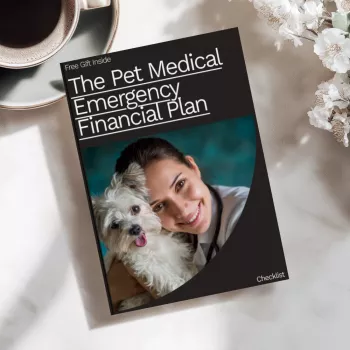
If you want a ready-to-fill version you can print or keep on your phone, The Pet Medical Emergency Financial Plan – Essential Checklist for Building Your Pet’s Emergency Fund is designed to capture these details fast, with a clean format that’s easy to hand to a partner or pet sitter.
Build a realistic savings target using common cost ranges
Emergency care pricing varies by region, clinic type, and complexity of treatment. The goal isn’t to predict the exact bill—it’s to avoid being underfunded for the first critical hours, and to reduce the chance that a bigger event becomes a financial crisis.
| Pet profile | Rapid-access goal (same day) | Full emergency fund goal | Examples of scenarios to plan for |
|---|---|---|---|
| Cat (adult, indoor) | $300–$600 | $1,000–$2,000 | Blocked urinary tract (male), toxin exposure, dental abscess, sudden lethargy needing labs |
| Small dog (<25 lb) | $400–$800 | $1,500–$3,000 | GI upset with dehydration, foreign body concerns, pancreatitis workup, laceration repair |
| Medium dog (25–60 lb) | $500–$1,000 | $2,000–$4,000 | X-rays for limping, bite wounds, hospitalization for vomiting/diarrhea, allergic reaction treatment |
| Large dog (>60 lb) | $600–$1,200 | $3,000–$6,000 | Bloat risk assessment, orthopedic injury imaging, surgery/anesthesia, longer hospital stays |
| Multi-pet household (2+ pets) | $800–$1,500 | $4,000–$8,000 | Two emergencies close together, contagious illness diagnostics, overlapping urgent visits |
For broader context on veterinary care trends and consumer data, the American Veterinary Medical Association (AVMA) reports and statistics are a useful starting point when comparing how costs and care patterns shift over time.
Funding strategy: make saving automatic and frictionless
Where to keep the money and how to access it fast
If you tend to freeze under pressure, pairing your money plan with a calming routine can help you follow through. Some owners keep a short, practical stress toolkit alongside their checklist; for example, How Essential Oils Can Ease Stress and Anxiety | Relaxation eBook Guide for Natural Stress Relief, Aromatherapy, and Anxiety Support can be used to build a simple wind-down habit for you (not your pet) during intense situations.
Combine your fund with insurance and financing—without relying on them
Keep the plan current: a simple maintenance routine
Printable checklist option for faster setup
For a fill-in template you can store digitally or print, use The Pet Medical Emergency Financial Plan – Essential Checklist for Building Your Pet’s Emergency Fund as your “single source of truth” for money, contacts, and authorization details.
FAQ
How much should be in a pet emergency fund to start?
A good first milestone is a rapid-access amount in the few-hundred-dollar range to cover an exam, basic diagnostics, and initial stabilization. After that, scale toward a larger goal based on your pet’s size, age, and local emergency pricing.
Should the emergency fund be separate from regular savings?
Yes—separating it adds clarity and reduces accidental spending, which makes same-day decisions easier at the clinic. A dedicated savings account or labeled “bucket” with fast transfer access usually works well.
If there is pet insurance, is an emergency fund still needed?
Yes, because many clinics require payment up front while insurers reimburse later. Your fund also covers deductibles, co-insurance, exclusions, and any timing gaps while claims are processed.
Recommended for you


Stress-Free Travel With Little Kids: A Simple Plan
Jul 20, 2026













Leave a comment