-
Shop
- Adidas
- Advanced Technologies
- Bathroom
- Best-Sellers
- Car Accessories
- Dating & Social Skills
- Digital Resources
- AI & Technology
- AI Skills
- Beauty
- Budgeting & Saving
- Car Buying & Ownership
- Cozy Feast Collection
- Electronics & Technology
- Emotional Intelligence
- Entrepreneurship & Business Growth
- Financial Education
- Financial Independence
- Financial Mindset & Psychology
- Goal Setting
- Home Styling & Organization
- Kitchen & Recipes
- Leadership
- Mindfulness
- Mindset
- Motivation
- Online Business
- Parenting & Child Development
- Personal Style & Fashion
- Pet Lifestyle & Wellness
- Positive Thinking
- Productivity
- Self Confidence
- Sleep Improvement
- Smart Life with AI
- Stress Management & Relaxation
- Travel Planning
- Wellness
- Yoga & Fitness
- Yoga & Mind-Body Practices
- Easter Products
- Education & Learning
- Family & Parenting
- Fashion
- Alexander McQueen
- Bags
- Bags & Wallets
- Balenciaga
- Belts
- Blazers
- Bottega Veneta
- Brunello Cucinelli
- Burberry
- Chanel
- Chloé
- Dior
- Dolce & Gabbana
- Dresses
- Etro
- Fendi
- Gucci
- Hats & Hair Accessories
- Jewelry
- Jil Sander
- Keychains
- Kiton
- Luggage
- Miu Miu
- Off-White
- Outerwear
- Prada
- Rick Owens
- Saint Laurent
- Shoes
- Socks & Tights
- The Row
- Tom Ford
- Valentino
- Valentino Garavani
- Versace
- Vivienne Westwood
- Watches
- Furniture
- Gadgets
- Health & Beauty
- Health & Wellness
- Home & Garden
- Home Electronics
- Kids & Babies
- Kitchen
- Lighting
- Patio, Lawn & Garden
- Personal Growth
- Pet Care
- Pet Supplies
- Pets
- Smart Home Living Guides
- Sport & Outdoors
- Stress Relief & Relaxation
- TikTok Growth & Monetization Mastery
- Travel
- Wealth
- Wealth Building
- Popular
- Best deals
Leadership Presence Checklist for Boardroom and Zoom
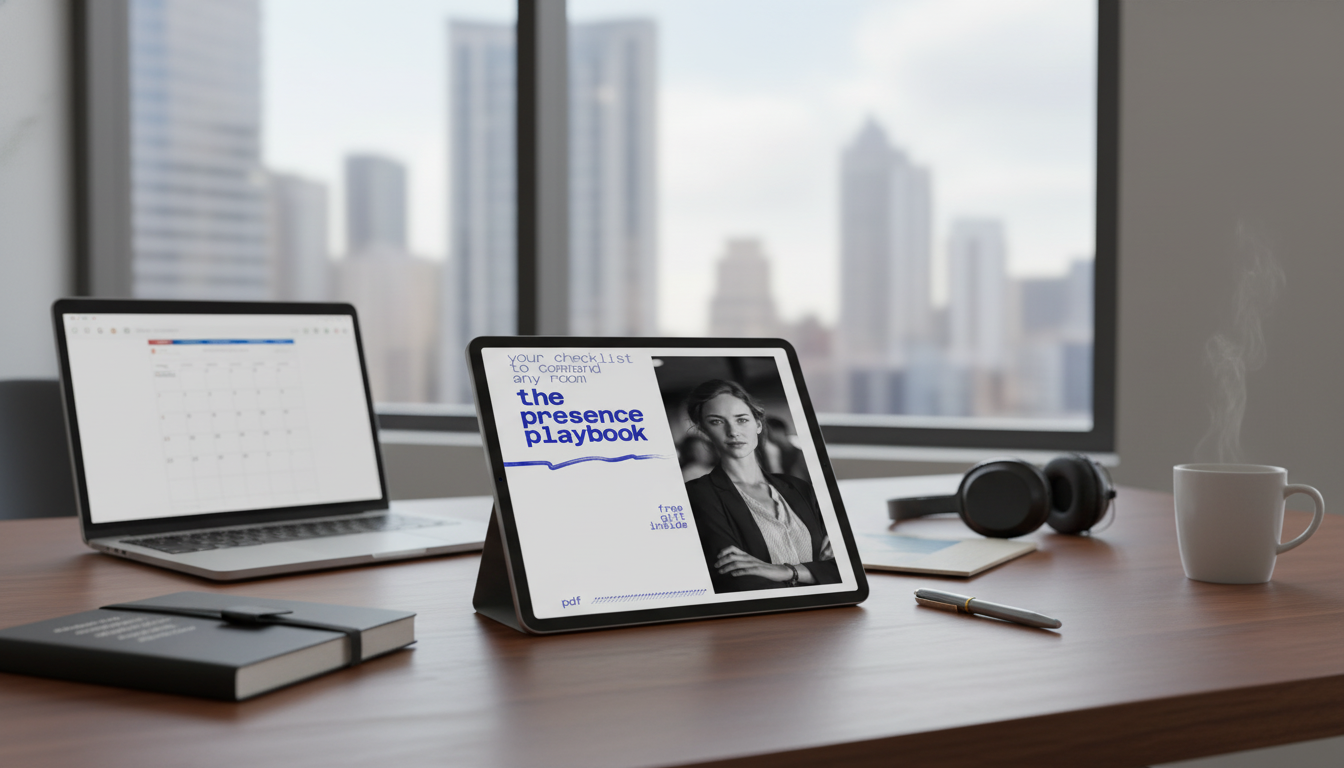
The Presence Playbook: A Checklist to Command Any Room—Boardrooms, Zoom Calls, and High-Stakes Moments
Leadership presence isn’t a personality trait reserved for a few; it’s a set of behaviors that can be practiced and repeated under pressure. When presence is strong, the way a message lands matches the level of responsibility behind it—especially when stakes are high, time is short, and attention is fragmented.
Below is a practical playbook that breaks presence into clear checkpoints for preparation, delivery, and recovery, so it becomes repeatable in boardrooms, Zoom calls, and executive updates.
What “Presence” Looks Like When It’s Working
Presence is easiest to improve when it’s defined in observable outcomes. In real meetings, it tends to show up as:
- Clarity: the point is obvious within the first minute, and the listener knows what matters most.
- Composure: pace, breathing, and tone stay steady even during challenge or disagreement.
- Credibility: statements are supported with evidence, constraints, and decision logic—not vibes.
- Connection: the room feels seen; questions get answered directly; tension gets named without drama.
- Control of the close: the end includes a decision, a next step, or a clear takeaway—no trailing off.
This is also why presence improves quickly when stress management improves. Stress can change breathing, voice tone, and cognitive flexibility—factors that directly affect how “in control” you sound. For a deeper look at how stress affects the body, see the American Psychological Association’s overview.
Pre-Meeting Checklist: Set the Conditions for Authority
Most “presence problems” are actually preparation problems. Use this checklist to create authority before anyone joins the room.
- Decide the outcome: one sentence that states the decision needed or the change sought.
- Map the room: identify decision-makers, influencers, skeptics, and anyone who could derail the agenda.
- Build a 3-part message: context (why now), recommendation (what), rationale (why it works).
- Prepare the “hard questions”: budget, risk, timeline, dependencies, and tradeoffs—answer in 20 seconds each.
- Choose a power constraint: limit slides or talking points so the delivery stays tight under pressure.
- Prime your body: hydration, a brief walk, and 60 seconds of slower breathing to reduce vocal strain and rushed pacing.
60-Second Prep Before You Join
| Moment | What to do | Why it works |
|---|---|---|
| 30 seconds before | Stand tall, drop shoulders, inhale for 4 and exhale for 6 twice | Reduces stress signals that can thin the voice and speed up speech |
| Right before speaking | Open with the outcome sentence, then pause | Signals control and gives listeners a clear frame |
| After the first question | Repeat the question in a shorter form, then answer | Buys time, shows listening, and prevents rambling |
If having a printable structure helps you stay consistent, The Presence Playbook: Your Checklist to Command Any Room is designed to be used exactly like a pre-meeting and in-meeting routine—tight enough to follow under pressure.
In the Room: Body Language and Voice That Carry Weight
In-person presence is less about looking “powerful” and more about reducing nervous signals that distract from the message. Aim for calm, deliberate, and specific.
- Posture: tall spine, relaxed shoulders, feet grounded; avoid rocking or shifting every sentence.
- Hands: use slower, deliberate gestures; keep them visible and purposeful rather than busy or hidden.
- Eye contact: anchor on one person per key point; sweep the room for inclusion without “searching for approval.”
- Vocal pace: aim slightly slower than comfortable; pause after headlines and before numbers.
- Tone: end key statements with a downward inflection to avoid sounding like a question.
- Silence: let a point land; don’t fill every gap—controlled pauses read as confidence.
For additional perspective on what executive presence looks like in practice, explore guidance from Harvard Business Review on developing executive presence and communicating with authority.
On Zoom and Hybrid Calls: Presence Without the Room’s Energy
Video calls remove many “credibility cues” people rely on (physical presence, room energy, side conversations). The solution is to make your signal clearer than your noise.
For many professionals, Zoom presence improves fast when social friction drops in everyday interactions. If networking, small talk, or group dynamics are part of the pressure, Social Confidence in Any Situation supports the same outcome: calmer delivery, clearer responses, fewer “nervous fillers.”
Handling Pushback Without Losing the Floor
High-Stakes Moments: Presentations, Negotiations, and Executive Updates
High-stakes communication is also a learnable skill set. For research-backed insight into communicating under pressure, see thought leadership from Stanford Graduate School of Business.
How to Use The Presence Playbook as a Repeatable System
To reinforce consistency beyond meetings—especially when motivation dips between big moments—Motivation Magic: Your Easy-Do Checklist to Spark Drive & Get Stuff Done pairs well with a presence practice plan by keeping follow-through simple and trackable.
FAQ
How can leadership presence improve quickly without changing personality?
Focus on behaviors you can repeat: open with the outcome, slow your pace slightly, use pauses after headlines, and close with a clear ask. Improve fastest by practicing one behavior per week until it becomes automatic.
What’s the simplest way to sound more confident on Zoom?
Prioritize audio quality, look at the lens for key points, reduce fidgeting, and add a deliberate pause after your opening sentence. Those small moves create a calm signal that reads as control.
How should pushback be handled in a meeting with executives?
Acknowledge the concern, answer with a concise fact-based structure, and bridge back to the decision. Avoid over-explaining, then confirm alignment on the next step and owner.
Recommended for you


60-Second Grounding Skills to Stay Present & Calm
May 15, 2026













Leave a comment