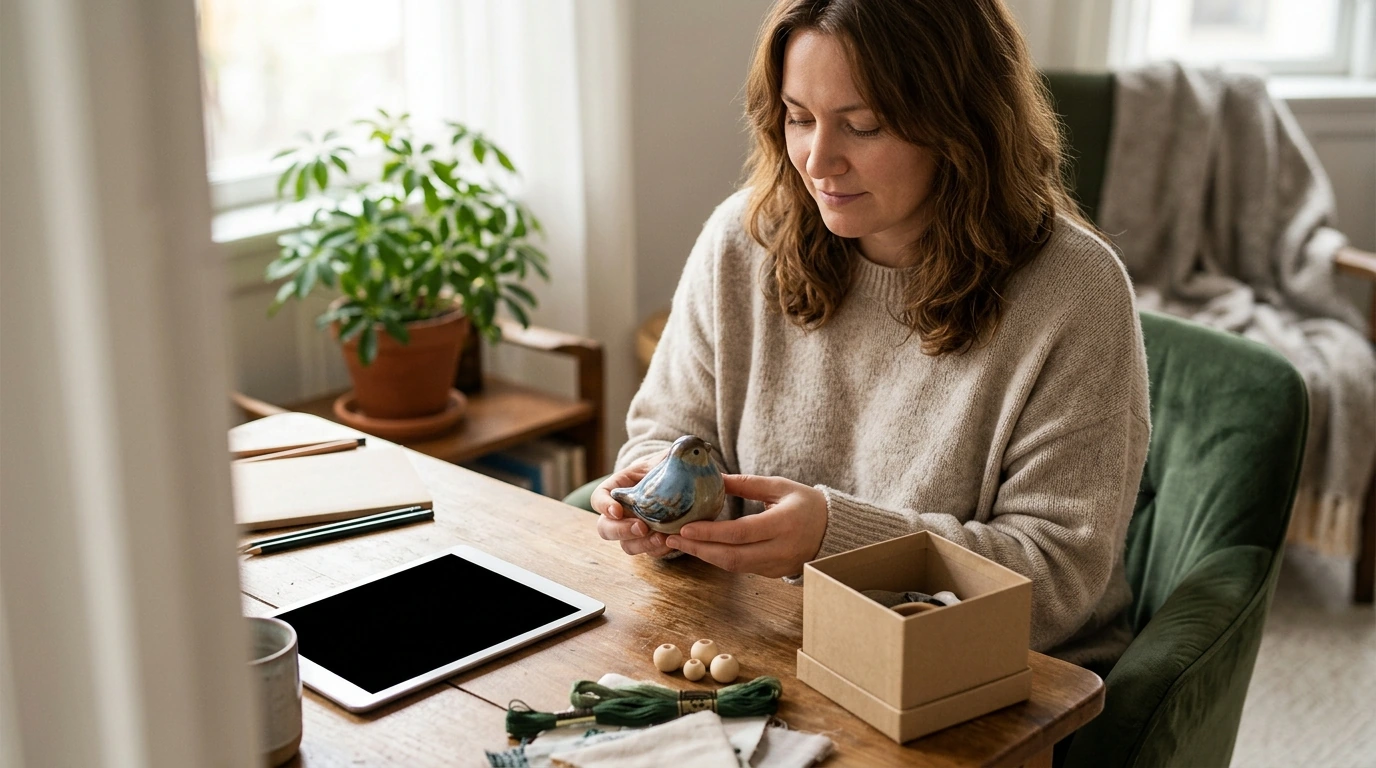
Clutter can be more than a collection of things taking up space. A gift may remind you of someone you love; an unfinished project may carry hopes you had for yourself. Even an ordinary purchase can bring up regret about money or a decision you wish you had made differently.
We can make room without turning those feelings into a judgment about ourselves. A gentle approach gives you permission to move slowly, keep what matters, and make decisions that suit your life now. If you would like extra support, our digital guide offers a self-compassionate perspective on the process.
Objects often hold stories. You may feel obligated to keep a gift because someone chose it for you, even if you do not use it. A box of supplies might represent a hobby you intended to try, while a sentimental item may seem inseparable from the person or time it brings to mind.
Those feelings are understandable, but the amount of clutter in your home is not a measure of your character or worth. Your belongings reflect circumstances, choices, and experiences—not a verdict on who you are.
Before deciding what to keep, pause and notice what comes up. Are you feeling affection, frustration, sadness, or pressure? You do not have to solve the feeling immediately. Naming it can help you separate the object in front of you from the expectations attached to it.
Choose one manageable area: a kitchen drawer, a corner of a desk, or a small surface you use every day. Starting with a limited space makes it easier to see what you have without taking on the whole room.
Give yourself a short session, perhaps ten or fifteen minutes, and stop before the task becomes overwhelming. You might begin by removing obvious trash, returning a few misplaced items, or grouping similar things together. Any of those steps counts, even if nothing leaves your home.
For items you are unsure about, create a designated “decide later” spot. A small box or a section of a shelf can hold those choices until you have more time or emotional energy. You can return to them when you feel ready rather than forcing a decision today.
A useful question does not push you toward one answer. It helps you acknowledge what an item means while considering what you need now. You might ask, “Does this support the way I use this space?” or “What would make this easier to enjoy or care for?”
With a gift, you can appreciate the giver’s thoughtfulness without treating the object as a lifelong obligation. If it helps, silently thank the gift for what it represented before deciding whether to keep it, pass it on, or set it aside. Keeping it is a valid choice, too.
| When an item brings up… | Try asking… | A possible next step |
|---|---|---|
| Guilt about a gift | Can I appreciate the thought without keeping the item? | Keep, pass on, or set it aside for now. |
| Regret about money spent | Would keeping it serve me now? | Consider using, donating, or letting it go. |
| Sentimental attachment | What memory matters most to me? | Keep the object or preserve the memory another way. |
For a purchase you regret, remember that keeping it cannot undo the expense. It may still be useful, or it may be ready for a new home. For a meaningful object, you might keep it, take a photo, or write down the memory associated with it. Choose the option that feels right for you, not the one that sounds most efficient.
If guilt tends to make decluttering feel heavier, our The Gentle Way to Declutter Without Shame digital guide is a resource centered on decluttering, emotional healing, and self-compassion. It is for readers who want to consider the feelings surrounding their belongings as well as the objects themselves. The guide is listed at $5.99 USD.
Our team also offers How Essential Oils Can Ease Stress and Anxiety, a separate relaxation eBook guide for readers interested in aromatherapy. You do not need another product or a special routine to begin decluttering; a small amount of time and a kind approach are enough.
Notice the changes that make daily life easier. Perhaps you can open a drawer without rearranging its contents, find your keys more quickly, or use a clear spot to prepare a meal. These practical shifts matter, even if other areas remain untouched.
When a decision feels difficult, leave it for another day. You can return with a fresh perspective, ask someone you trust to sit with you, or decide that the item deserves a place in your home after all. The goal is a space that supports you, not a perfect result.
If clutter or the thought of letting things go causes significant distress, consider seeking support from a qualified mental health professional. Mind’s information on hoarding offers further context, and the NHS guide to raising low self-esteem shares ideas for challenging unkind thoughts about yourself.
Start by separating your worth from your belongings. Notice what the guilt is telling you, ask yourself a compassionate question, and make one small decision at a time.
Keep them for now or place them in a designated space to revisit later. There is no need to rush a meaningful decision.
It is a digital guide for people interested in approaching clutter with self-compassion and addressing feelings of guilt.





Leave a comment