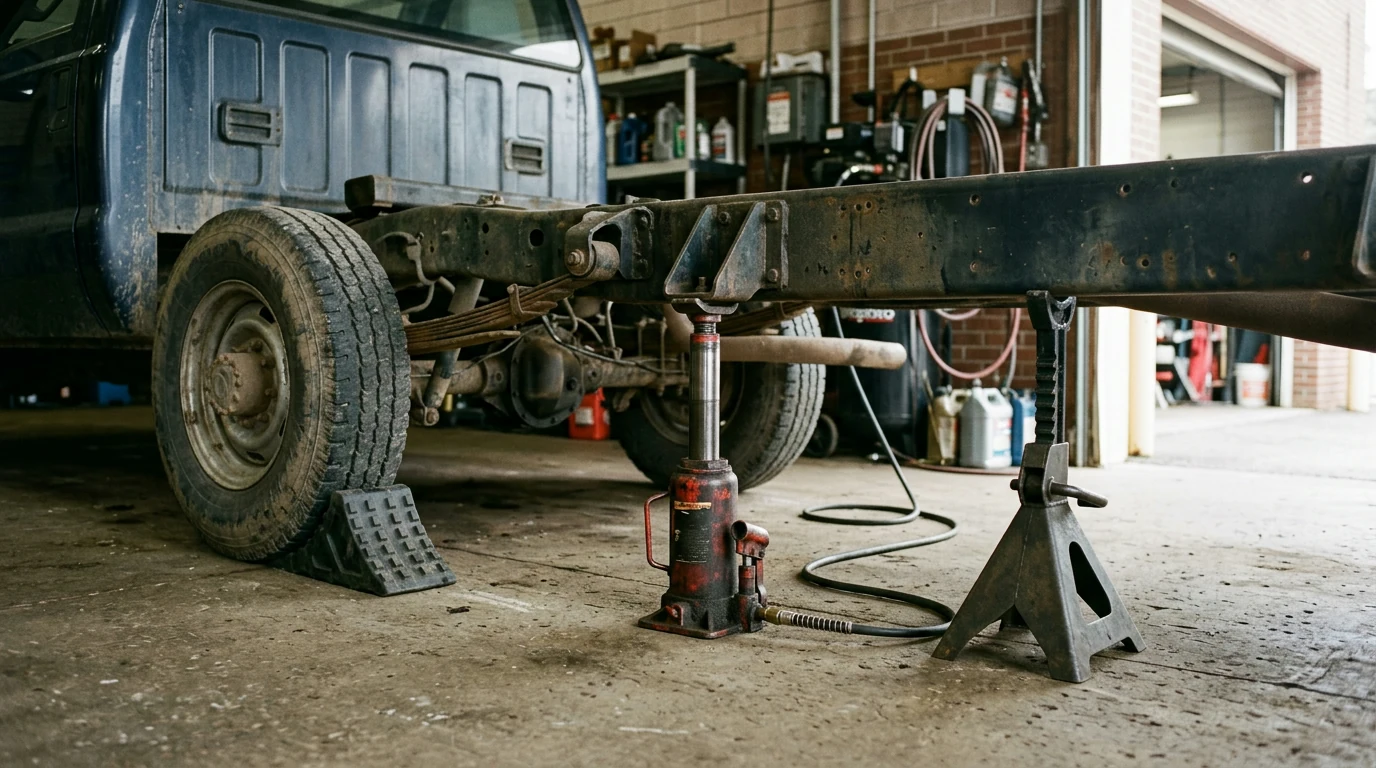
A 20-ton air hydraulic bottle jack gives you a heavy-duty lifting option when a job calls for more than a light-duty jack. But the number on the label is only the starting point. Before you raise a vehicle or other load, you need to know what the jack will support, whether it fits the lifting location, and how you will secure the load once it is raised.
Our team recommends planning the entire lift before placing the jack. That includes finding an approved lifting point, confirming the available air supply, and having suitable supports ready.
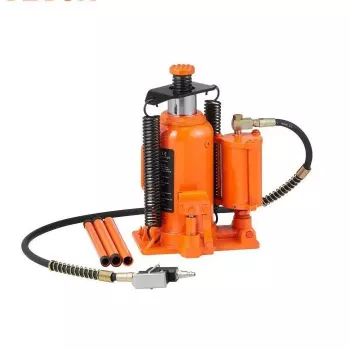
Our 20 Ton Air Hydraulic Bottle Jack has a stated lifting capacity of 20 tons. As an air hydraulic bottle jack, it uses a hydraulic lifting mechanism with pneumatic operation. That capacity makes it an option for substantial loads, but it does not mean every vehicle, axle, or lifting point is suitable.
The load borne at the jack’s contact point matters, as do the jack’s position and the vehicle manufacturer’s instructions. A vehicle may also have clearance or support requirements that make a particular jack unsuitable, even when its rated capacity is sufficient. Visit the product listing for current price and availability.
Start by determining the load at the intended lifting point. It must be within the jack’s rated capacity, with a suitable safety margin. Do not assume that the load is evenly distributed across the vehicle; equipment, cargo, and vehicle design can affect weight distribution. If you cannot establish a safe load or lifting arrangement, get qualified assistance before proceeding.
Next, consult the vehicle instructions for approved lifting and support points. Measure the space beneath the intended point and confirm that the jack fits with enough room to position it correctly. Also check that its available lift height is sufficient to place the intended support without extending or improvising beyond the manufacturer’s instructions.
For pneumatic operation, confirm that your air supply meets the jack manufacturer’s requirements and that the connection is compatible. Plan for the equipment you need before the vehicle is raised, rather than discovering a mismatch midway through the job.
| Check | What to confirm |
|---|---|
| Load | The load at the lifting point is within the jack’s rated capacity. |
| Clearance | The jack fits beneath the approved lifting point. |
| Lift height | The jack can raise the load sufficiently for the intended support. |
| Air supply | The available supply meets the jack’s requirements. |
| Ground | The lifting surface is firm and level. |
Follow both the vehicle and jack instructions for each lift. Park securely on a firm, level surface, set the parking brake as directed, and chock the wheels as appropriate. Clear the area of people and obstacles, then position the jack squarely at an approved lifting point. Never use a makeshift contact point simply because it is easier to reach.
Raise the load steadily and watch for movement, tilting, or other signs of instability. If anything shifts or the jack does not remain properly seated, stop and lower the load according to the manufacturer’s procedure. Reassess the setup before trying again.
Never work beneath a vehicle supported only by a jack. Place appropriately rated jack stands at approved support points before going underneath. Lower the vehicle onto the stands as directed and confirm that it is stable before starting work. Choose stands and support locations suitable for the load; the jack’s capacity does not replace the need for rated supports.
When the work is complete, make sure tools and people are clear. Follow the jack and vehicle instructions to raise the vehicle enough to remove the stands, then lower it steadily. Keep everyone clear throughout the lowering process. The OSHA requirements for jacks provide additional guidance on safe use and inspection.
Inspect the jack before each use for damage, hydraulic leaks, or other signs of malfunction. If it is unsafe or does not operate properly, remove it from service rather than relying on it for another lift. Follow the manufacturer’s directions for maintenance, hydraulic fluid, and storage; using the wrong fluid or an unauthorized repair can create a safety problem.
Keep the jack and its working area clean, and store it as instructed so it is ready for inspection before the next job. You can also review NHTSA’s vehicle safety resources alongside your vehicle’s own instructions.
If you are deciding whether to repair or part with an older vehicle, our car donation checklist offers another resource to consider. For your next lifting job, view our 20 Ton Air Hydraulic Bottle Jack listing.
No. Check the load at the lifting point, approved jack locations, available clearance, and required lift height as well as the jack’s rated capacity.
No. Place appropriately rated jack stands at approved support points and confirm the vehicle is stable before working underneath.
Check the manufacturer’s air supply requirements and confirm that your available supply and connection are compatible before use.




Leave a comment