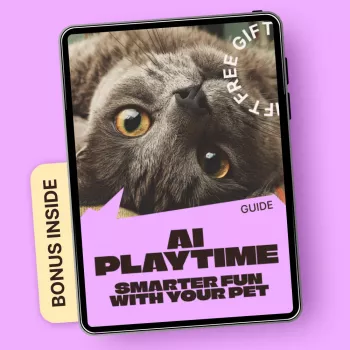
Some pets are ready to chase a toy at a moment’s notice, while others would rather investigate a scent or enjoy a quiet interaction. AI Playtime offers a starting point for finding fresh ways to spend time together, with your pet’s preferences, comfort, and energy level guiding the plan.
A personalized activity doesn’t have to be elaborate. A few minutes of supervised exploration can be a satisfying change of pace when it suits your pet. Our team recommends starting with what you already know about your companion, then trying new ideas one small step at a time.
Your pet’s species, age, mobility, attention span, and favorite activities all matter when you’re choosing a game. A young dog who enjoys moving toys may welcome a short chase, while an older pet with mobility limitations may prefer exploring treats placed within easy reach. A cat might enjoy stalking a wand toy, but another may be more interested in a quiet search.
Think about how your pet usually responds to novelty, too. Some animals investigate immediately; others need time and space to approach. Letting your pet make that choice can make an activity more comfortable for both of you.
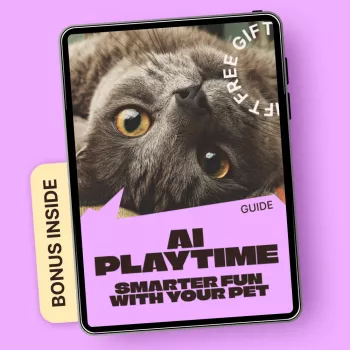
Our AI Playtime guide is a starting point for exploring personalized pet engagement. Use it alongside your own observations rather than assuming that every activity idea will fit every animal.
Before choosing a game, make a few notes about what your pet likes. Do they seek out scents, follow moving objects, or prefer gentle interaction? Notice when they have energy and which activities they avoid. An activity that works well one day may not be appealing when your pet is tired or distracted.
Consider your surroundings as well. A small room may be better suited to a slow search than a chase. Clear away hazards, choose materials appropriate for your pet’s species, and plan to supervise. If your veterinarian has given you advice about exercise, food, or mobility, use it to shape your choices.
| Pet preference or need | Activity idea | What to watch for |
|---|---|---|
| Enjoys using their nose | Hide a few suitable treats for a supervised search | Keep portions modest and hiding spots accessible |
| Likes chasing moving objects | Try a short, species-appropriate toy chase | Pause if breathing becomes heavy or interest fades |
| Prefers calmer interaction | Offer a gentle treat-search or quiet toy exploration | Let the pet approach or leave at their own pace |
For a treat search, start with an easy-to-find piece so your pet can understand the game without frustration. If you use food rewards, account for them in your pet’s daily intake. For more enrichment ideas, see the ASPCA’s dog enrichment guidance and International Cat Care’s advice on playing with cats.
An AI tool can help you brainstorm when your usual games feel repetitive. Give it useful context: your pet’s species and age, what they enjoy, the space available, and how much time you have. You can also mention relevant limitations, while keeping veterinary guidance at the center of any health-related decision.
For example, you could ask: “Suggest three supervised indoor activities for a pet that enjoys scent games and has limited space.” Add your pet’s species and age to make the suggestions more relevant, and describe any materials you already have available.
Review each idea before trying it. Would your pet be able to reach the materials safely? Is the toy appropriate for their species? Is there enough room to move without slipping or bumping into furniture? Skip suggestions that don’t fit. If you have concerns about pain, health, or mobility, consult your veterinarian before introducing a new activity.
Start with a brief session and watch whether your pet chooses to engage. You don’t need to finish a game simply because you set it up. If your pet walks away, seems uncomfortable, becomes tired, or loses interest, stop or offer a break. You can try a different activity later.
A simple record can help you spot patterns. Note the activity, time of day, and whether your pet approached willingly or chose to leave. Over time, you may discover that a morning scent search is more appealing than an evening chase, or that shorter sessions work best.
Rotate a few suitable favorites rather than introducing something new every day. Familiar games can be enjoyable, and small changes—such as placing a treat in a different accessible spot—can add variety without making an activity overwhelming.
If you’d like help planning personalized pet engagement, explore our AI Playtime bonding activity planner. The guide is listed at $9.99 USD and is in stock; visit the product page for current details.
For your own downtime after play, we also offer our relaxation eBook guide. Keep essential oils away from pets, and consult your veterinarian before using them around animals.
AI can suggest ideas, but you should judge whether each activity suits your individual pet. Ask your veterinarian for guidance when health or mobility is a concern.
Stop or switch to a different activity and give your pet a break. Note which games they choose to engage with so you can plan future sessions.
The guide is listed at $9.99 USD. Check the product page for current pricing and availability.






Leave a comment