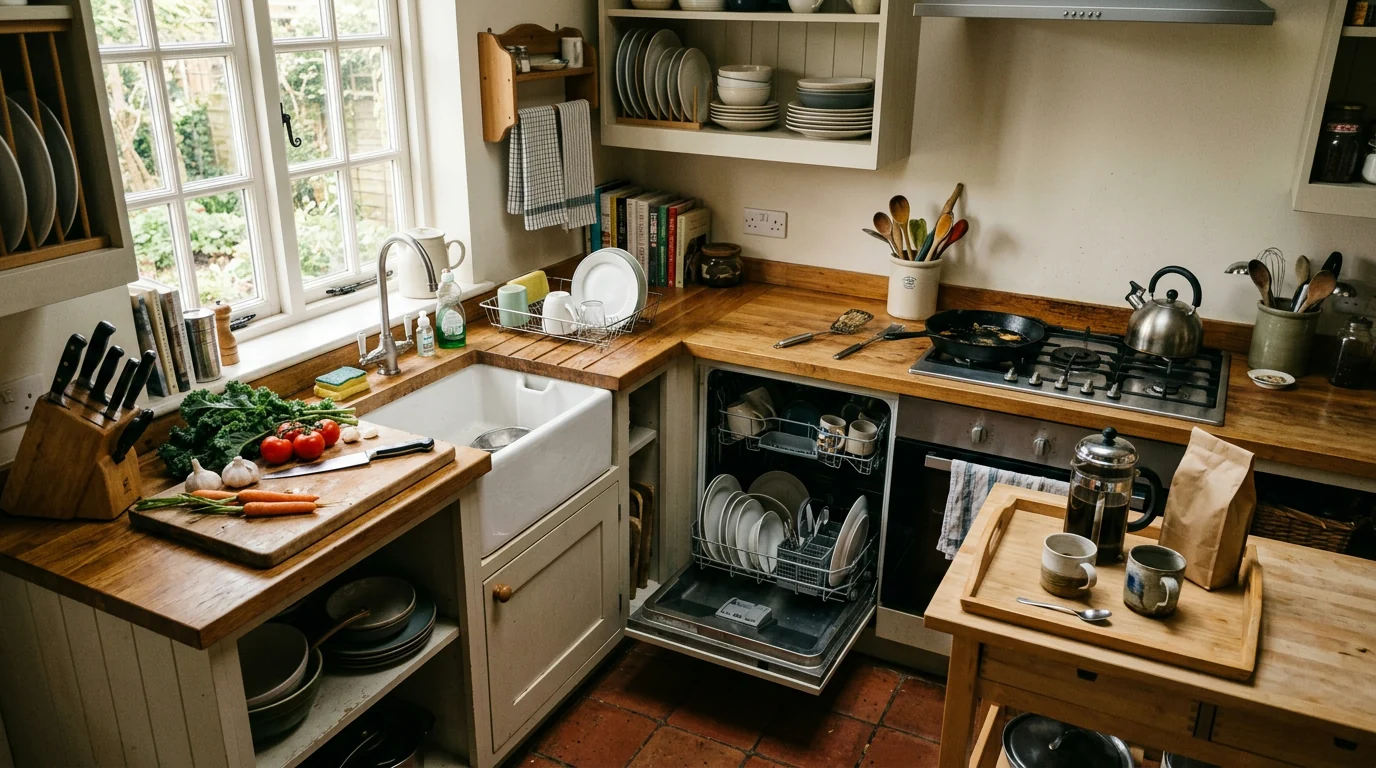
A well-organized kitchen starts with keeping everyday items close to where you use them. You don’t need a renovation or a matching set of containers to make that happen. A few practical zones can reduce unnecessary trips, free up counter space, and make familiar tasks feel easier.
Start with your routines, then adjust your storage around them. Our printable guide can support the planning process as you decide what belongs where.
Before moving anything, notice how you use the room over a few typical days. Where do you unload groceries, prepare vegetables, cook dinner, and wash dishes? Pay attention to the spots where you repeatedly cross the kitchen for a tool or shuffle clutter aside to find a work surface.
Make a short list of the activities that happen most often. You might need a dedicated coffee spot, a convenient place to pack lunches, or easy access to baking supplies. Your zones should reflect your household’s habits rather than follow a fixed layout.
Also note what is already working. If your plates are easy to reach from both the dishwasher and dining table, there may be no reason to move them.
Group tools and supplies by activity, with frequently used items close to their point of use. The planner below offers a starting point; your refrigerator, cabinets, and available counter space will help determine the best arrangement.
| Zone | Useful location | Items to keep nearby |
|---|---|---|
| Food storage | Near the refrigerator or pantry | Shelf-stable foods and storage containers |
| Preparation | Clear counter space near the sink | Cutting boards, knives, and mixing bowls |
| Cooking | Near the stove or oven | Pans, utensils, and oven mitts |
| Cleaning | Near the sink or dishwasher | Dish soap, cloths, and cleaning supplies |
| Serving | Near the dining area when practical | Plates, glasses, and cutlery |
Zones can overlap. A drawer between the prep counter and stove might hold tools used for both chopping and cooking. Keep raw food preparation separate from ready-to-eat food, however, and wash surfaces and utensils between tasks. FoodSafety.gov’s four steps to food safety offer guidance on cleaning and preventing cross-contamination.
Give your most-used tools the easiest-to-reach spots. Place everyday knives and cutting boards near your prep surface, and keep the pan you use most often where you can retrieve it without moving a stack of bakeware. Higher shelves and distant cabinets are better suited to occasional items.
Try to preserve one clear stretch of counter for preparation. Leave enough room to move comfortably between the sink, counter, and cooking area, including space to set down a hot pan safely. If an appliance occupies your only useful prep surface but rarely gets used, consider storing it elsewhere.
Keep cleaning chemicals separate from food and out of children’s reach. For more household storage precautions, see Poison Help’s prevention tips.
In a compact kitchen, a zone can be a drawer, a shelf, or a temporary setup rather than a permanent counter. Use the same surface for preparing lunch and serving dinner, then reset it between tasks. A small tray can hold frequently used supplies together and make them easy to move.
Choose organizers only when they address a specific problem. A drawer divider can stop utensils from tangling, while a shelf riser can make stacked dishes easier to reach. Labeled containers may help your household return pantry staples to the right place. Measure the available space before buying anything.
Keep the busiest areas reserved for tools you use regularly. A seasonal roasting pan can live farther away, leaving room near the stove for your everyday cookware.
Our Designing Functional Kitchen Zones with Ease printable guide is a home organization and kitchen design guide available as a digital download. It’s listed at $6.99; visit the product page for current purchase details.
Use it alongside a simple assessment of your kitchen: list your main activities, identify available drawers and shelves, and note the tools you reach for most. Then decide which items need to move and which can stay put. You can make changes one zone at a time instead of emptying the entire room.
If you’re also setting aside time to unwind after organizing, our essential oils relaxation eBook guide is a separate digital resource to explore.
A simple daily reset helps your layout stay useful: return tools to their zones, put away clean dishes, and clear the prep counter. It doesn’t have to be perfect; the goal is to make the next meal easier to start.
After a few weeks, notice which items consistently land somewhere other than their assigned home. That may be a sign they belong closer to where you use them. Our team recommends revisiting your setup when your routines, equipment, or storage needs change. A good zone is one you can comfortably maintain.
Common zones include food storage, preparation, cooking, cleaning, and serving. You can adapt or combine them to suit your household and space.
Group tools by task, share counter surfaces between activities, and keep frequently used items accessible. Reset shared areas between uses.
No. Our kitchen zone guide is a printable digital download.






Leave a comment