-
Shop
- Adidas
- Advanced Technologies
- Bathroom
- Best-Sellers
- Car Accessories
- Dating & Social Skills
- Digital Resources
- AI & Technology
- AI Skills
- Beauty
- Budgeting & Saving
- Car Buying & Ownership
- Cozy Feast Collection
- Electronics & Technology
- Emotional Intelligence
- Entrepreneurship & Business Growth
- Financial Education
- Financial Independence
- Financial Mindset & Psychology
- Goal Setting
- Home Styling & Organization
- Kitchen & Recipes
- Leadership
- Mindfulness
- Mindset
- Motivation
- Online Business
- Parenting & Child Development
- Personal Style & Fashion
- Pet Lifestyle & Wellness
- Positive Thinking
- Productivity
- Self Confidence
- Sleep Improvement
- Smart Life with AI
- Stress Management & Relaxation
- Travel Planning
- Wellness
- Yoga & Fitness
- Yoga & Mind-Body Practices
- Easter Products
- Education & Learning
- Family & Parenting
- Fashion
- Alexander McQueen
- Bags
- Bags & Wallets
- Balenciaga
- Belts
- Blazers
- Bottega Veneta
- Brunello Cucinelli
- Burberry
- Chanel
- Chloé
- Dior
- Dolce & Gabbana
- Dresses
- Etro
- Fendi
- Gucci
- Hats & Hair Accessories
- Jewelry
- Jil Sander
- Keychains
- Kiton
- Luggage
- Miu Miu
- Off-White
- Outerwear
- Prada
- Rick Owens
- Saint Laurent
- Shoes
- Socks & Tights
- The Row
- Tom Ford
- Valentino
- Valentino Garavani
- Versace
- Vivienne Westwood
- Watches
- Furniture
- Gadgets
- Health & Beauty
- Health & Wellness
- Home & Garden
- Home Electronics
- Kids & Babies
- Kitchen
- Lighting
- Patio, Lawn & Garden
- Personal Growth
- Pet Care
- Pet Supplies
- Pets
- Smart Home Living Guides
- Sport & Outdoors
- Stress Relief & Relaxation
- TikTok Growth & Monetization Mastery
- Travel
- Wealth
- Wealth Building
- Popular
- Best deals
Ratchet Chain Binder Set Guide for Heavy Hauls
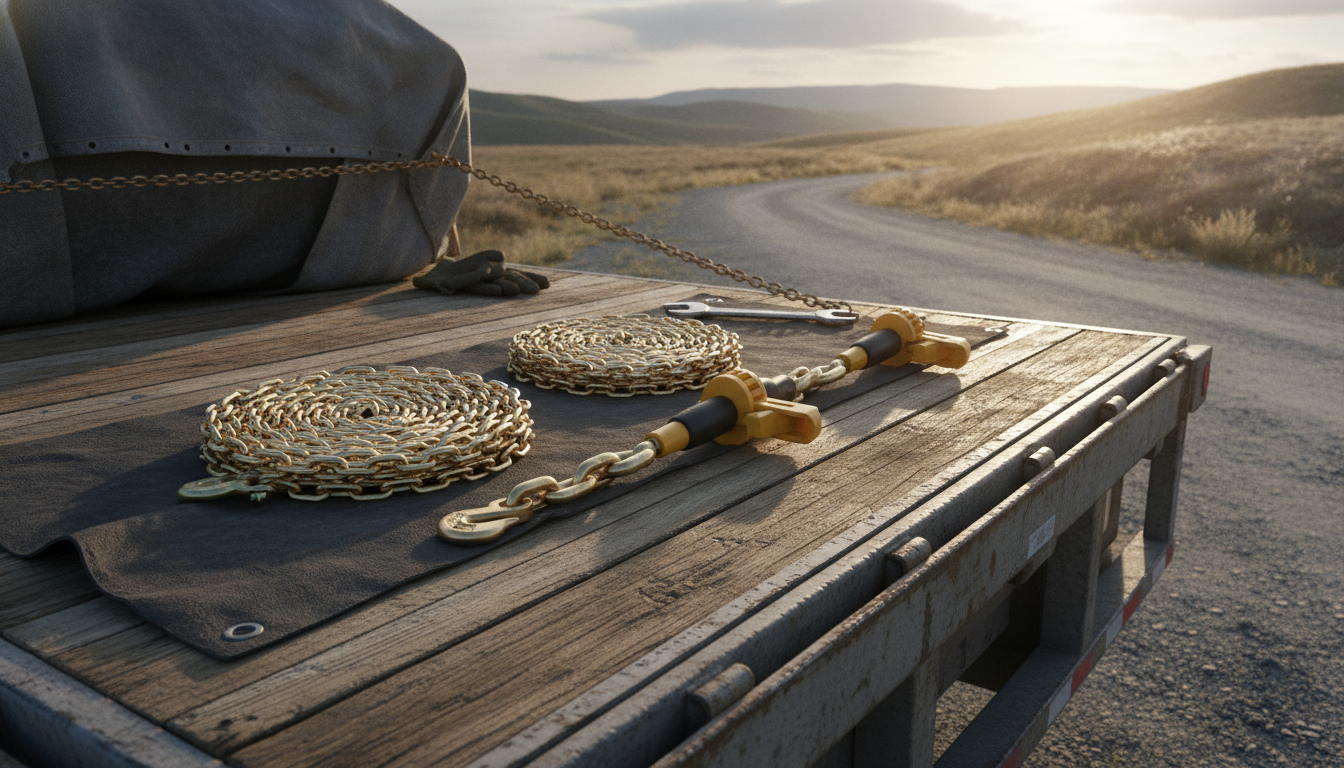
Heavy-Duty Ratchet Chain Binder Set: Secure Tie-Downs for Tough Hauls
A ratchet chain binder set applies controlled tension to transport chains so equipment, vehicles, and materials stay locked down during transit and on the jobsite. When loads vibrate, settle, and shift under braking, the right binder helps keep your chain runs tight and your securement consistent. Below is a practical guide to what a ratchet chain binder set does, where it’s the right choice, what to verify before buying, and how to use it safely every time.
What a Ratchet Chain Binder Set Does
A ratchet chain binder tightens a chain in small, repeatable increments using a ratcheting handle. That incremental action matters for heavier loads because you can “dial in” tension without the sudden snap-back risk that can happen with lever-style binders.
- Tensions transport chain with control: the ratchet mechanism lets you take up slack and then tighten in measured strokes.
- Helps reduce load shift: constant tension supports securement through vibration, cornering, and braking.
- Works as part of a system: binder + transport chain + correctly fitted hooks/anchor points are all equally important.
- Offers controlled release: a ratchet binder typically backs off more gradually than a lever binder, reducing stored-energy surprises during unload.
Where It’s Used (and When It’s the Right Choice)
Ratchet chain binders are common anywhere high tension and repeatable adjustment are needed—especially when the load is heavy, the trip is long, or frequent re-checks and re-tightening are expected.
- Equipment and machinery transport: skid steers, mini excavators, attachments, and implements where tie-down points are robust and accessible.
- Flatbed and utility trailers: pallets, steel, lumber bundles, pipe, and crated goods that benefit from firm, even tension.
- Farm and ranch hauling: tractors, mowers, fencing materials, and other bulky items when properly rigged and protected from abrasion.
- Best fit: when high tension is needed and fine adjustments matter—particularly on heavier loads that may settle after the first few miles.
Quick Specs Checklist Before Buying
Before adding a binder set to your trailer kit, verify the match between binder, chain, hooks, and your anchor points. A strong binder isn’t useful if the chain size is wrong or the hooks don’t seat correctly.
- Chain size compatibility: binders are commonly matched to transport chain sizes (often associated with Grade 70). Confirm the binder is sized for your chain links.
- Working Load Limit (WLL): WLL must meet or exceed the requirement for your load and tiedown configuration. Don’t “average” ratings across mismatched components—your system is only as strong as the lowest-rated part.
- Hook style and fit: grab hooks, clevis hooks, or other end fittings should fully seat on the chain and anchor point without side-loading.
- Handle length and mechanism feel: leverage helps, but control and a smooth ratchet action matter when tightening and releasing under tension.
- Finish and corrosion resistance: road salt, mud, and moisture accelerate wear. A protective finish and basic lubrication help extend service life.
Compatibility Guide: Chain Grades, Sizes, and Typical Use
Match the binder to the chain size and intended application. Avoid mixing undersized binders with larger chain, and steer clear of unmarked chain for critical securement.
Binder and Chain Matching (General Reference)
| Chain type | Common use case | What to verify before use |
|---|---|---|
| Transport chain (e.g., Grade 70) | Flatbed and equipment tiedowns | WLL markings on chain and binder; proper hook fit; no twisted links |
| Higher-grade alloy chain (e.g., Grade 80/100) | Rigging/lifting applications (not automatically a tiedown standard) | Confirm application suitability; ensure all parts are rated for the same purpose |
| Unknown/unmarked chain | Any hauling scenario | Avoid for critical securement; replace with rated, marked chain |
Also confirm hook geometry: hooks should fully seat and pull in-line. If the hook rides on the tip of an anchor point or the chain is twisted, tension can concentrate in the wrong place and lead to deformation or a sudden slip.
How to Use a Ratchet Chain Binder Safely
Safe securement starts before the handle ever moves. Build a consistent routine and repeat it on every haul—especially when weather, mud, or darkness makes it harder to spot problems.
For deeper regulatory guidance and best practices, review the FMCSA Cargo Securement Rules and the NHTSA Driver’s Guide to Cargo Securement.
Care, Storage, and Service Life
Common Mistakes That Cause Loose Loads
Featured Option
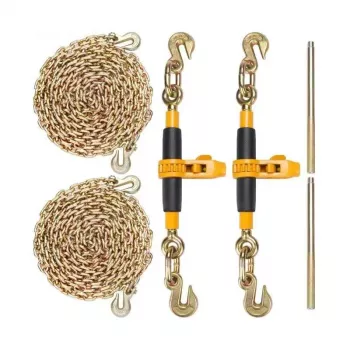
If you want a ready-to-go setup for heavy hauling and frequent use, see the Heavy-Duty Ratchet Chain Binder Set. Before purchasing, confirm the set matches your chain size, hook style, and required ratings for your trailer and cargo.
More In-Stock Items
- Turn an Old Car Into a Smart Tax Move: A Complete Checklist for Donating Your Car to Charity for a Tax Write-Off
- How Essential Oils Can Ease Stress and Anxiety | Relaxation eBook Guide for Natural Stress Relief, Aromatherapy, and Anxiety Support
FAQ
What’s the difference between a ratchet chain binder and a lever binder?
A ratchet binder tightens in small increments and typically releases more gradually, which helps reduce snap-back risk. Lever binders can store more energy and may release abruptly if not handled carefully; both styles must still meet the required WLL for the job.
How many chain binders are needed to secure equipment on a trailer?
It depends on the equipment weight, tie-down points, and applicable cargo securement rules. Many setups use multiple independent tiedowns for redundancy, and requirements can vary by configuration and jurisdiction—verify against FMCSA and local regulations.
Can a ratchet chain binder be used for lifting?
Generally no—chain binders are intended for load securement, not overhead lifting. Use properly rated lifting/rigging equipment designed for that purpose and follow the applicable safety standards.













Leave a comment