-
Shop
- Adidas
- Advanced Technologies
- Bathroom
- Best-Sellers
- Car Accessories
- Dating & Social Skills
- Digital Resources
- AI & Technology
- AI Skills
- Beauty
- Budgeting & Saving
- Car Buying & Ownership
- Cozy Feast Collection
- Electronics & Technology
- Emotional Intelligence
- Entrepreneurship & Business Growth
- Financial Education
- Financial Independence
- Financial Mindset & Psychology
- Goal Setting
- Home Styling & Organization
- Kitchen & Recipes
- Leadership
- Mindfulness
- Mindset
- Motivation
- Online Business
- Parenting & Child Development
- Personal Style & Fashion
- Pet Lifestyle & Wellness
- Positive Thinking
- Productivity
- Self Confidence
- Sleep Improvement
- Smart Life with AI
- Stress Management & Relaxation
- Travel Planning
- Wellness
- Yoga & Fitness
- Yoga & Mind-Body Practices
- Easter Products
- Education & Learning
- Family & Parenting
- Fashion
- Alexander McQueen
- Bags
- Bags & Wallets
- Balenciaga
- Belts
- Blazers
- Bottega Veneta
- Brunello Cucinelli
- Burberry
- Chanel
- Chloé
- Dior
- Dolce & Gabbana
- Dresses
- Etro
- Fendi
- Gucci
- Hats & Hair Accessories
- Jewelry
- Jil Sander
- Keychains
- Kiton
- Luggage
- Miu Miu
- Off-White
- Outerwear
- Prada
- Rick Owens
- Saint Laurent
- Shoes
- Socks & Tights
- The Row
- Tom Ford
- Valentino
- Valentino Garavani
- Versace
- Vivienne Westwood
- Watches
- Furniture
- Gadgets
- Health & Beauty
- Health & Wellness
- Home & Garden
- Home Electronics
- Kids & Babies
- Kitchen
- Lighting
- Patio, Lawn & Garden
- Personal Growth
- Pet Care
- Pet Supplies
- Pets
- Smart Home Living Guides
- Sport & Outdoors
- Stress Relief & Relaxation
- TikTok Growth & Monetization Mastery
- Travel
- Wealth
- Wealth Building
- Popular
- Best deals
Healthy Joints, Safer Workouts: Joint Care + AI Plans

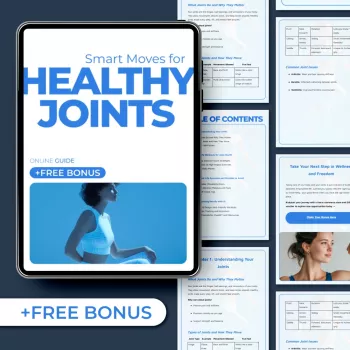
Smart Moves for Healthy Joints: Practical Guide to Joint Care, Workout Safety, and AI-Powered Fitness Planning
Healthy joints rely on a balance of mobility, strength, load management, and recovery. Joint-friendly training is less about avoiding exercise and more about choosing the right movements, controlling intensity, and building capacity in the tissues that support the joint. This guide covers simple daily joint-care habits, safer exercise options, injury-prevention checkpoints, and a practical way to plan workouts with AI so progress stays steady without aggravating pain.
How joints stay resilient (and why workouts sometimes irritate them)
Joints aren’t just “bones meeting bones.” They depend on surrounding muscles, tendons, ligaments, cartilage, and synovial fluid to move well. Regular movement helps circulation and lubrication, which is one reason a smart warm-up often makes a cranky joint feel more capable.
Most flare-ups come from fast changes in training volume, intensity, or range of motion—not necessarily one single “bad” rep. A sudden jump in running mileage, adding too many sets to failure, or pushing into deeper ranges under heavy load can outpace what cartilage and connective tissue can tolerate.
Pain signals can also reflect technique issues, poor recovery, or limitations at neighboring joints (for example, a stiff ankle or weak hip can shift stress into the knee). The goal is to improve tolerance to load through gradual exposure, not complete rest unless medically necessary. General activity guidance from the CDC supports the idea that consistent, appropriate movement is beneficial for long-term health—including joint health.
Daily joint-care basics that make workouts safer
Small habits, repeated daily, are often what keep training sustainable.
- Warm up for 5–10 minutes: light cardio (walk, bike) plus joint circles and movement-specific ramp-up sets before lifting.
- Prioritize range you can control: move smoothly, avoid bouncing into end range, and keep tension through the full motion you own.
- Build “joint insurance” strength: hips (glutes), core, upper back/scapular control, calves/feet, and grip/forearms.
- Recover on purpose: sleep, adequate protein, hydration, and 1–2 easier days per week so tissues can adapt.
- Reduce repetitive stress: vary positions at home/work, take brief movement breaks, and adjust ergonomics so the same tissues aren’t loaded all day.
If you need a structured, easy-to-follow reference that ties these habits into workout planning, consider Smart Moves for Healthy Joints – Practical Guide to Joint Care and Workout Safety, Safe Exercises, Injury Prevention & AI-Powered Fitness Planning.
Movement principles for safer strength training and cardio
Training safely is less about perfect exercises and more about dependable rules.
- Progress gradually: increase weekly training load by small steps (time, sets, reps, or weight), not all at once.
- Use pain rules: discomfort up to mild (about 0–3/10) that settles within 24 hours is often acceptable; sharp, escalating, or lingering pain is a stop sign.
- Control tempo: slower lowering phases (eccentrics) and brief pauses improve control and reduce “bounce” forces at the joint.
- Choose joint-friendly cardio when irritated: cycling, elliptical, incline walking, swimming, or rowing depending on tolerance.
- Use smart ranges and grips: neutral grips for shoulders/wrists, slightly wider stance when needed, and avoid extreme joint angles under heavy load early on.
For broader, evidence-based recommendations on activity levels and safe progression, the ACSM physical activity guidance is a strong reference point.
Joint-friendly exercise swaps (with modifications)
Safer exercise options by joint (examples and quick tweaks)
| Joint area | Often irritating | Friendlier option | Quick modification |
|---|---|---|---|
| Knee | Deep, heavy squats to full depth | Box squat or goblet squat | Limit depth to pain-free range; slow 3-second lower |
| Knee | High-impact jumps on fatigue | Step-ups or sled pushes | Lower step height; keep knee tracking over toes |
| Shoulder | Wide-grip upright rows | Face pulls or cable rows | Use neutral grip; keep elbows below shoulder height |
| Shoulder | Strict overhead press when painful | Landmine press | Press in a forward arc; stop before pinch |
| Wrist/Elbow | Straight-bar curls/pressing with bent wrists | Neutral-grip dumbbell work | Keep wrist stacked; reduce load and add forearm eccentrics |
| Ankle/Foot | Sudden jump in running mileage | Incline walk or bike intervals | Add 5–10% volume per week; alternate low-impact days |
Injury-prevention checkpoints: technique, load, and warning signs
For additional joint-health education and exercise ideas, the Arthritis Foundation’s exercise resources can be helpful, especially for understanding flare-ups and pacing.
AI-powered fitness planning for joint-safe progress
If stress and poor sleep are amplifying aches, recovery support can matter as much as exercise selection. A calming evening routine may help some people stay consistent with training and mobility work; How Essential Oils Can Ease Stress and Anxiety is an optional guide for relaxation habits that can complement a recovery-focused plan.
A practical routine template (beginner-friendly and joint-aware)
FAQ
Is it safe to exercise with joint pain?
Often yes when pain is mild and predictable: discomfort around 0–3/10 that settles back to baseline within 24 hours is commonly tolerated. Stop if pain is sharp, escalating, or lingers beyond a day, and seek evaluation if there is swelling, locking/catching, numbness/tingling, new weakness, night pain, or a worsening trend week to week.
What are the best low-impact exercises for bad knees or hips?
Cycling, swimming, elliptical, incline walking, rowing, sled pushes, and step-ups are common low-impact options, depending on what feels best for your symptoms. Start with short sessions (10–20 minutes) and build slowly, keeping weekly increases modest so joints and tendons can adapt.
How do I use an AI workout plan without aggravating my joints?
Give the AI clear constraints (pain triggers, equipment, time, restrictions), then apply simple progression rules like changing only one variable at a time and capping weekly jumps. Track RPE and next-day symptoms, swap movements when a joint flares, and treat AI as a menu of options—your real-time feedback (and professional advice when needed) should make the final call.















Leave a comment