-
Shop
- Adidas
- Advanced Technologies
- Bathroom
- Best-Sellers
- Car Accessories
- Dating & Social Skills
- Digital Resources
- AI & Technology
- AI Skills
- Beauty
- Budgeting & Saving
- Car Buying & Ownership
- Cozy Feast Collection
- Electronics & Technology
- Emotional Intelligence
- Entrepreneurship & Business Growth
- Financial Education
- Financial Independence
- Financial Mindset & Psychology
- Goal Setting
- Home Styling & Organization
- Kitchen & Recipes
- Leadership
- Mindfulness
- Mindset
- Motivation
- Online Business
- Parenting & Child Development
- Personal Style & Fashion
- Pet Lifestyle & Wellness
- Positive Thinking
- Productivity
- Self Confidence
- Sleep Improvement
- Smart Life with AI
- Stress Management & Relaxation
- Travel Planning
- Wellness
- Yoga & Fitness
- Yoga & Mind-Body Practices
- Easter Products
- Education & Learning
- Family & Parenting
- Fashion
- Alexander McQueen
- Bags
- Bags & Wallets
- Balenciaga
- Belts
- Blazers
- Bottega Veneta
- Brunello Cucinelli
- Burberry
- Chanel
- Chloé
- Dior
- Dolce & Gabbana
- Dresses
- Etro
- Fendi
- Gucci
- Hats & Hair Accessories
- Jewelry
- Jil Sander
- Keychains
- Kiton
- Luggage
- Miu Miu
- Off-White
- Outerwear
- Prada
- Rick Owens
- Saint Laurent
- Shoes
- Socks & Tights
- The Row
- Tom Ford
- Valentino
- Valentino Garavani
- Versace
- Vivienne Westwood
- Watches
- Furniture
- Gadgets
- Health & Beauty
- Health & Wellness
- Home & Garden
- Home Electronics
- Kids & Babies
- Kitchen
- Lighting
- Patio, Lawn & Garden
- Personal Growth
- Pet Care
- Pet Supplies
- Pets
- Smart Home Living Guides
- Sport & Outdoors
- Stress Relief & Relaxation
- TikTok Growth & Monetization Mastery
- Travel
- Wealth
- Wealth Building
- Popular
- Best deals
Eco-Friendly Dog Toy Checklist: Non-Toxic & Durable
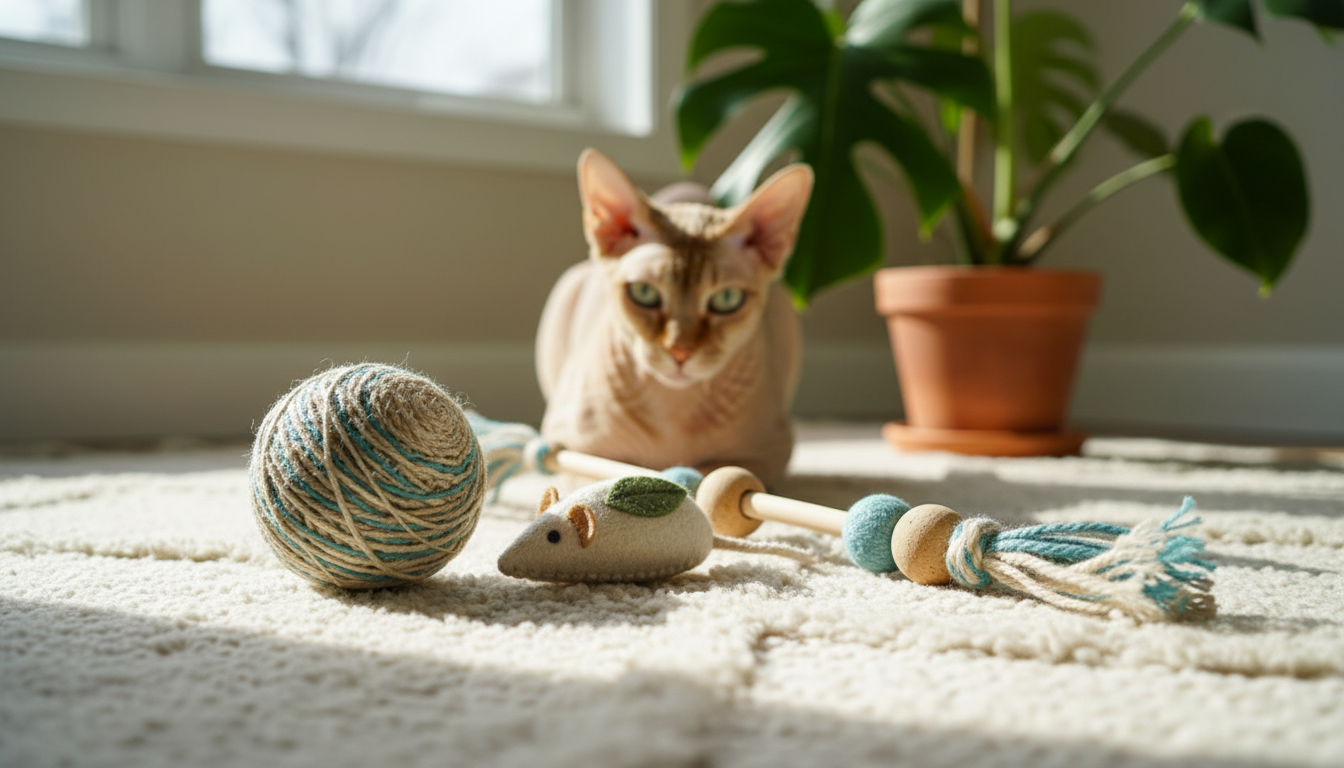
Eco-Friendly Pet Toy Checklist: Safer, Greener Play for Dogs
Choosing dog toys can feel simple until safety, durability, and environmental impact are considered together. This checklist breaks down what to look for—materials, dyes, construction, and end-of-life options—so playtime stays fun while reducing exposure to unwanted chemicals and unnecessary waste.
What “eco-friendly” means for dog toys
“Eco-friendly” pet toys aren’t just about a natural-looking label. A truly greener choice usually checks four boxes:
- Prioritizes safer materials: fewer concerning additives, coatings, and heavy-metal pigments that can transfer during mouthing and chewing.
- Reduces waste: durable designs, repairable parts, and end-of-life options that make sense for the material (recycle/compost only where appropriate and accepted locally).
- Considers sourcing and manufacturing: transparency about what’s inside, responsible forestry or latex sourcing, and reduced packaging.
- Matches the toy to the dog: the most sustainable toy is the one your dog can use safely for a long time (not the one replaced every week).
Quick safety screen before anything else
Before evaluating “green” claims, run a fast safety check. Even a well-made toy can be risky if it’s the wrong size or design for your dog.
- Size and shape: choose a size that can’t be swallowed; avoid shapes that can wedge in the mouth or throat.
- Construction: tug toys should have reinforced seams; rubber toys should resist cracking; plush toys should have tight stitching.
- Choking hazards: skip easily-detached eyes, buttons, ribbons, and squeakers for dogs that target weak points.
- Supervision level: some toys are “supervised play only” even when labeled durable—especially for power chewers.
For additional general guidance on safe toy use and supervision, see the ASPCA’s dog toy safety tips.
Materials checklist: what to seek and what to question
Material choice affects everything: durability, chemical exposure potential, and what happens when the toy wears out.
- Natural rubber: often durable and grippy; look for brands that describe sourcing and avoid strong chemical odors.
- Organic cotton/hemp: good for soft toys and ropes; verify dyes are low-impact and stitching is tight.
- Recycled materials: can reduce waste, but confirm what the recycled content is and how it’s processed.
- Plant fibers (jute, sisal): better for light chewing; watch for loose fibers that could be ingested.
- What to question: toys with a strong plastic smell, sticky coatings, “vinyl” with no details, or vague claims without clear material disclosure.
Materials at a glance
| Material | Pros | Watch-outs | Best for |
|---|---|---|---|
| Natural rubber | Durable, grippy, often long-lasting | Cracks over time; avoid heavy chemical odor; inspect for chunks | Moderate to heavy chewers (supervised) |
| Organic cotton / hemp | Renewable fibers; softer mouth feel | Seams can fail; dyes/prints may vary | Gentle chewers, fetch, light tug |
| Recycled polyester | Uses existing plastic waste; often washable | Microfiber shedding; may not be chew-proof | Cuddlers, light play |
| Jute / sisal | Lower-impact plant fibers; simple construction | Fraying and ingestion risk if dog shreds | Short supervised sessions |
Non-toxic signals on labels (and what they actually imply)
Labels can be helpful, but only if they’re specific. Look for information you can verify, not just marketing phrases.
- Look for clear disclosures: the material type (e.g., natural rubber vs. “rubber”), dye/ink details, and care instructions.
- Certifications can help: confirm what they cover—fiber content, dyes, or the finished item. For textiles, OEKO-TEX Standard 100 is one example of a screening standard for harmful substances in tested components.
- Avoid “mystery blends”: phrases like “proprietary material” without context make it hard to assess safety and durability.
- Chew-intended matters: if a toy is meant for chewing, prefer products designed and tested for pet oral contact rather than repurposed household items.
Durability and design: the sustainability multiplier
Durability is often the biggest driver of lower waste. A toy that lasts three times as long typically saves money and reduces the number of replacements shipped and discarded.
- Match the toy to chew style: power chewers generally do better with thicker rubber and minimal seams; gentle chewers can use rope or plush with reinforced stitching.
- Choose simple builds: fewer glued parts, fewer detachable pieces, and minimal mixed materials usually wear better and are easier to assess for damage.
- Consider modular/repairable toys: replaceable rope inserts or covers can extend lifespan when the core is still safe.
- Rotate toys: rotation keeps interest high and slows wear, reducing replacement frequency.
Packaging and shipping: the hidden footprint
For practical guidance on reducing household waste overall, the EPA’s Reduce, Reuse, Recycle resources are a useful baseline.
Care, cleaning, and end-of-life options
Printable checklist for shopping and toy audits
If a ready-to-use version helps, see Your Eco-Friendly Pet Toy Checklist | Sustainable Dog Toys Guide, Non-Toxic Pet Toy Buying Guide, Green Pet Care Digital Download.
Looking for another step-by-step checklist format for everyday decisions? Turn an Old Car Into a Smart Tax Move: A Complete Checklist for Donating Your Car to Charity for a Tax Write-Off is also available as a digital download.
FAQ
What materials are generally safer for dog toys?
Natural rubber, organic cotton/hemp, and products with clearly disclosed materials are often good starting points. Avoid toys with strong chemical odors, flaky coatings, or easily detached parts, and always match the toy to your dog’s chew style and supervision needs.
Are “non-toxic” dog toys always safe to chew?
No—“non-toxic” isn’t a consistently regulated promise, and it doesn’t guarantee durability. Look for specific material disclosures and appropriate chew ratings, and retire the toy once it starts cracking, shredding, or losing pieces.
How often should dog toys be replaced?
Inspect toys weekly and replace them as soon as you see cracking, loose seams, exposed stuffing/squeakers, or missing chunks. Replacement frequency depends on your dog’s chewing intensity and the toy’s construction, so tracking what lasts can reduce waste over time.
Recommended for you

TV Furniture Layouts That Feel Comfortable Every Day
Jun 27, 2026
Instagram vs TikTok: Which Platform Wins for Brands?
Jun 28, 2026













Leave a comment