-
Shop
- Adidas
- Advanced Technologies
- Bathroom
- Best-Sellers
- Car Accessories
- Dating & Social Skills
- Digital Resources
- AI & Technology
- AI Skills
- Beauty
- Budgeting & Saving
- Car Buying & Ownership
- Cozy Feast Collection
- Electronics & Technology
- Emotional Intelligence
- Entrepreneurship & Business Growth
- Financial Education
- Financial Independence
- Financial Mindset & Psychology
- Goal Setting
- Home Styling & Organization
- Kitchen & Recipes
- Leadership
- Mindfulness
- Mindset
- Motivation
- Online Business
- Parenting & Child Development
- Personal Style & Fashion
- Pet Lifestyle & Wellness
- Positive Thinking
- Productivity
- Self Confidence
- Sleep Improvement
- Smart Life with AI
- Stress Management & Relaxation
- Travel Planning
- Wellness
- Yoga & Fitness
- Yoga & Mind-Body Practices
- Easter Products
- Education & Learning
- Family & Parenting
- Fashion
- Alexander McQueen
- Bags
- Bags & Wallets
- Balenciaga
- Belts
- Blazers
- Bottega Veneta
- Brunello Cucinelli
- Burberry
- Chanel
- Chloé
- Dior
- Dolce & Gabbana
- Dresses
- Etro
- Fendi
- Gucci
- Hats & Hair Accessories
- Jewelry
- Jil Sander
- Keychains
- Kiton
- Luggage
- Miu Miu
- Off-White
- Outerwear
- Prada
- Rick Owens
- Saint Laurent
- Shoes
- Socks & Tights
- The Row
- Tom Ford
- Valentino
- Valentino Garavani
- Versace
- Vivienne Westwood
- Watches
- Furniture
- Gadgets
- Health & Beauty
- Health & Wellness
- Home & Garden
- Home Electronics
- Kids & Babies
- Kitchen
- Lighting
- Patio, Lawn & Garden
- Personal Growth
- Pet Care
- Pet Supplies
- Pets
- Smart Home Living Guides
- Sport & Outdoors
- Stress Relief & Relaxation
- TikTok Growth & Monetization Mastery
- Travel
- Wealth
- Wealth Building
- Popular
- Best deals
60-Second Grounding Skills to Stay Present & Calm
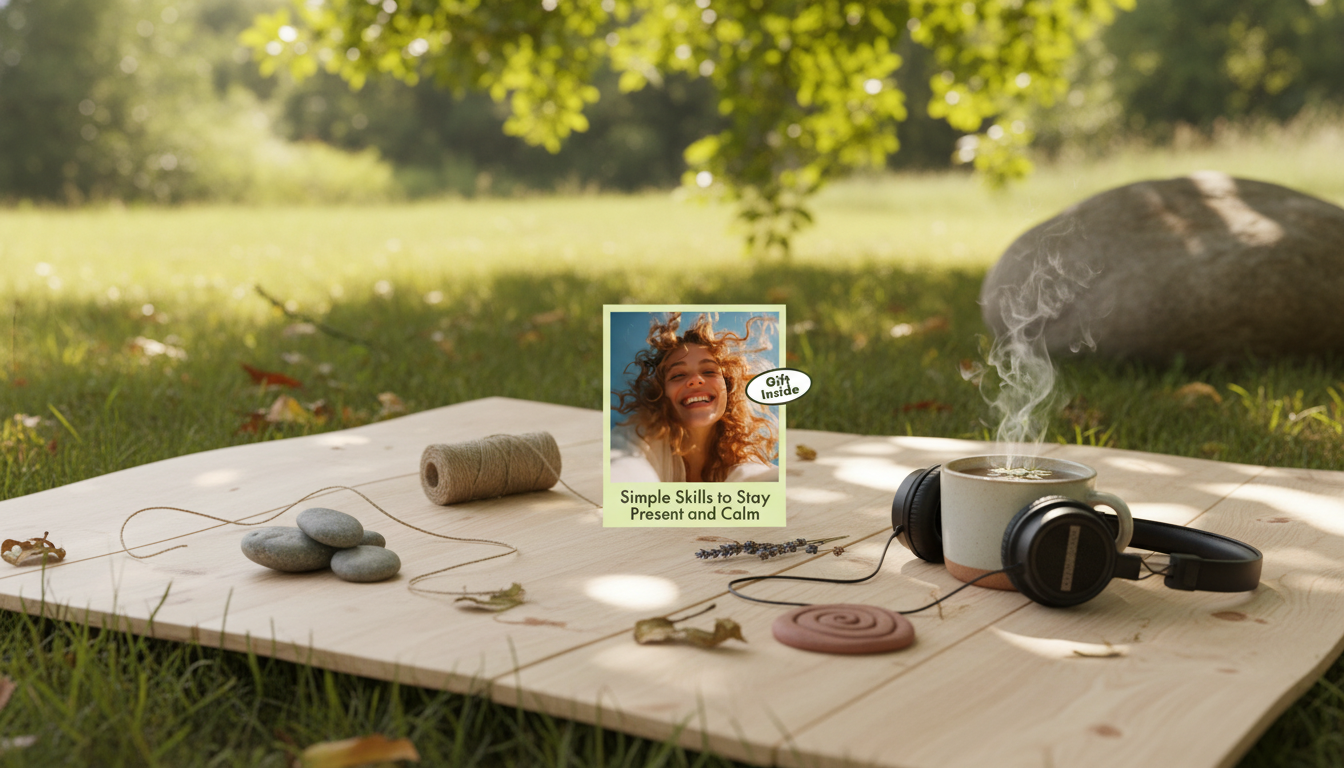
Grounded & Empowered: Simple Skills to Stay Present and Calm
Stress can spike fast—during a tough email, a crowded commute, or a tense conversation. Grounding skills are practical tools that help the nervous system settle so attention can return to the present moment. The goal isn’t to force “calm” on command; it’s to create enough steadiness to make the next choice with more clarity. The techniques below are simple, repeatable, and designed to work in real life: quick resets, body-based calming, and routines that support steady focus without needing perfect conditions.
What it means to be grounded (and why it helps so quickly)
Being grounded means bringing attention back to present-moment sensations—what you see, hear, and feel, plus the steady support of your environment. When stress rises, the body can shift into fight/flight/freeze, and attention often narrows into threat-scanning, worry loops, or emotional overload. Grounding techniques use breath, movement, and sensory input to send a “safe enough, right now” signal.
A grounded state doesn’t erase the problem in front of you; it reduces the intensity so you can respond rather than react on autopilot. And while a dramatic reset can feel appealing, small skills practiced consistently tend to work better than rare, big interventions. If you want a structured reference you can keep on your phone or print for your desk, Grounded & Empowered: Simple Skills to Stay Present and Calm organizes practical exercises by situation so they’re easier to use when you actually need them.
A 60-second reset for sudden stress
When stress hits hard and fast, use this short sequence. It’s designed to be discreet at work, in public, or mid-conversation.
- Name the moment: Silently label what’s happening (“stress is here,” “my mind is racing”). A simple label can reduce overwhelm by creating a little distance.
- Plant the feet: Feel the contact points with the floor. Gently shift weight into your heels, then settle evenly.
- Long exhale: Inhale softly through the nose, then exhale a little longer than the inhale. Repeat once or twice.
- Orient: Look around and identify three neutral objects (a rectangle, a blue item, a straight edge). Let your eyes land on each for a beat.
- Soften jaw and shoulders: Release tension in two places that commonly tighten. Imagine the shoulders sliding down your back.
Quick grounding options and when to use them
| Skill | Best for | How long |
|---|---|---|
| Feet-on-floor press | Feeling scattered or unsteady | 20–40 seconds |
| Long exhale breathing | Racing heart, agitation | 30–60 seconds |
| 3-object orienting | Spiraling thoughts, worry loops | 30–60 seconds |
| Temperature change (cool water) | High intensity stress | 30–90 seconds |
| Hand-on-heart + belly | Emotional overwhelm | 45–90 seconds |
Simple sensory grounding to steady attention
Sensory grounding works by shifting attention away from repetitive thoughts and toward neutral, present-moment detail. If one sense feels too intense, pick just one channel (often touch is the gentlest) and keep it simple.
- Sight: Slowly scan the room and notice colors, straight lines, and light sources. Keep your pace unhurried.
- Sound: Identify the farthest sound you can hear, then the nearest sound. Repeat once to widen awareness.
- Touch: Rub fingertips together and notice texture. Then place palms on thighs and feel warmth and pressure.
- Smell/taste: Sip water or tea and describe the sensation (cool, warm, smooth, bitter, neutral). Neutral description helps interrupt rumination.
For a clear, practical definition of grounding in psychology, the APA Dictionary of Psychology is a helpful reference point.
Body-based calming that doesn’t require meditation
You don’t need a long silent sit to regulate your system. These techniques are physical, brief, and “doable” even when the mind is loud.
If motivation drops when you’re stressed, pairing grounding with tiny, concrete next steps can help. Motivation Magic: Your Easy-Do Checklist to Spark Drive & Get Stuff Done is a quick, action-focused companion for the “what do I do next?” moment after you’ve calmed your body.
Staying present during screens, messages, and constant alerts
For background on mindfulness and safety considerations (including what it can and can’t do), the National Center for Complementary and Integrative Health provides an evidence-informed overview.
A small daily routine that builds calm over time
If social situations are a common trigger, calm plus confidence skills often work better together. Social Confidence in Any Situation is a practical checklist you can review before meetings, networking, or challenging conversations.
When grounding feels hard: gentle adjustments
For reliable information on anxiety disorders and when to seek help, the National Institute of Mental Health offers a clear overview.
A guided toolkit for practice and reference
If you want a ready-to-use format for quick access at a desk, on a phone, or during travel, Grounded & Empowered: Simple Skills to Stay Present and Calm is a practical digital toolkit designed for repeat use.
FAQ
What is a grounding technique and how fast can it work?
A grounding technique is a simple action that brings attention back to present-moment sensory experience (feet on the floor, what you see, what you hear). Some skills can reduce intensity in about 30–90 seconds, especially longer exhales and external orienting.
What can be done when anxiety spikes at work or in public?
Use discreet options like a gentle feet press into the floor, light hand pressure on your thigh, silently naming three neutral objects, or one longer exhale. If you can move, a short, slow walking reset often helps without drawing attention.
Can grounding help with racing thoughts at night?
Yes—choose low-stimulation grounding like a brief body scan, touch-based anchoring (hands on belly or upper arms), and a slow, slightly longer exhale. Keeping a consistent wind-down routine makes it easier for the brain to recognize bedtime as a cue to downshift.
Recommended for you



Leadership Presence Checklist for Boardroom and Zoom
May 15, 2026













Leave a comment