A Checklist for Fitness at Home: A Simple Daily Movement Planner You’ll Actually Use
Consistency is easier when the plan is already made. Our “A Checklist for Fitness at Home” is a simple, no-equipment movement checklist you can print or use digitally—built for busy days, small spaces, and the kind of momentum that comes from checking one small box at a time. When you don’t have the bandwidth to design a workout, you can still follow a straightforward structure: move a little, add a bit of strength when you can, and keep your joints feeling good with quick mobility.
What this fitness-at-home checklist helps you do (without overthinking it)
- Turn “I should work out” into a clear next step using a short list of movement options you can do anywhere.
- Stay consistent on low-motivation days by focusing on completion, not perfection.
- Balance the basics—daily movement, simple strength, and mobility—without needing a full program.
- Keep your plan flexible: pick one activity, stack two quick items, or build a full session when time allows.
How to use the daily movement planner in 5 minutes
- Choose a minimum: Decide what counts as “done” today (example: 10 minutes of movement or one strength circuit).
- Pick one category first: Start with movement, strength, or mobility; add a second only if it feels realistic.
- Set a time trigger: Attach the checklist to something that already happens (after coffee, after work, before your shower).
- Keep friction low: Open the digital file on your phone/tablet or print one page and place it where you’ll see it.
- Check the box immediately: Mark it right after finishing—closing the loop is part of the habit.
If you regularly “wait for motivation,” try flipping it: start with your minimum, then let momentum decide whether you add more.
No-equipment workout ideas to plug into the checklist
Daily movement options (5–15 minutes)
- Brisk walk in place while a show loads or dinner cooks
- Stair laps (even a few rounds count)
- A quick dance break
- A 10-minute “get your steps inside” loop (hallway, living room, or backyard)
Simple strength options (10–20 minutes)
- Squats or sit-to-stands (chair optional)
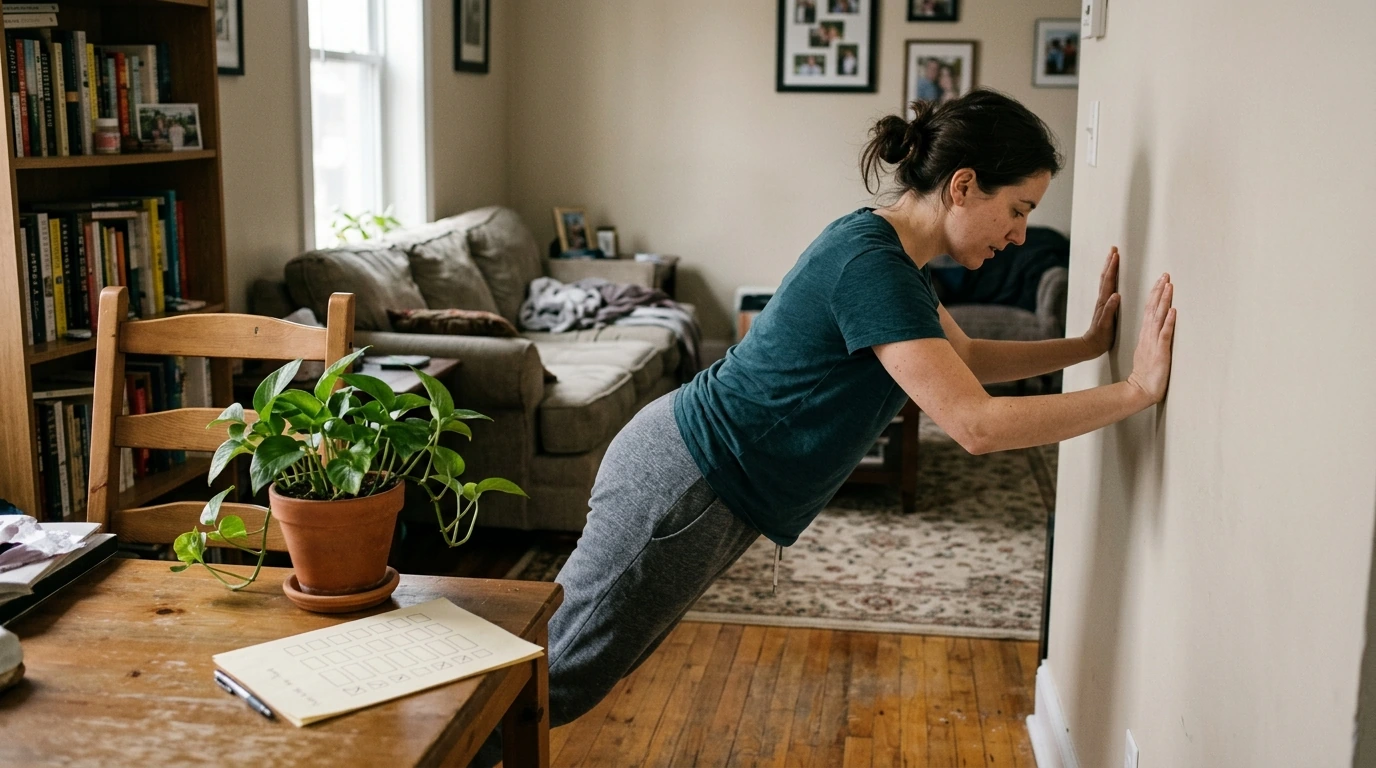
- Wall or counter push-ups
- Glute bridges
- Lunges (or split squats holding onto a counter for balance)
- A short plank series (plank, side plank, bird dog)
Mobility and recovery options (5–10 minutes)
- Hip openers
- Hamstring stretch sequence
- Thoracic twists (gentle upper-back rotation)
- Ankle mobility drills
- Light yoga flow focused on breathing
Make it scalable: Reduce reps, slow the tempo, shorten the time, or split it into two mini-sessions (example: 5 minutes mid-morning + 5 minutes late afternoon). The goal is “repeatable,” not “impressive.”
A simple weekly plan (mix-and-match template)
A repeatable rhythm beats a perfect schedule. Aim for strength on 2–3 days, mobility most days, and some form of daily movement. Keep one “lighter” day to protect momentum—something always counts. Then use your checklist to track what you actually did, and repeat what worked next week.
Weekly movement planner template (example you can copy)
| Day |
Micro-move (5–10 min) |
Strength (10–20 min) |
Mobility (5–10 min) |
Notes |
| Mon |
Walk in place |
Squats + push-ups |
Hip + ankle mobility |
Start easy; focus on form |
| Tue |
Stairs / brisk loop |
— |
Shoulders + spine twists |
Mobility-only day still counts |
| Wed |
Dance break |
Lunges + glute bridges |
Hamstrings |
Add reps only if energy is high |
| Thu |
Step goal split (2 x 5 min) |
— |
Gentle stretch flow |
Recovery day |
| Fri |
Fast walk / march |
Core circuit (planks, dead bugs) |
Hips |
Short and focused |
| Sat |
Outdoor walk (if possible) |
Full-body mix |
Full-body stretch |
Longer session option |
| Sun |
Easy movement |
— |
Relaxing mobility |
Reset for next week |
Make the checklist stick: small rules that protect consistency
- Use the minimum viable workout: A tiny version that’s so easy it’s hard to skip (example: 5 minutes of walking in place).
- Avoid all-or-nothing tracking: Count partial wins (mobility only, 10 minutes only, one circuit only).
- Keep choices limited: Rotate a short list of favorites rather than searching for something new every day.
- Plan for interruptions: If the day gets messy, default to a micro-move and check the box.
For general health guidelines, the CDC and the World Health Organization both emphasize regular weekly movement plus muscle-strengthening activity—your checklist is a practical way to get those building blocks done in real life.
Digital download tips: print, reuse, and track progress simply
Recommended pairing for stress-friendly routines
Shop our team’s picks (digital downloads you can use right away)
FAQ
Is this checklist suitable for beginners?
Yes. Start by choosing a minimum goal (like 5–10 minutes of movement), pick low-impact options such as walking in place and gentle mobility, and build gradually by adding a second item or a short strength circuit when you feel ready.
How often should at-home workouts be done with no equipment?
Many adults aim for weekly moderate activity plus muscle-strengthening days, and no-equipment strength sessions can count toward that. This checklist helps you spread movement across the week flexibly—some days can be short and light, while 2–3 days can focus more on strength.
Can this be used on a phone or tablet instead of printing?
Yes. You can use it digitally by saving it to your device, duplicating a fresh copy each week, and marking completion right after you finish so you can track your consistency over time.
Recommended for you





Leave a comment