-
Shop
- Adidas
- Advanced Technologies
- Bathroom
- Best-Sellers
- Car Accessories
- Dating & Social Skills
- Digital Resources
- AI & Technology
- AI Skills
- Beauty
- Budgeting & Saving
- Car Buying & Ownership
- Cozy Feast Collection
- Electronics & Technology
- Emotional Intelligence
- Entrepreneurship & Business Growth
- Financial Education
- Financial Independence
- Financial Mindset & Psychology
- Goal Setting
- Home Styling & Organization
- Kitchen & Recipes
- Leadership
- Mindfulness
- Mindset
- Motivation
- Online Business
- Parenting & Child Development
- Personal Style & Fashion
- Pet Lifestyle & Wellness
- Positive Thinking
- Productivity
- Self Confidence
- Sleep Improvement
- Smart Life with AI
- Stress Management & Relaxation
- Travel Planning
- Wellness
- Yoga & Fitness
- Yoga & Mind-Body Practices
- Easter Products
- Education & Learning
- Family & Parenting
- Fashion
- Alexander McQueen
- Bags
- Bags & Wallets
- Balenciaga
- Belts
- Blazers
- Bottega Veneta
- Brunello Cucinelli
- Burberry
- Chanel
- Chloé
- Dior
- Dolce & Gabbana
- Dresses
- Etro
- Fendi
- Gucci
- Hats & Hair Accessories
- Jewelry
- Jil Sander
- Keychains
- Kiton
- Luggage
- Miu Miu
- Off-White
- Outerwear
- Prada
- Rick Owens
- Saint Laurent
- Shoes
- Socks & Tights
- The Row
- Tom Ford
- Valentino
- Valentino Garavani
- Versace
- Vivienne Westwood
- Watches
- Furniture
- Gadgets
- Health & Beauty
- Health & Wellness
- Home & Garden
- Home Electronics
- Kids & Babies
- Kitchen
- Lighting
- Patio, Lawn & Garden
- Personal Growth
- Pet Care
- Pet Supplies
- Pets
- Smart Home Living Guides
- Sport & Outdoors
- Stress Relief & Relaxation
- TikTok Growth & Monetization Mastery
- Travel
- Wealth
- Wealth Building
- Popular
- Best deals
AI Car Maintenance Schedule: Personalize Service Reminders
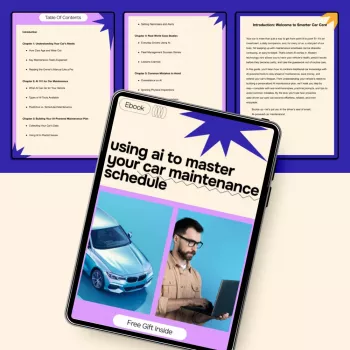
Using AI to Master Your Car Maintenance Schedule: Smarter Vehicle Care for Modern Drivers
Keeping up with oil changes, tire rotations, inspections, and seasonal prep gets harder as vehicles add more tech and schedules get busier. AI-assisted maintenance planning turns scattered reminders and generic intervals into a clear, personalized routine based on mileage, driving conditions, time, and manufacturer recommendations—helping reduce breakdown risk, protect resale value, and avoid overpaying for unnecessary services.
What “AI-assisted maintenance” actually means
AI-assisted maintenance isn’t a magic crystal ball—it’s a practical system that organizes what the manufacturer already requires and adapts it to how a vehicle is actually used. Most tools rely on rule sets, pattern matching, and simple forecasting to keep a “living” schedule accurate as time and mileage move.
- Uses rules + pattern matching to translate factory maintenance intervals into a living schedule tied to mileage and time.
- Adjusts recommendations for real-world factors: short trips, stop-and-go driving, towing, extreme heat/cold, dusty roads, and long idle periods.
- Consolidates tasks into fewer shop visits by grouping items due around the same timeframe.
- Creates reminders and checklists that fit a driver’s routine (calendar, notifications, or a simple dashboard).
- Pairs well with service records to prevent missed items and duplicated work.
Build a reliable baseline schedule in 15 minutes
The fastest way to get real value from AI is to feed it clean baseline inputs. If you start with the owner’s manual and accurate history, the resulting plan is usually more actionable than any generic “every 3,000 miles” rule.
- Collect essentials: year/make/model/engine, current mileage, typical monthly mileage, and driving profile (city/highway mix, climate, load).
- Start from the owner’s manual maintenance chart and warranty requirements; treat these as non-negotiable guardrails.
- Create “core intervals” for: engine oil and filter, tire rotation, air filters (engine/cabin), brake inspections, fluids (coolant, brake, transmission), battery checks, and wipers/lighting.
- Add time-based items that still matter with low mileage: brake fluid age, coolant age, tire age, battery age, and rubber deterioration.
- Record last service dates/mileages; unknown history becomes an inspection task rather than a guess.
| Input | Where to find it | Why it matters |
|---|---|---|
| Year/make/model/engine | Registration, VIN decoder, owner’s manual | Ensures correct intervals, fluid types, and capacities |
| Current mileage | Odometer | Triggers mileage-based tasks and projections |
| Driving conditions | Self-assessment (short trips, towing, climate) | Determines “severe service” adjustments |
| Service history | Receipts, shop portal, maintenance log | Prevents duplicate work and identifies unknowns |
| Tire info | Sidewall date code, tread depth | Safety planning beyond rotations and pressure checks |
Make AI recommendations practical: severity rules, bundling, and timing
A schedule only works if it matches real life. The most useful AI-driven plans are consistent about “severity,” smart about bundling, and flexible about timing—without letting critical items slip.
Use consistent severity rules
- Apply severity rules consistently: frequent short trips, heavy traffic, towing, or extreme temperatures often shorten oil-change and inspection intervals.
- If your manual defines “severe service,” treat that definition as the deciding factor, not a social media rule of thumb.
Bundle work to cut extra appointments
- Bundle tasks to reduce downtime: align tire rotation with oil service; align cabin filter with seasonal HVAC use; align brake inspection with tire rotation.
- Use a “due soon window” (e.g., next 500–1,000 miles or next 30 days) to group tasks without drifting past critical intervals.
Plan seasonally so surprises are rare
- Plan seasonally: pre-winter battery/tires/defrost checks; pre-summer coolant/AC checks; rainy season wipers and lighting.
- Define what is DIY vs shop: quick checks (tire pressure, washer fluid) vs safety-critical or specialized services (brake fluid flush, transmission service).
Connect data sources without overcomplicating things
You don’t need a fully connected car to get most of the benefits. A simple mileage log plus calendar reminders—anchored to your manual—already covers a lot. Data integrations are optional upgrades, not requirements.
Two authoritative resources worth keeping bookmarked: NHTSA’s recall lookup for safety recalls, and the Car Care Council for general maintenance education.
Avoid common mistakes that lead to wasted money or missed maintenance
Turn the plan into a weekly habit that sticks
Recommended guides and checklists (in stock)
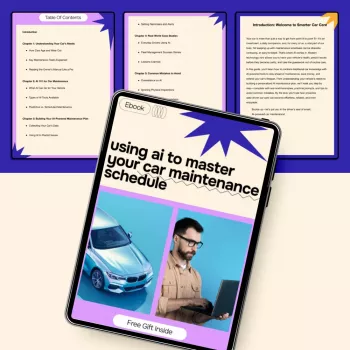
- Using AI to Master Your Car Maintenance Schedule | Smart Vehicle Care eBook | ai for car maintenance schedules Guide for Modern Drivers (helps translate manual intervals into a clean, trackable system)
- Turn an Old Car Into a Smart Tax Move: A Complete Checklist for Donating Your Car to Charity for a Tax Write-Off (useful when maintenance costs no longer make sense and you’re planning an exit)
FAQ
Can AI really predict when my car will need maintenance?
Most tools don’t “predict” in a fortune-telling sense; they combine manufacturer intervals with mileage/time tracking and adjust for driving conditions. Accuracy improves when you keep good service history, but safety-critical items still need real inspections.
What information should be tracked to get accurate maintenance reminders?
Track current mileage, an estimate of monthly mileage, the date/mileage of past services, your driving conditions (short trips, towing, climate), and any diagnostic codes you’ve seen. Also track time-based items like brake fluid age, coolant age, tire age, and battery age.
Is it safe to use an OBD-II device or connected app for maintenance planning?
It can be safe if you choose a reputable device/app, use read-only monitoring when possible, and avoid coding changes you don’t fully understand. For serious symptoms (overheating, braking issues, severe misfires), use professional diagnosis rather than relying on an app alone.
Recommended for you

Budget Your Week Like Cash for Calm Productivity
Aug 10, 2026
2/3 Rule for Living Rooms: Rugs, Tables & Art Sizing
Aug 11, 2026













Leave a comment