-
Shop
- Adidas
- Advanced Technologies
- Bathroom
- Best-Sellers
- Car Accessories
- Dating & Social Skills
- Digital Resources
- AI & Technology
- AI Skills
- Beauty
- Budgeting & Saving
- Car Buying & Ownership
- Cozy Feast Collection
- Electronics & Technology
- Emotional Intelligence
- Entrepreneurship & Business Growth
- Financial Education
- Financial Independence
- Financial Mindset & Psychology
- Goal Setting
- Home Styling & Organization
- Kitchen & Recipes
- Leadership
- Mindfulness
- Mindset
- Motivation
- Online Business
- Parenting & Child Development
- Personal Style & Fashion
- Pet Lifestyle & Wellness
- Positive Thinking
- Productivity
- Self Confidence
- Sleep Improvement
- Smart Life with AI
- Stress Management & Relaxation
- Travel Planning
- Wellness
- Yoga & Fitness
- Yoga & Mind-Body Practices
- Easter Products
- Education & Learning
- Family & Parenting
- Fashion
- Alexander McQueen
- Bags
- Bags & Wallets
- Balenciaga
- Belts
- Blazers
- Bottega Veneta
- Brunello Cucinelli
- Burberry
- Chanel
- Chloé
- Dior
- Dolce & Gabbana
- Dresses
- Etro
- Fendi
- Gucci
- Hats & Hair Accessories
- Jewelry
- Jil Sander
- Keychains
- Kiton
- Luggage
- Miu Miu
- Off-White
- Outerwear
- Prada
- Rick Owens
- Saint Laurent
- Shoes
- Socks & Tights
- The Row
- Tom Ford
- Valentino
- Valentino Garavani
- Versace
- Vivienne Westwood
- Watches
- Furniture
- Gadgets
- Health & Beauty
- Health & Wellness
- Home & Garden
- Home Electronics
- Kids & Babies
- Kitchen
- Lighting
- Patio, Lawn & Garden
- Personal Growth
- Pet Care
- Pet Supplies
- Pets
- Smart Home Living Guides
- Sport & Outdoors
- Stress Relief & Relaxation
- TikTok Growth & Monetization Mastery
- Travel
- Wealth
- Wealth Building
- Popular
- Best deals
Streetwear Rules Bundle: Build Better Urban Outfits Fast
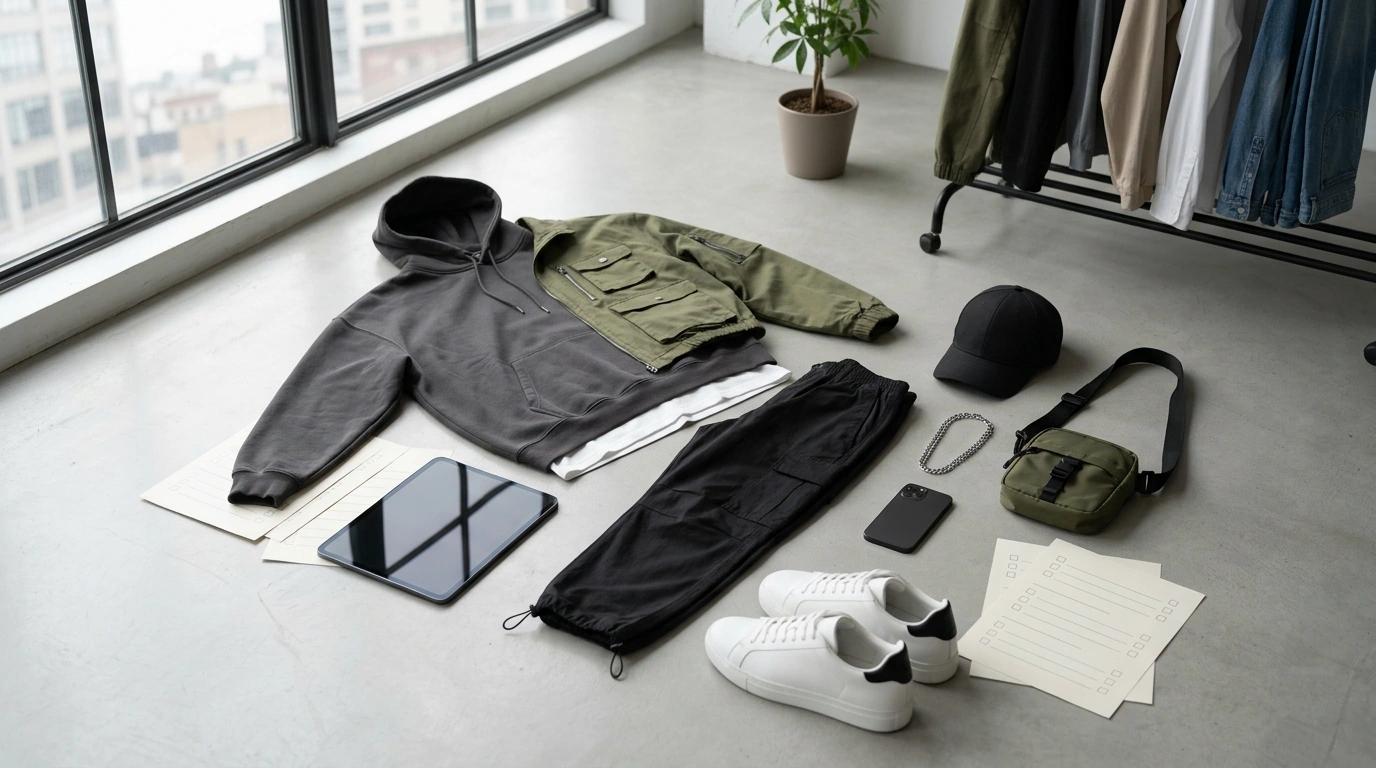
Streetwear Style Rules Bundle: A Practical System for Building Better Urban Fits
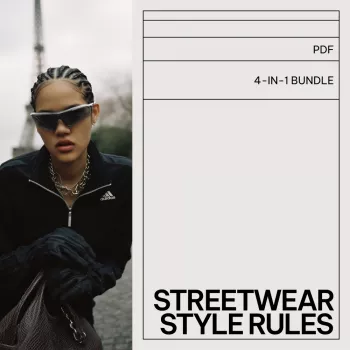
Streetwear is easiest to level up when the rules are clear: fit first, a tight color plan, intentional layers, and accessories that support the silhouette. The Streetwear Style Rules Bundle is designed to turn scattered inspiration into a repeatable process for putting outfits together—whether the vibe is clean minimal, skate-rooted, techwear-leaning, or bold and graphic. Instead of chasing every drop, you get a framework you can apply to what you already own, then shop with purpose to fill the right gaps. For more guidance, see Researching Fashion: Books – UC Berkeley Library guide.
For a quick refresher on how streetwear evolved into a global uniform, see Vogue’s history of streetwear. For fit and silhouette terms (the stuff that makes outfit “rules” easier to follow), the Business of Fashion Fashion A–Z is a solid reference. For further reading, see The Evolution of Streetwear: From Subculture to High Fashion – rmcad.
What the bundle helps solve (and who it’s for)
Most “bad fits” aren’t about having the wrong clothes—they’re about making too many choices at once. A good system reduces friction and makes your wardrobe feel consistent instead of random.
- For beginners: reduces decision fatigue with step-by-step outfit building and checklists.
- For intermediate wearers: tightens consistency—less random buying, more cohesive rotation.
- For content creators and stylists: provides a repeatable framework for planning looks, packing lists, and shopping lists.
- Works best for: urban wardrobes built around sneakers, tees/hoodies, denim/cargos, jackets, and caps/bags.
If the goal is to get dressed faster while looking more intentional, start with a ruleset—not a haul.
Core streetwear rules that consistently work
These rules don’t lock you into one aesthetic; they keep the outfit readable. When something feels “off,” it’s usually because one of these slipped.
- Rule 1: Prioritize silhouette—decide if the fit is oversized, straight, or tapered before choosing pieces.
- Rule 2: Balance volume—if the top is big, keep the bottom cleaner; if bottoms are wide, keep the top simpler.
- Rule 3: Limit the palette—choose 1 base color + 1 neutral + 1 accent (optional) to avoid visual noise.
- Rule 4: Anchor with footwear—sneakers set the tone; build color and proportions around them.
- Rule 5: Use one statement piece—graphic tee, loud jacket, or standout accessory; everything else supports it.
- Rule 6: Layer with intention—each layer should add either warmth, texture, or shape (not just extra fabric).
| Rule | Fast way to apply it | Common mistake to avoid |
|---|---|---|
| Silhouette first | Pick pants fit before the top | Buying tops without knowing bottom proportions |
| Balance volume | Big top + straight pants, or wide pants + fitted/clean top | Oversized everything (unless styled as a deliberate look) |
| Tight palette | Stick to 2–3 colors total | Mixing multiple bright accents at once |
| Footwear anchors | Match one shoe color to one other item | Forcing shoes that fight the outfit’s vibe |
| One statement piece | Only one loud element per look | Stacking graphics, logos, and bright accessories together |
| Intentional layers | Add a layer for texture (denim, nylon, knit) | Layers that bunch or distort the silhouette |
Building a rotation instead of a pile of clothes
A rotation is where streetwear starts to look “expensive,” even when it isn’t—because the pieces talk to each other. A pile is when every item only works with one specific outfit.
- Start with a base kit: 2–3 tees, 1–2 hoodies, 1 overshirt or light jacket, 1 heavier outer layer, 2 pants silhouettes, 1 clean sneaker, 1 statement sneaker.
- Aim for mix-and-match: each top should work with both a lighter and darker bottom.
- Choose a signature lane (minimal, skate, outdoors, tech, luxury-street) to guide fabrics and branding levels.
- Use checklists to prevent duplicate purchases (same color hoodie, same wash denim, same white sneaker style).
When shopping, the question isn’t “Do I like it?” It’s “What role does it play, and what does it pair with immediately?”
Fit and proportion: the fastest way to look put-together
Fit is the multiplier. Two people can wear the same hoodie and pants and look completely different based on sleeve break, pant break, and how the hems land.
Color, graphics, and texture without overdoing it
Accessories that complete streetwear (without clutter)
Using the bundle as a weekly system
Bundle details and where it fits in a style upgrade
- Product: Streetwear Style Rules Bundle: 4-in-1 eBooks, Guides & Checklists for Urban Fashion Enthusiasts
- Ideal for: anyone who wants more consistency in daily outfits without chasing every trend.
More in-stock digital guides & checklists
- How Essential Oils Can Ease Stress and Anxiety | Relaxation eBook Guide for Natural Stress Relief, Aromatherapy, and Anxiety Support
- Turn an Old Car Into a Smart Tax Move: A Complete Checklist for Donating Your Car to Charity for a Tax Write-Off
FAQ
How many outfits can be built from a small streetwear capsule?
With 8–12 core pieces, it’s realistic to get 20+ combinations by rotating two pant silhouettes, swapping layers (tee/hoodie/overshirt/jacket), and limiting your colors so everything mixes. Planning five outfits weekly keeps the capsule feeling fresh without buying more.
What’s the easiest rule to follow when an outfit feels “off”?
Check silhouette balance first (big top vs. wide bottom), then tighten the palette to 2–3 colors. If it still feels noisy, remove extras until there’s only one statement piece.
Does streetwear have to be oversized?
No—oversized is one lane, not the definition. Streetwear can be straight, cropped, relaxed, or even lightly tailored; what matters is intentional proportion and footwear that matches the vibe.
Recommended for you

Is Cozy AI Free? Plans, Limits, and What to Check
Aug 10, 2026
Budget Your Week Like Cash for Calm Productivity
Aug 10, 2026











Leave a comment