-
Shop
- Adidas
- Advanced Technologies
- Bathroom
- Best-Sellers
- Car Accessories
- Dating & Social Skills
- Digital Resources
- AI & Technology
- AI Skills
- Beauty
- Budgeting & Saving
- Car Buying & Ownership
- Cozy Feast Collection
- Electronics & Technology
- Emotional Intelligence
- Entrepreneurship & Business Growth
- Financial Education
- Financial Independence
- Financial Mindset & Psychology
- Goal Setting
- Home Styling & Organization
- Kitchen & Recipes
- Leadership
- Mindfulness
- Mindset
- Motivation
- Online Business
- Parenting & Child Development
- Personal Style & Fashion
- Pet Lifestyle & Wellness
- Positive Thinking
- Productivity
- Self Confidence
- Sleep Improvement
- Smart Life with AI
- Stress Management & Relaxation
- Travel Planning
- Wellness
- Yoga & Fitness
- Yoga & Mind-Body Practices
- Easter Products
- Education & Learning
- Family & Parenting
- Fashion
- Alexander McQueen
- Bags
- Bags & Wallets
- Balenciaga
- Belts
- Blazers
- Bottega Veneta
- Brunello Cucinelli
- Burberry
- Chanel
- Chloé
- Dior
- Dolce & Gabbana
- Dresses
- Etro
- Fendi
- Gucci
- Hats & Hair Accessories
- Jewelry
- Jil Sander
- Keychains
- Kiton
- Luggage
- Miu Miu
- Off-White
- Outerwear
- Prada
- Rick Owens
- Saint Laurent
- Shoes
- Socks & Tights
- The Row
- Tom Ford
- Valentino
- Valentino Garavani
- Versace
- Vivienne Westwood
- Watches
- Furniture
- Gadgets
- Health & Beauty
- Health & Wellness
- Home & Garden
- Home Electronics
- Kids & Babies
- Kitchen
- Lighting
- Patio, Lawn & Garden
- Personal Growth
- Pet Care
- Pet Supplies
- Pets
- Smart Home Living Guides
- Sport & Outdoors
- Stress Relief & Relaxation
- TikTok Growth & Monetization Mastery
- Travel
- Wealth
- Wealth Building
- Popular
- Best deals
Mood Lighting Made Easy: Scenes, Dimmers & Smart Control
Light & Mood: Mastering Atmosphere with Every Switch
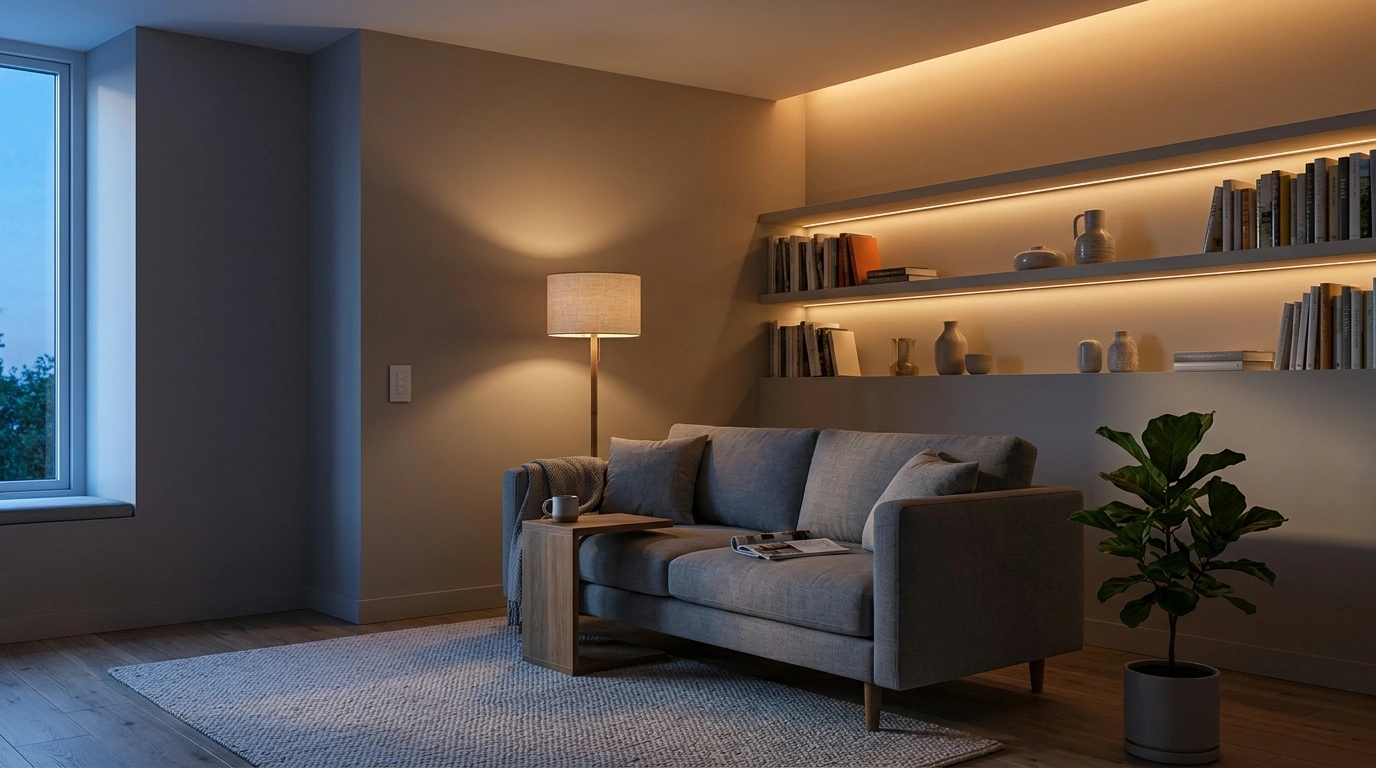
Lighting changes how a room feels as much as how it looks. The right mix of brightness, direction, and color temperature can shift a space from energizing to calm in seconds—without moving furniture or repainting walls. Below are practical, room-ready lighting moves plus smart and AI-assisted techniques for building reliable “mood scenes” you can repeat every day.
Mood starts with three dials: brightness, warmth, and direction
Most “good lighting” comes down to controlling three variables that the eye reads instantly.
- Brightness sets intensity: Lower light feels intimate and restorative; higher light supports activity, accuracy, and alertness.
- Warmth (color temperature) shapes emotion: Warm light (about 2200–3000K) reads cozy and flattering; neutral (3500–4100K) reads clean and balanced; cooler (5000K+) reads crisp and task-focused.
- Direction sculpts the room: Uplight expands perceived height; downlight clarifies tasks; side light reveals texture; backlight creates depth and reduces harsh contrast.
Keep glare in check by avoiding bare bulbs in direct view. Shades, diffusers, baffles, and indirect placement (bouncing light off walls/ceilings) usually feel better than “more lumens.” Also aim for consistency within a zone: mixing very warm and very cool bulbs in the same sightline can feel unsettled unless it’s intentionally staged.
Layered lighting: the fastest way to control ambiance
Layering makes mood control easy because each layer can be adjusted independently. Think in three parts:
- Ambient (overall): A diffused ceiling fixture, indirect cove lighting, or multiple lamps instead of one overpowering source.
- Task (work zones): Under-cabinet kitchen strips, a desk lamp, bedside reading lights, or vanity lighting positioned to reduce facial shadows.
- Accent (focus/interest): Picture lights, wall washers, bookshelf LEDs, plants lit from below, or a narrow-beam spotlight on art.
A simple rule that works almost everywhere: keep at least two light sources per room (one ambient plus one lamp or accent). That minimum instantly gives you a “scene” instead of a single on/off look.
Color temperature and color rendering: making people and materials look right
After brightness, the biggest mood lever is how “warm” the white light appears. Many homes feel off not because the fixtures are wrong, but because the white light is inconsistent.
- Pick a default warmth per room and adjust by time of day: warmer at night supports winding down; neutral to slightly cool supports daytime focus.
- Prioritize high color rendering in living areas and bathrooms so skin tones and finishes look natural (look for strong CRI details on packaging).
- Match the light to the finishes: Glossy surfaces amplify glare; matte surfaces absorb light and may need slightly higher brightness or more wall-bounced light.
- Use warm-dim bulbs where relaxing is the goal—these shift warmer as they dim, echoing incandescent behavior.
Color effects can be fun, but they’re easiest to live with when your everyday preset stays in white light. Save saturated colors for occasional “event” scenes rather than daily default lighting.
Room-by-room mood recipes (simple scenes that work)
Use these setups as starting points, then fine-tune one variable at a time (brightness first, then warmth, then where the accent lands).
Living room
Pair a diffused ambient source with two lamps at different heights. Add one accent aimed at texture—curtain folds, artwork, or plant leaves—to make the room feel deeper and less flat.
Bedroom
Kitchen
Bathroom
Home office
| Room | Relaxed scene | Focused scene | Best control to add |
|---|---|---|---|
| Living room | Low-to-medium brightness, warm (2200–2700K), lamps + one soft accent | Medium brightness, neutral (3000–3500K), add task lamp near seating | Dimmer for ambient + smart plug for lamps |
| Bedroom | Very low, warm, indirect night light + warm bedside lamps | Medium, warm-neutral (2700–3000K) for dressing/cleaning | Two independent bedside switches + warm-dim bulb |
| Kitchen | Warm pendants/dining light at low level | Bright, neutral task lighting on counters | Separate switch zones for task vs dining |
| Bathroom | Warm, low night mode | Even, neutral light at mirror height | Dedicated vanity circuit + night-light setting |
| Home office | Soft ambient to reduce contrast | Bright, neutral task lighting aimed at desk | Desk lamp with adjustable head + dimmable overhead |
Switch-by-switch control: building dependable scenes without a full remodel
If you want a step-by-step walkthrough for setting up repeatable scenes (including practical placement tips and automation ideas), see Light & Mood: Mastering Atmosphere with Every Switch.
Smart and AI-assisted lighting techniques that actually help
For deeper technical standards and lighting science, the Illuminating Engineering Society (IES) and the Lighting Research Center (LRC) are strong starting points.
Common mood-killers and quick fixes
Pairing lighting with other calming cues can make mood scenes feel more complete. If scent is part of your wind-down routine, How Essential Oils Can Ease Stress and Anxiety complements an evening lighting setup nicely.
A practical next step: a guided plan for lighting moods at home
FAQ
What color temperature is best for a relaxing mood at night?
Warm light in the 2200–2700K range, dimmed low, tends to feel most relaxing at night. Warm-dim bulbs are especially effective because they get warmer as they dim, and keeping bright/cool light out of bedrooms late evening helps the space feel calmer.
How do dimmers change the feel of a room compared with switching lights on and off?
Dimmers let you control intensity so you can reduce glare and soften shadows without turning lights off completely. They also make layered lighting work better—multiple small sources at low levels usually feels more comfortable than one bright source.
Do smart bulbs or smart switches work better for mood lighting?
Smart switches are great for reliable control of whole circuits, while smart bulbs are better when you want to change color temperature, create color scenes, or control lamps individually. Many homes get the best results by mixing both and keeping a simple manual fallback for everyday use.
Recommended for you
Breathable Quick-Dry Long-Sleeve Yoga Crop Top
Aug 9, 2026









Leave a comment