-
Shop
- Adidas
- Advanced Technologies
- Bathroom
- Best-Sellers
- Car Accessories
- Dating & Social Skills
- Digital Resources
- AI & Technology
- AI Skills
- Beauty
- Budgeting & Saving
- Car Buying & Ownership
- Cozy Feast Collection
- Electronics & Technology
- Emotional Intelligence
- Entrepreneurship & Business Growth
- Financial Education
- Financial Independence
- Financial Mindset & Psychology
- Goal Setting
- Home Styling & Organization
- Kitchen & Recipes
- Leadership
- Mindfulness
- Mindset
- Motivation
- Online Business
- Parenting & Child Development
- Personal Style & Fashion
- Pet Lifestyle & Wellness
- Positive Thinking
- Productivity
- Self Confidence
- Sleep Improvement
- Smart Life with AI
- Stress Management & Relaxation
- Travel Planning
- Wellness
- Yoga & Fitness
- Yoga & Mind-Body Practices
- Easter Products
- Education & Learning
- Family & Parenting
- Fashion
- Alexander McQueen
- Bags
- Bags & Wallets
- Balenciaga
- Belts
- Blazers
- Bottega Veneta
- Brunello Cucinelli
- Burberry
- Chanel
- Chloé
- Dior
- Dolce & Gabbana
- Dresses
- Etro
- Fendi
- Gucci
- Hats & Hair Accessories
- Jewelry
- Jil Sander
- Keychains
- Kiton
- Luggage
- Miu Miu
- Off-White
- Outerwear
- Prada
- Rick Owens
- Saint Laurent
- Shoes
- Socks & Tights
- The Row
- Tom Ford
- Valentino
- Valentino Garavani
- Versace
- Vivienne Westwood
- Watches
- Furniture
- Gadgets
- Health & Beauty
- Health & Wellness
- Home & Garden
- Home Electronics
- Kids & Babies
- Kitchen
- Lighting
- Patio, Lawn & Garden
- Personal Growth
- Pet Care
- Pet Supplies
- Pets
- Smart Home Living Guides
- Sport & Outdoors
- Stress Relief & Relaxation
- TikTok Growth & Monetization Mastery
- Travel
- Wealth
- Wealth Building
- Popular
- Best deals
Scent Routines for Mood: Relaxation, Focus & Energy
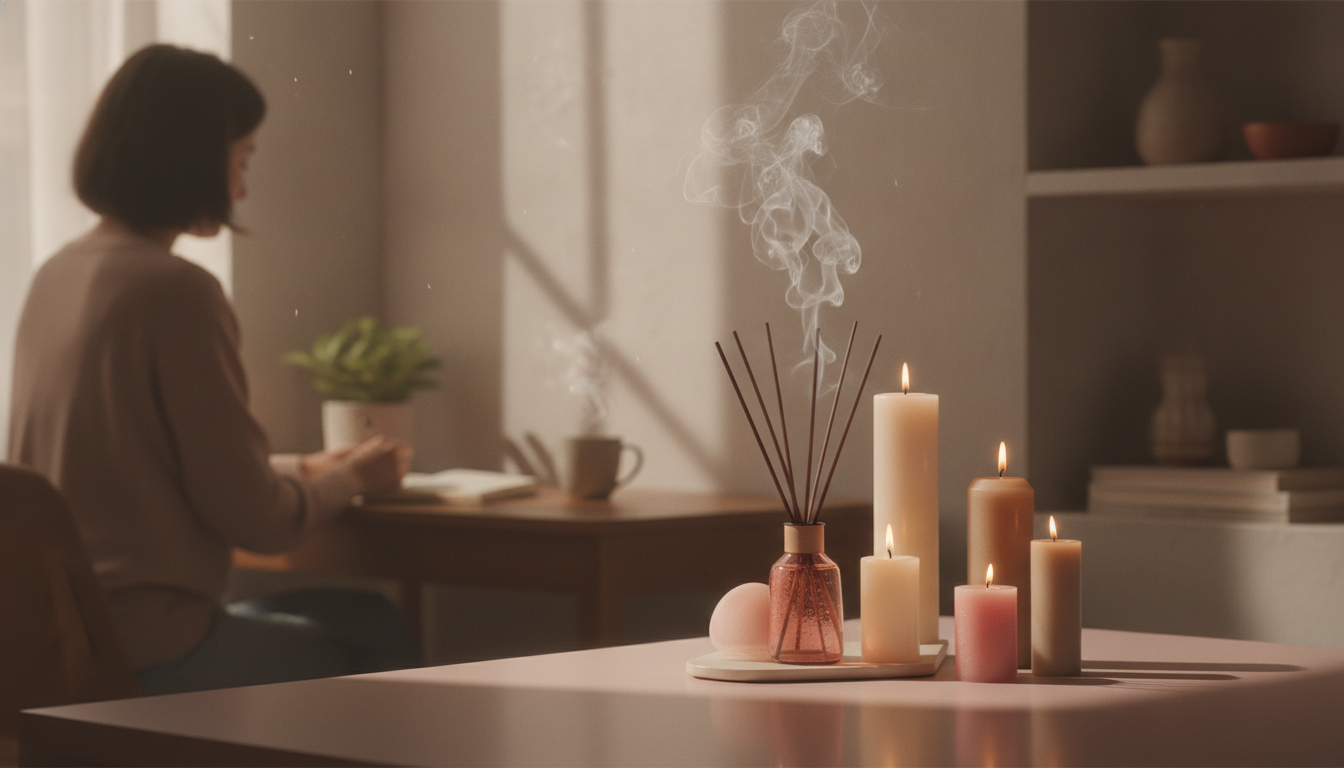
Using Fragrance for Mood and Atmosphere: Practical Scent Routines for Relaxation and Energy Balance
Fragrance can shift how a space feels within minutes—calm and grounded, bright and focused, cozy and intimate. The most consistent results come from choosing the right scent profile for the moment, controlling intensity, and matching the delivery method (diffuser, candle, linen spray, personal scent) to the room and activity. Below are simple frameworks and ready-to-use routines for shaping atmosphere, supporting relaxation, and balancing energy throughout the day.
How scent affects mood and a room’s feel
Scent perception is closely linked to memory and emotion, which is why familiar notes can quickly cue comfort, alertness, or calm. The effect isn’t just about the fragrance itself—intensity matters just as much. Too strong can feel stressful or “crowded,” while too subtle won’t register as a meaningful mood cue.
Context changes outcomes, too. The same bright citrus that feels energizing at 8 a.m. can feel distracting at 10 p.m. Finally, a stable atmosphere often comes from light layering (air + fabric + personal scent) rather than relying on a single source that swings between “can’t smell it” and “too much.”
Pick a mood first, then choose a scent direction
Start by naming the outcome you want (unwind, get moving, concentrate, feel cozy). Then choose a scent family that naturally supports that atmosphere and set the intensity to match the room.
Scent families, common effects, and best ways to use them
| Scent family | Atmosphere it tends to create | Best delivery methods | When to avoid or reduce |
|---|---|---|---|
| Lavender / soft floral | Unwinding, settling, bedtime calm | Ultrasonic diffuser (low), pillow mist, bath | If it reads “soapy” or triggers headaches—use less or swap to gentle woods |
| Citrus (lemon, orange, bergamot-like) | Brightness, motivation, fresh-start feel | Diffuser bursts, room spray, entryway reed diffuser | Late evening or migraine-prone settings—keep brief and light |
| Herbal (rosemary, basil, eucalyptus-like) | Clarity, “clean air” vibe, mental reset | Workspace diffuser, shower steam, targeted roll-on | If sensitive to strong camphor notes—dilute or pick softer herbs |
| Wood / resin (cedar, sandalwood-like) | Grounded, quiet, cozy stability | Candle (well-ventilated), reed diffuser, linen spray | Small rooms with low airflow—use low intensity to prevent heaviness |
| Gourmand / vanilla-like | Warmth, comfort, inviting sweetness | Candle, room spray (light), fabric scent | Hot days or high-humidity spaces—can become cloying |
Choose the right delivery method for the space
Delivery method often determines whether a scent feels “polished” or overpowering.
- Diffusers: Best for even room coverage. Use timed intervals (10–20 minutes on, then off) to prevent scent fatigue.
- Candles: Add both aroma and ambiance. Burn in ventilated areas and avoid overly strong fragrance loads in small rooms.
- Room sprays: Ideal for quick mood shifts. Spray into the air above head height and allow a minute to settle.
- Linen/pillow mists: Keep scent close and gentle; great for bedtime routines and “soft background” atmosphere.
- Personal scent (roller, perfume, balm): Supports mood without changing the whole room—useful in shared spaces.
A simple intensity rule that prevents overwhelm
Use a low-and-slow approach: start at 30–50% of what seems necessary, then increase gradually only if the scent disappears within 5 minutes. Match intensity to room size and ventilation—small rooms need less, while open-plan spaces do better with controlled placement (near the center, not right next to seating).
Add “scent breaks” so the effect stays noticeable: 30–60 minutes without fragrance can restore sensitivity. If a scent feels irritating, don’t push through—lower concentration, shorten duration, or change the scent profile.
Ready-to-use routines for relaxation, focus, and balanced energy
These routines are designed to be repeatable. Consistency is what turns scent into a reliable cue.
- Morning reset (5–15 minutes): Bright citrus or light herbal in an entryway or kitchen. Stop diffusion once the space feels “awake,” rather than letting it run for hours.
- Midday focus block (25–50 minutes): Clean herbal/tea-like notes near the workspace. Avoid sweet or heavy blends that can feel sedating.
- After-work decompression (20–40 minutes): Soft floral or gentle woods in the living area. Pair with lower lighting for a stronger “work is over” cue.
- Evening wind-down (30–60 minutes): Linen/pillow mist plus a low diffuser setting. Keep the scent profile simple, not layered.
- Social hosting (throughout event): Warm woods + subtle citrus. Refresh with a light room spray between guest arrivals.
Layering scent without creating a clash
Safety and comfort checklist
For additional context on aromatherapy and safety considerations, refer to the NIH (NCCIH) aromatherapy overview, the Cleveland Clinic guide, and fragrance safety standards from IFRA.
When fragrance isn’t working: quick fixes
A structured approach for building a personal scent plan
Guides to go deeper
- Using Fragrance for Mood and Atmosphere (eBook guide)
- How Essential Oils Can Ease Stress and Anxiety (relaxation eBook guide)
FAQ
How long should a diffuser run to support mood without becoming overwhelming?
Run a diffuser in short intervals (about 10–20 minutes) followed by a break, then repeat only if needed. Adjust for room size and ventilation, and build in “scent breaks” to prevent scent fatigue.
What scents are best for relaxation versus energy?
Relaxation tends to pair well with soft florals and gentle woods at low intensity, while energy is often supported by bright citrus and light herbs used in short bursts. Individual sensitivity matters, so start lighter than you think and increase gradually.
Is it okay to layer a candle and a diffuser in the same room?
Yes, as long as you keep profiles compatible and intensity low. Limit the room to two active sources, ventilate well, and pause one source if the space starts to feel heavy.









Leave a comment