-
Shop
- Adidas
- Advanced Technologies
- Bathroom
- Best-Sellers
- Car Accessories
- Dating & Social Skills
- Digital Resources
- AI & Technology
- AI Skills
- Beauty
- Budgeting & Saving
- Car Buying & Ownership
- Cozy Feast Collection
- Electronics & Technology
- Emotional Intelligence
- Entrepreneurship & Business Growth
- Financial Education
- Financial Independence
- Financial Mindset & Psychology
- Goal Setting
- Home Styling & Organization
- Kitchen & Recipes
- Leadership
- Mindfulness
- Mindset
- Motivation
- Online Business
- Parenting & Child Development
- Personal Style & Fashion
- Pet Lifestyle & Wellness
- Positive Thinking
- Productivity
- Self Confidence
- Sleep Improvement
- Smart Life with AI
- Stress Management & Relaxation
- Travel Planning
- Wellness
- Yoga & Fitness
- Yoga & Mind-Body Practices
- Easter Products
- Education & Learning
- Family & Parenting
- Fashion
- Alexander McQueen
- Bags
- Bags & Wallets
- Balenciaga
- Belts
- Blazers
- Bottega Veneta
- Brunello Cucinelli
- Burberry
- Chanel
- Chloé
- Dior
- Dolce & Gabbana
- Dresses
- Etro
- Fendi
- Gucci
- Hats & Hair Accessories
- Jewelry
- Jil Sander
- Keychains
- Kiton
- Luggage
- Miu Miu
- Off-White
- Outerwear
- Prada
- Rick Owens
- Saint Laurent
- Shoes
- Socks & Tights
- The Row
- Tom Ford
- Valentino
- Valentino Garavani
- Versace
- Vivienne Westwood
- Watches
- Furniture
- Gadgets
- Health & Beauty
- Health & Wellness
- Home & Garden
- Home Electronics
- Kids & Babies
- Kitchen
- Lighting
- Patio, Lawn & Garden
- Personal Growth
- Pet Care
- Pet Supplies
- Pets
- Smart Home Living Guides
- Sport & Outdoors
- Stress Relief & Relaxation
- TikTok Growth & Monetization Mastery
- Travel
- Wealth
- Wealth Building
- Popular
- Best deals
GMT Dive Watch Guide: Ceramic Bezel & Sapphire Crystal
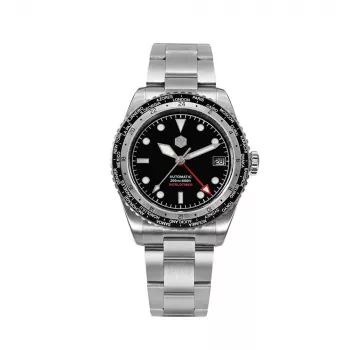
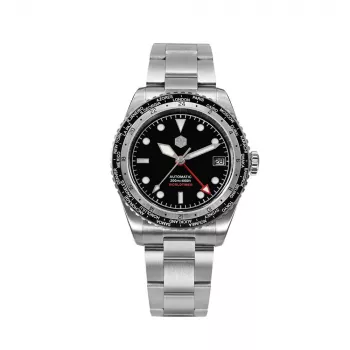
Luxury GMT Automatic Diving Watch with Ceramic Bezel & Sapphire Glass
A GMT diving watch blends two practical tools into one capable sport watch: a timing bezel for underwater use and a second time zone for travel. This model pairs an automatic movement with a ceramic bezel and sapphire glass—materials chosen for daily durability, legibility, and long-term wear when life includes everything from airport sprints to weekend water time.
What Makes a GMT Dive Watch Different
Most watches tell one time. A GMT dive watch is designed to tell multiple “stories” at once—local time on the main hands, home (or destination) time on a dedicated GMT hand, and elapsed minutes via the dive bezel.
- GMT function: Tracks a second time zone using an additional hand and a 24-hour scale on the dial or bezel, helping avoid the AM/PM confusion that can happen when traveling.
- Dive timing: A unidirectional bezel tracks elapsed minutes. Because it only turns one way, an accidental bump can’t extend the indicated dive time.
- Why the combo matters: It’s a practical setup for frequent travelers who still want a sport watch that can handle water activities and rougher daily wear.
- At-a-glance reading: Strong lume, high-contrast markers, and a clean separation between hands and indices matter more here than decorative details.
Materials That Define the Build: Ceramic Bezel and Sapphire Glass
Two components take the most abuse in real life: the bezel (constantly brushed by sleeves, desks, and door frames) and the crystal (exposed to sand, grit, and accidental contact). Ceramic and sapphire are popular upgrades because they keep a watch looking crisp long after the honeymoon period.
- Ceramic bezel benefits: High resistance to everyday scratches and fading helps the timing scale stay sharp and readable for years.
- Sapphire glass benefits: Sapphire is highly scratch resistant, protecting clarity and reducing the chance of permanent marks from metal contact or abrasive dust.
- Edge cases to know: Sapphire can chip or crack from a hard impact, and ceramic—while excellent against scratches—can be damaged by severe knocks.
- Practical check: A premium feel shows up in the details: firm, confident bezel clicks with minimal backplay, and crystal clarity that stays readable at angles.
Ceramic Bezel vs. Common Alternatives (Everyday Wear Perspective)
| Component | Ceramic | Aluminum Insert | Steel Bezel |
|---|---|---|---|
| Scratch resistance | High | Moderate | Moderate |
| Color/marking longevity | High (resists fading) | Lower (can fade) | High (but can scuff) |
| Impact behavior | Can chip with hard impact | Can dent/scratch | Can dent/scratch |
| Typical look over time | Stays cleaner/near-new | Shows wear faster | Shows scuffs/polish marks |
Automatic Movement and GMT Operation
An automatic watch runs off wrist motion via a rotor, with the option to manually wind. That means the watch feels “alive”—but it also benefits from a simple routine.
For deeper standards context, divers’ watch requirements are outlined in ISO 6425, and independent accuracy certification is commonly associated with organizations like COSC (when a watch is submitted and certified).
Diving Readiness: Water Resistance, Bezel Safety, and Legibility
For practical planning and conservative safety guidance around water activities, resources from NOAA are a solid reference point.
Fit, Comfort, and Everyday Wear
When to Choose This Style of Watch
Product Snapshot
If the goal is a premium sport watch that stays sharp-looking while delivering real travel functionality, the Luxury GMT Automatic Diving Watch with Ceramic Bezel & Sapphire Glass is positioned as a durable daily wear option with a dual-time display and dive-ready design cues.
Quick Specs Checklist (Before Buying)
| Item to Check | Why It Matters | What to Look For |
|---|---|---|
| Water resistance rating | Determines safe water activities | A clear rating and guidance for swimming/diving use |
| Crown type | Seal reliability | Secure crown operation and proper closure |
| GMT setting behavior | Ease during travel | Local-hour jump vs. independent GMT hand (preference-based) |
| Crystal and bezel materials | Wear resistance | Sapphire glass and ceramic bezel confirmation |
| Lume performance | Low-light legibility | Bright, even lume on hands and indices |
Other In-Stock Picks Worth Browsing
- Elegant French Burgundy Velvet Long-Sleeve Banquet Dress for Autumn (a polished option for formal travel, dinners, and milestone events).
- How Essential Oils Can Ease Stress and Anxiety | Relaxation eBook Guide for Natural Stress Relief, Aromatherapy, and Anxiety Support (a lightweight travel companion for winding down after long flights).
FAQ
Can a GMT diving watch be used for real diving?
It can be, but suitability depends on the stated water-resistance rating, a properly secured crown, and ongoing pressure testing over time. The unidirectional bezel supports elapsed-time tracking, but the watch should be used strictly within its rating and maintained—especially after saltwater exposure.
What is the advantage of a ceramic bezel and sapphire glass?
Ceramic helps the bezel resist scratches and fading, while sapphire helps the crystal stay clear and resist permanent scuffs. The main trade-off is impact: a severe knock can chip ceramic or crack sapphire even though they hold up extremely well to daily wear.
How do you set the GMT hand for a second time zone?
Set the local time first, then set the GMT hand to your home time using the 24-hour scale so you can tell day versus night. The exact steps depend on whether the watch uses a “traveler” (jumping local hour) or “caller” (independent GMT hand) setting style, but the goal is the same: local time on the main hands, home time on the GMT hand.












Leave a comment