-
Shop
- Adidas
- Advanced Technologies
- Bathroom
- Best-Sellers
- Car Accessories
- Dating & Social Skills
- Digital Resources
- AI & Technology
- AI Skills
- Beauty
- Budgeting & Saving
- Car Buying & Ownership
- Cozy Feast Collection
- Electronics & Technology
- Emotional Intelligence
- Entrepreneurship & Business Growth
- Financial Education
- Financial Independence
- Financial Mindset & Psychology
- Goal Setting
- Home Styling & Organization
- Kitchen & Recipes
- Leadership
- Mindfulness
- Mindset
- Motivation
- Online Business
- Parenting & Child Development
- Personal Style & Fashion
- Pet Lifestyle & Wellness
- Positive Thinking
- Productivity
- Self Confidence
- Sleep Improvement
- Smart Life with AI
- Stress Management & Relaxation
- Travel Planning
- Wellness
- Yoga & Fitness
- Yoga & Mind-Body Practices
- Easter Products
- Education & Learning
- Family & Parenting
- Fashion
- Alexander McQueen
- Bags
- Bags & Wallets
- Balenciaga
- Belts
- Blazers
- Bottega Veneta
- Brunello Cucinelli
- Burberry
- Chanel
- Chloé
- Dior
- Dolce & Gabbana
- Dresses
- Etro
- Fendi
- Gucci
- Hats & Hair Accessories
- Jewelry
- Jil Sander
- Keychains
- Kiton
- Luggage
- Miu Miu
- Off-White
- Outerwear
- Prada
- Rick Owens
- Saint Laurent
- Shoes
- Socks & Tights
- The Row
- Tom Ford
- Valentino
- Valentino Garavani
- Versace
- Vivienne Westwood
- Watches
- Furniture
- Gadgets
- Health & Beauty
- Health & Wellness
- Home & Garden
- Home Electronics
- Kids & Babies
- Kitchen
- Lighting
- Patio, Lawn & Garden
- Personal Growth
- Pet Care
- Pet Supplies
- Pets
- Smart Home Living Guides
- Sport & Outdoors
- Stress Relief & Relaxation
- TikTok Growth & Monetization Mastery
- Travel
- Wealth
- Wealth Building
- Popular
- Best deals
Still Tired After 8 Hours? Causes and a 14-Day Reset
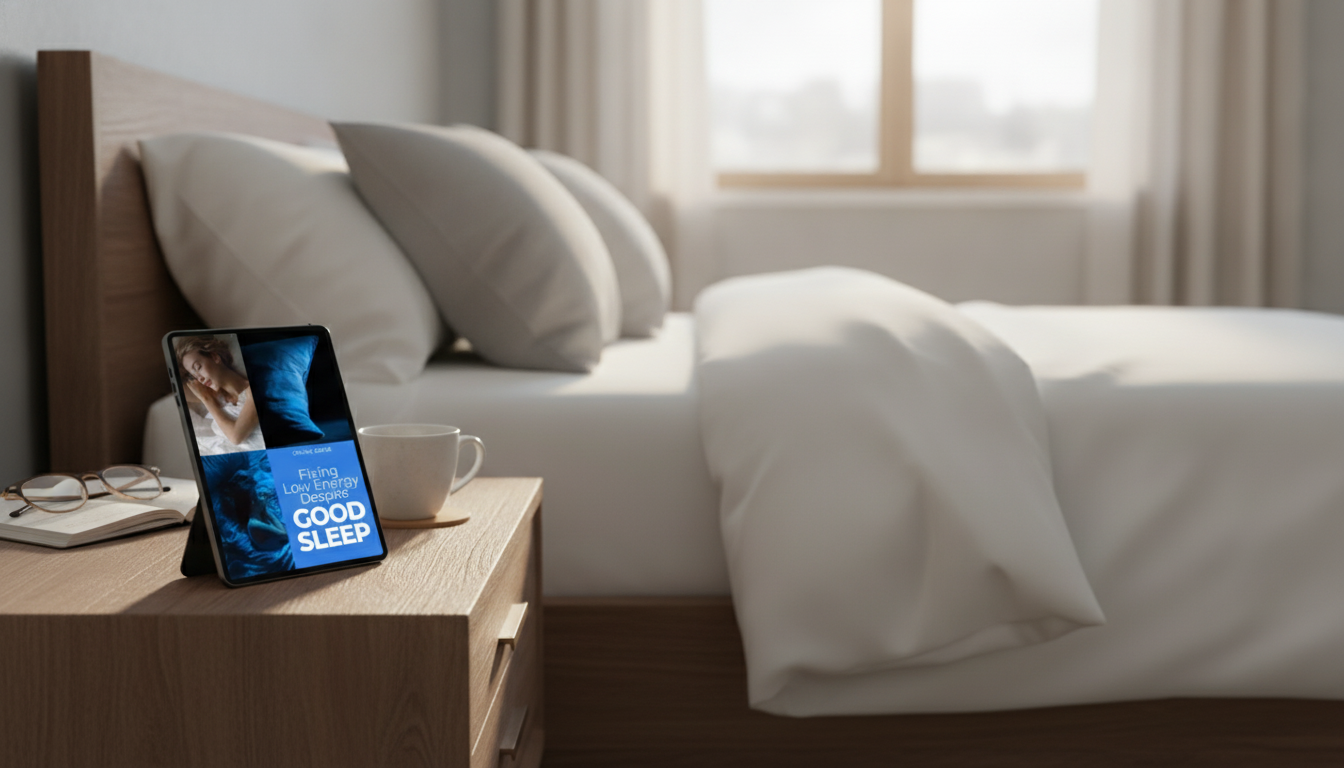
Fixing Low Energy Despite Good Sleep: Practical Reasons You’re Still Tired and What to Do Next
Getting enough hours in bed doesn’t always translate into feeling restored. Daytime fatigue can come from sleep quality issues, stress physiology, nutrition gaps, poor light and movement timing, hydration, medication effects, or underlying health conditions. The goal is to identify the most likely contributors, test a few high-impact habits for 7–14 days, and know when it’s time to ask a clinician for targeted labs or screening.
When “good sleep” isn’t actually restorative
“Good sleep” is often measured by quantity (how many hours you were in bed). Restorative sleep depends more on quality: continuity (few awakenings), depth (enough deep sleep), REM sleep, and timing that matches your circadian rhythm.
Common signs of non-restorative sleep include waking up unrefreshed, morning headaches, dry mouth, frequent nighttime urination, or needing caffeine just to function. Even with a consistent schedule, sleep can be fragmented by noise spikes, reflux, breathing disruptions, or subtle awakenings you don’t remember.
Before changing everything, collect a 7-day baseline. Track bedtime and wake time, number of awakenings, caffeine/alcohol timing, naps, and a simple morning energy rating (1–10). Patterns show up fast when you keep the tracking lightweight.
High-probability causes of low energy despite sleeping enough
Fatigue usually has a few overlapping drivers. These are common, actionable places to start:
- Sleep-disordered breathing: Snoring, gasping, witnessed pauses, and daytime sleepiness can signal obstructive sleep apnea—even if you feel like you “sleep all night.”
- Circadian mismatch: Late-night light exposure, late meals, and inconsistent mornings can shift internal timing, making sleep less efficient and mornings harder.
- Stress and hyperarousal: Chronic worry or overwork can keep your nervous system “on,” reducing how rested you feel.
- Blood sugar swings: A sugary breakfast or long gaps between meals can create predictable crashes mid-morning or mid-afternoon.
- Nutrient gaps or thyroid imbalance: Low iron (including low ferritin), B12, vitamin D, and thyroid issues are common, testable contributors.
- Medication and supplement effects: Antihistamines, some antidepressants, beta blockers, sedatives, and some “sleep aids” can cause next-day grogginess.
- Dehydration and low electrolytes: Mild deficits can lower energy and concentration, especially with heat, exercise, or high caffeine intake.
| What it feels like | Common clues | What to try first |
|---|---|---|
| Sleepy and foggy all morning | Snoring, dry mouth, morning headache | Side-sleeping, nasal support, ask about sleep apnea screening |
| Crash after lunch | Heavy meal, sugary drink, low protein | Protein + fiber lunch, 10-minute walk after eating |
| Wired at night, tired in the day | Late scrolling, late caffeine, irregular schedule | Morning outdoor light, earlier caffeine cutoff, consistent wake time |
| Low motivation and “flat” energy | High stress load, low movement, limited daylight | Short daily movement breaks, sunlight exposure, stress downshift routine |
A 14-day reset plan to improve energy without overhauling life
Run this as a short experiment. Keep your top priorities simple: light timing, caffeine timing, protein, movement, and a calmer evening.
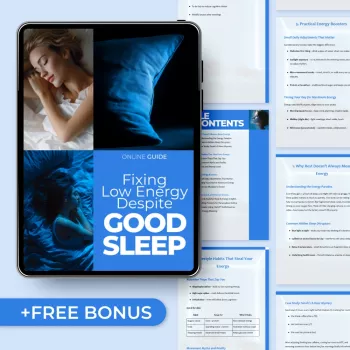
If you want a step-by-step routine you can follow without guesswork, consider Fixing Low Energy Despite Good Sleep | Digital Guide to Boost Energy, Beat Fatigue, Sleep Better & Feel Energized Daily, which includes weekly planning prompts and troubleshooting for common fatigue patterns.
Check the basics that quietly drain energy
When stress is a major driver, relaxing cues can help the downshift stick. For a simple, natural routine idea, How Essential Oils Can Ease Stress and Anxiety | Relaxation eBook Guide for Natural Stress Relief, Aromatherapy, and Anxiety Support focuses on practical calming habits you can pair with your evening wind-down.
When to get medical input (and what to ask about)
Ask about screening for sleep apnea, anemia/iron studies (including ferritin), thyroid function (TSH), vitamin B12, vitamin D, glucose/A1C, and medication side effects. Helpful background reading is available from NIH MedlinePlus (Fatigue), the CDC (About Sleep), and the NHLBI (Sleep Deprivation and Deficiency).
A guided approach for building an energy routine that sticks
A guided format can reduce decision fatigue. Fixing Low Energy Despite Good Sleep | Digital Guide to Boost Energy, Beat Fatigue, Sleep Better & Feel Energized Daily is built around repeatable habits—light timing, balanced meals, movement breaks, and a realistic wind-down—so you can run a 14-day reset and adjust based on results.
FAQ
Why am I exhausted even after 8 hours of sleep?
Eight hours can still be non-restorative if sleep is fragmented, breathing is disrupted (like sleep apnea), your circadian rhythm is shifted by late light/late meals, or stress keeps your system in a hyper-alert state. Nutrition, blood sugar swings, and medical issues like anemia or thyroid imbalance can also contribute, so a short tracking period plus targeted screening can help pinpoint the cause.
How long does it take to feel more energized after changing habits?
Some changes can help within 3–7 days (morning light, better caffeine timing, hydration, and a lighter evening routine). Bigger shifts often take 2–4 weeks, especially when improving sleep consistency, nutrition patterns, and daily movement; if there’s no meaningful improvement after a few weeks, a clinician can help evaluate underlying causes.
What tests are commonly checked for persistent fatigue?
Common checks include a CBC, ferritin/iron studies, TSH (thyroid), vitamin B12, vitamin D, and fasting glucose or A1C. Based on symptoms like snoring or morning headaches, sleep apnea testing may also be recommended—your clinician can tailor the workup to your situation.















Leave a comment