-
Shop
- Adidas
- Advanced Technologies
- Bathroom
- Best-Sellers
- Car Accessories
- Dating & Social Skills
- Digital Resources
- AI & Technology
- AI Skills
- Beauty
- Budgeting & Saving
- Car Buying & Ownership
- Cozy Feast Collection
- Electronics & Technology
- Emotional Intelligence
- Entrepreneurship & Business Growth
- Financial Education
- Financial Independence
- Financial Mindset & Psychology
- Goal Setting
- Home Styling & Organization
- Kitchen & Recipes
- Leadership
- Mindfulness
- Mindset
- Motivation
- Online Business
- Parenting & Child Development
- Personal Style & Fashion
- Pet Lifestyle & Wellness
- Positive Thinking
- Productivity
- Self Confidence
- Sleep Improvement
- Smart Life with AI
- Stress Management & Relaxation
- Travel Planning
- Wellness
- Yoga & Fitness
- Yoga & Mind-Body Practices
- Easter Products
- Education & Learning
- Family & Parenting
- Fashion
- Alexander McQueen
- Bags
- Bags & Wallets
- Balenciaga
- Belts
- Blazers
- Bottega Veneta
- Brunello Cucinelli
- Burberry
- Chanel
- Chloé
- Dior
- Dolce & Gabbana
- Dresses
- Etro
- Fendi
- Gucci
- Hats & Hair Accessories
- Jewelry
- Jil Sander
- Keychains
- Kiton
- Luggage
- Miu Miu
- Off-White
- Outerwear
- Prada
- Rick Owens
- Saint Laurent
- Shoes
- Socks & Tights
- The Row
- Tom Ford
- Valentino
- Valentino Garavani
- Versace
- Vivienne Westwood
- Watches
- Furniture
- Gadgets
- Health & Beauty
- Health & Wellness
- Home & Garden
- Home Electronics
- Kids & Babies
- Kitchen
- Lighting
- Patio, Lawn & Garden
- Personal Growth
- Pet Care
- Pet Supplies
- Pets
- Smart Home Living Guides
- Sport & Outdoors
- Stress Relief & Relaxation
- TikTok Growth & Monetization Mastery
- Travel
- Wealth
- Wealth Building
- Popular
- Best deals
Drooping Houseplants? Diagnose Fast and Restore Them
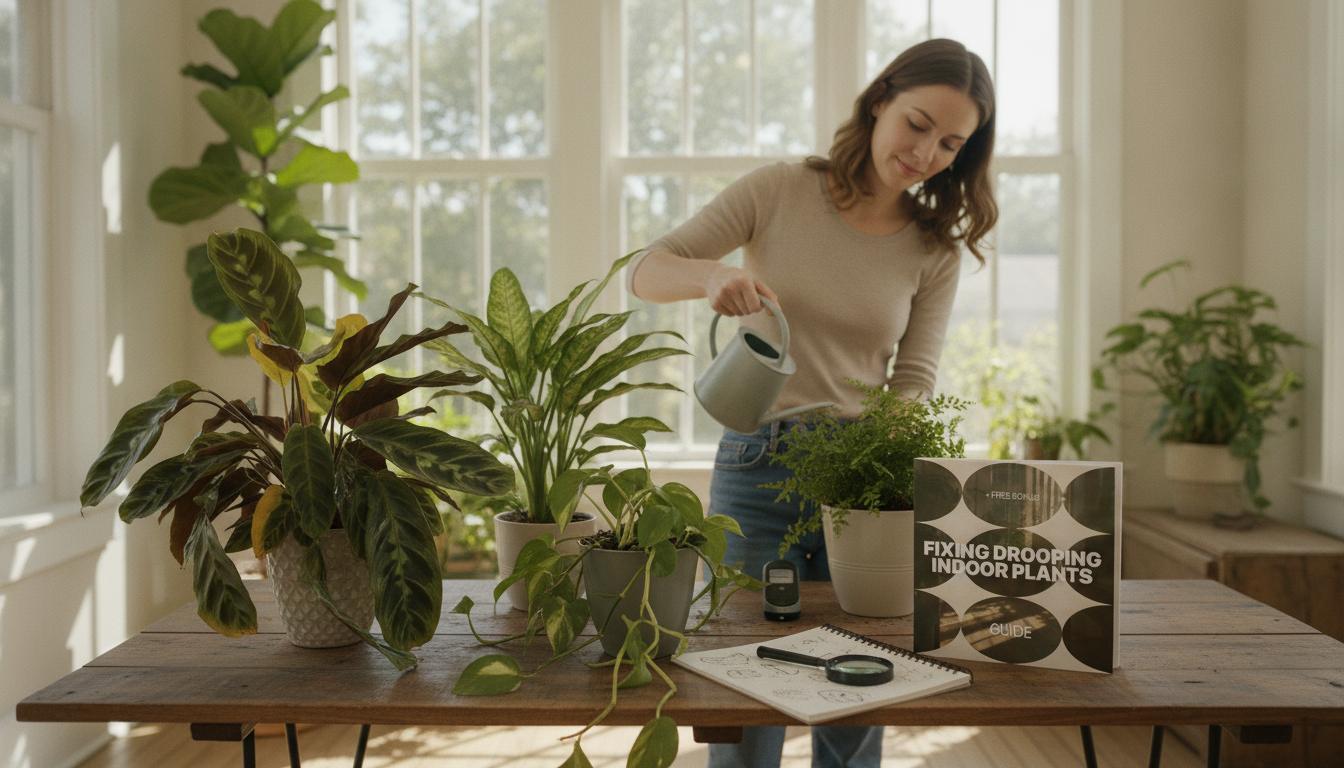
Fixing Drooping Indoor Plants: Causes, Quick Checks, and Step-by-Step Recovery
Drooping is a common distress signal that can come from water stress, root problems, pests, temperature swings, or light mismatches. A fast, methodical check—starting with soil moisture and root health—usually reveals the cause. Use the diagnostics below to identify what’s happening, apply the right fix, and support the plant’s recovery over the next 1–3 weeks.
Fast diagnosis: 5-minute triage before changing anything
- Check soil moisture 2–3 inches down: dusty-dry suggests underwatering; wet/cold soil suggests overwatering or poor drainage.
- Look at leaf texture: limp and thin often indicates dehydration; soft/yellowing or mushy stems often indicate excess water and low oxygen at roots.
- Inspect the pot: confirm there’s a drainage hole and that the saucer isn’t holding standing water.
- Scan for pests: check leaf undersides and stem joints for webbing, speckling, sticky residue, or clusters of tiny insects.
- Confirm recent changes: new location, repotting, heat/AC vent exposure, missed waterings, or fertilizer spikes often correlate with sudden droop.
Droop pattern quick guide
| What you see | Most likely cause | What to do now |
|---|---|---|
| Leaves limp, soil dry, pot feels light | Underwatering / hydrophobic soil | Deep soak until water drains; repeat once after 10 minutes if soil was bone-dry |
| Leaves limp, soil wet, yellowing, fungus gnats | Overwatering / low oxygen roots | Stop watering; improve drainage; consider repot if roots smell sour or are black/mushy |
| Droop only at hottest part of day; perks up at night | Heat/light stress or temporary transpiration imbalance | Move out of harsh sun/heat; water in morning; increase humidity gradually |
| Stems bending toward window, older leaves droop | Low or uneven light | Rotate weekly; move closer to bright indirect light; use a grow light if needed |
| Fine webbing, stippled leaves, persistent droop | Spider mites or other sap-sucking pests | Isolate plant; rinse foliage; treat with insecticidal soap; repeat weekly |
Watering problems: underwatering vs overwatering (and how to tell)
- Underwatering signs: crispy edges, soil pulling from pot sides, leaves droop then recover quickly after a thorough drink.
- Overwatering signs: slow droop over days, yellowing, soft stems, musty odor, persistent wet soil, fungus gnats hovering near the pot.
- Confirm moisture at depth: soil can be wet on top and dry below (or vice versa). Use a finger test or a wooden skewer; damp, cool soil clinging to the skewer means you can wait.
- Hydrophobic soil fix: bottom-water 20–30 minutes or soak from top in cycles until evenly moist. If water beads and races through, refreshing the potting mix often helps.
- Overwatering immediate fix: empty the saucer, increase airflow, move to brighter (not hot) light, and pause watering until the top 1–2 inches are dry for most houseplants.
For a deeper watering refresher (including how often to check and what “thoroughly” means), see the University of Minnesota Extension guidance on watering houseplants.
Root and pot issues: drainage, compaction, and root rot
- Drainage basics: a pot needs a hole. If you use a decorative cachepot, keep the plant in a nursery pot inside and always dump excess water.
- Compacted/old mix: can suffocate roots even with “correct” watering. Droop persists, growth stalls, and the pot may stay wet longer than expected.
- Root rot indicators: black/brown mushy roots, foul smell, stems soft at the base, soil staying wet for a week or more.
- Recovery steps for suspected rot: unpot, trim damaged roots with sterilized scissors, discard soggy mix, repot into an airy medium, and water lightly once—then wait.
- Aftercare: keep in bright indirect light, avoid fertilizer for 3–4 weeks, and monitor for new growth before resuming feeding.
If the plant repeatedly droops after watering corrections, checking roots is often the turning point. General care standards and repotting cautions are also covered by the Royal Horticultural Society’s houseplant care guidance.
Light, heat, and humidity: when the environment causes droop
Pests and disease: hidden causes of drooping
For ID help and control basics, the Penn State Extension overview of houseplant insects and mites is a practical reference.
Recovery plan: what to do today, this week, and this month
Today
Next 3–7 days
Week 2–4
Helpful resources (in stock)
- Fixing Drooping Indoor Plants: Expert Guide on Indoor Plants Drooping Causes, Watering, Pests, and Recovery Tips
- How Essential Oils Can Ease Stress and Anxiety | Relaxation eBook Guide for Natural Stress Relief, Aromatherapy, and Anxiety Support
When to repot (and when not to)
FAQ
Why are my indoor plant leaves drooping even though the soil is wet?
Wet soil with drooping usually points to low oxygen around the roots from overwatering, compacted mix, or poor drainage. Pause watering, empty any saucer, increase light and airflow, and if it doesn’t improve within several days, unpot to check for dark/mushy roots and repot into a more airy mix.
How long does it take a drooping houseplant to recover?
Plants that are simply thirsty may perk up within a few hours after a deep soak. If the issue involves overwatering, compaction, or early root damage, improvement often takes 1–3 weeks as roots regrow and the plant rebalances in stable light and temperature.
Should a drooping plant be fertilized to help it bounce back?
No—fertilizing during stress can worsen droop by burning weakened roots or pushing soft growth. Correct water, light, and pest issues first, then resume light feeding only after you see clear signs of new growth.














Leave a comment