-
Shop
- Adidas
- Advanced Technologies
- Bathroom
- Best-Sellers
- Car Accessories
- Dating & Social Skills
- Digital Resources
- AI & Technology
- AI Skills
- Beauty
- Budgeting & Saving
- Car Buying & Ownership
- Cozy Feast Collection
- Electronics & Technology
- Emotional Intelligence
- Entrepreneurship & Business Growth
- Financial Education
- Financial Independence
- Financial Mindset & Psychology
- Goal Setting
- Home Styling & Organization
- Kitchen & Recipes
- Leadership
- Mindfulness
- Mindset
- Motivation
- Online Business
- Parenting & Child Development
- Personal Style & Fashion
- Pet Lifestyle & Wellness
- Positive Thinking
- Productivity
- Self Confidence
- Sleep Improvement
- Smart Life with AI
- Stress Management & Relaxation
- Travel Planning
- Wellness
- Yoga & Fitness
- Yoga & Mind-Body Practices
- Easter Products
- Education & Learning
- Family & Parenting
- Fashion
- Alexander McQueen
- Bags
- Bags & Wallets
- Balenciaga
- Belts
- Blazers
- Bottega Veneta
- Brunello Cucinelli
- Burberry
- Chanel
- Chloé
- Dior
- Dolce & Gabbana
- Dresses
- Etro
- Fendi
- Gucci
- Hats & Hair Accessories
- Jewelry
- Jil Sander
- Keychains
- Kiton
- Luggage
- Miu Miu
- Off-White
- Outerwear
- Prada
- Rick Owens
- Saint Laurent
- Shoes
- Socks & Tights
- The Row
- Tom Ford
- Valentino
- Valentino Garavani
- Versace
- Vivienne Westwood
- Watches
- Furniture
- Gadgets
- Health & Beauty
- Health & Wellness
- Home & Garden
- Home Electronics
- Kids & Babies
- Kitchen
- Lighting
- Patio, Lawn & Garden
- Personal Growth
- Pet Care
- Pet Supplies
- Pets
- Smart Home Living Guides
- Sport & Outdoors
- Stress Relief & Relaxation
- TikTok Growth & Monetization Mastery
- Travel
- Wealth
- Wealth Building
- Popular
- Best deals
Essential Oils for Stress & Anxiety: Simple Calm Routines
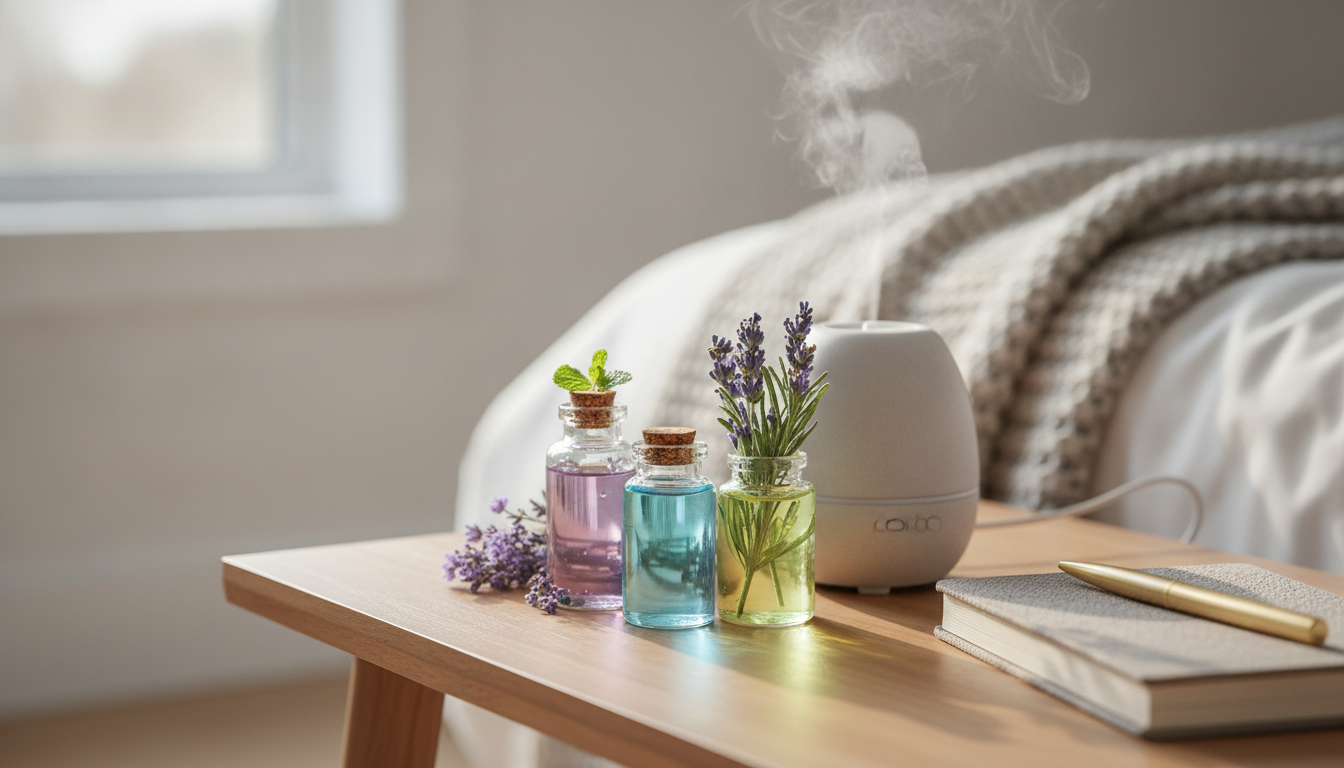
How Essential Oils Can Ease Stress and Anxiety: Simple Aromatherapy Routines for Calm
Stress can build quickly—tight shoulders, racing thoughts, shallow breathing, trouble sleeping. Aromatherapy offers a gentle, sensory way to support relaxation and create calming rituals at home. With the right oils, safe dilution, and consistent routines, essential oils can become a practical add-on to other healthy stress-management habits.
Why scent can shift mood so fast
Aroma can feel “instant” because smell is routed through the olfactory system, which connects closely with brain regions involved in emotion and memory. That’s why a familiar scent can quickly bring a sense of comfort, signal safety, or cue a wind-down state.
It helps to keep expectations realistic: aromatherapy is best viewed as relaxation support—easing tension, encouraging calmer breathing, and reinforcing sleep cues. It isn’t a substitute for medical care, and it won’t “erase” anxiety disorders on its own. For an evidence-based overview, see NCCIH’s essential oils guidance and Mayo Clinic’s aromatherapy overview.
Aromatherapy fits especially well into small moments that benefit from a reset: end-of-day decompression, pre-sleep wind-down, workday “pressure valve” breaks, and travel nerves (hotel rooms, car rides, or flights) when used thoughtfully.
Essential oils commonly used for relaxation and anxious feelings
Different oils land differently for different people—one person finds lavender cozy, another finds it too floral. Start with a single oil, use a low amount, and pay attention to how your body responds.
| Essential oil | Common relaxation use | Best time of day | Typical method | Key safety note |
|---|---|---|---|---|
| Lavender | Calm, sleep routine support | Evening | Diffuser or diluted topical | Patch test; avoid eye area |
| Bergamot | Daytime stress relief, mood lift | Morning/afternoon | Diffuser or inhaler | Citrus can be phototoxic on skin |
| Roman chamomile | Soothing, unwind support | Evening | Diffuser or bath (properly dispersed) | May irritate sensitive skin if undiluted |
| Frankincense | Grounding, slow-breath ritual | Anytime | Diffuser or inhalation | Use modest amounts; strong aroma |
| Ylang ylang | Relaxation, tension easing | Evening | Diffuser | Can feel overpowering; start low |
Lavender is a classic for bedtime and general calm. Bergamot often shines during daytime stress because it feels both bright and settling, but expressed citrus oils require extra caution if used on skin. Roman chamomile is gentle and commonly used in unwind routines. Frankincense is popular for slower breathing or meditation. Ylang ylang or clary sage can be powerful—use fewer drops than you think you need.
Three easy aromatherapy methods (and when to use each)
1) Diffusion for room atmosphere
Use short diffusion sessions (often 15–30 minutes) rather than running a diffuser all day. Keep the space ventilated, especially in smaller rooms. This method is ideal for setting a calm tone while stretching, journaling, or reading.
2) Inhalation for quick resets
For a fast “reset,” add 1–2 drops to a tissue or cotton pad and inhale gently from a comfortable distance. A personal inhaler also works well for commuting, travel, or a mid-meeting break without scenting the entire room.
3) Topical use for anchoring a ritual
Topical application can make a routine feel more intentional (for example, a brief shoulder massage before bed). Always dilute in a carrier oil, apply to small areas like pulse points, shoulders, or feet, and wash hands after. Avoid eyes and mucous membranes.
Safe use basics: dilution, skin sensitivity, and household precautions
Start low and scale slowly. For many adults, a 1% dilution is a conservative starting point (about 1 drop essential oil per 1 teaspoon/5 mL carrier oil). If you have sensitive skin, begin even lower. Patch test by applying a small amount of diluted oil to the inner forearm and waiting 24 hours.
Extra caution is important during pregnancy, with asthma or migraines, epilepsy, and for children and pets. Diffusion and topical use can affect others in the household, so use lighter amounts, limit exposure time, and choose well-ventilated spaces. Phototoxicity matters with some citrus oils—avoid direct UV exposure after topical use. For stress education and broader coping strategies, the American Psychological Association’s stress resources are a helpful baseline.
Relaxation routines that pair oils with proven calming habits
2-minute desk reset
Evening unwind
Sleep cue routine
Grounding for racing thoughts
When stress and anxiety need extra support
A guided, step-by-step approach to using essential oils for calm
Simple blend ideas (with safety reminders)
Build a toolkit without overbuying
For a focused, ready-to-use set of routines and safety notes, see How Essential Oils Can Ease Stress and Anxiety (Relaxation eBook Guide). If long-term stress is tied to feeling scattered or overcommitted, pairing calming rituals with goal clarity can help—Purposeful Progress: How to Set Goals with Kaizen & Ikigai offers a structured approach to building steadier daily momentum.
FAQ
Which essential oil is best for anxiety and stress?
It varies by person, but lavender and bergamot are common starting points because many people find them soothing and easy to use. Try one oil at a time, use low amounts, and pair it with a calming habit like slow breathing so you can tell what actually helps.
Is it safe to use essential oils every day for relaxation?
Daily use can be fine when you keep diffusion sessions short, use good ventilation, and take breaks if you notice sensitivity. For topical use, stick to proper dilution, patch test first, and use extra caution (or consult a clinician) for kids, pregnancy, asthma, migraines, pets, or complex medical conditions.
Can essential oils help with sleep when stress is high?
They may support sleep when used as part of a consistent bedtime ritual—lavender or Roman chamomile are common choices for a wind-down cue. If insomnia persists or worsens, it’s important to seek medical guidance to rule out underlying causes and get appropriate treatment.
Recommended for you


Best Earbuds to Block Noise for Sleep (Seal + Tips)
Jun 24, 2026










Leave a comment