-
Shop
- Adidas
- Advanced Technologies
- Bathroom
- Best-Sellers
- Car Accessories
- Dating & Social Skills
- Digital Resources
- AI & Technology
- AI Skills
- Beauty
- Budgeting & Saving
- Car Buying & Ownership
- Cozy Feast Collection
- Electronics & Technology
- Emotional Intelligence
- Entrepreneurship & Business Growth
- Financial Education
- Financial Independence
- Financial Mindset & Psychology
- Goal Setting
- Home Styling & Organization
- Kitchen & Recipes
- Leadership
- Mindfulness
- Mindset
- Motivation
- Online Business
- Parenting & Child Development
- Personal Style & Fashion
- Pet Lifestyle & Wellness
- Positive Thinking
- Productivity
- Self Confidence
- Sleep Improvement
- Smart Life with AI
- Stress Management & Relaxation
- Travel Planning
- Wellness
- Yoga & Fitness
- Yoga & Mind-Body Practices
- Easter Products
- Education & Learning
- Family & Parenting
- Fashion
- Alexander McQueen
- Bags
- Bags & Wallets
- Balenciaga
- Belts
- Blazers
- Bottega Veneta
- Brunello Cucinelli
- Burberry
- Chanel
- Chloé
- Dior
- Dolce & Gabbana
- Dresses
- Etro
- Fendi
- Gucci
- Hats & Hair Accessories
- Jewelry
- Jil Sander
- Keychains
- Kiton
- Luggage
- Miu Miu
- Off-White
- Outerwear
- Prada
- Rick Owens
- Saint Laurent
- Shoes
- Socks & Tights
- The Row
- Tom Ford
- Valentino
- Valentino Garavani
- Versace
- Vivienne Westwood
- Watches
- Furniture
- Gadgets
- Health & Beauty
- Health & Wellness
- Home & Garden
- Home Electronics
- Kids & Babies
- Kitchen
- Lighting
- Patio, Lawn & Garden
- Personal Growth
- Pet Care
- Pet Supplies
- Pets
- Smart Home Living Guides
- Sport & Outdoors
- Stress Relief & Relaxation
- TikTok Growth & Monetization Mastery
- Travel
- Wealth
- Wealth Building
- Popular
- Best deals
Break Bad Habits: Cue-to-Reward Checklist That Sticks
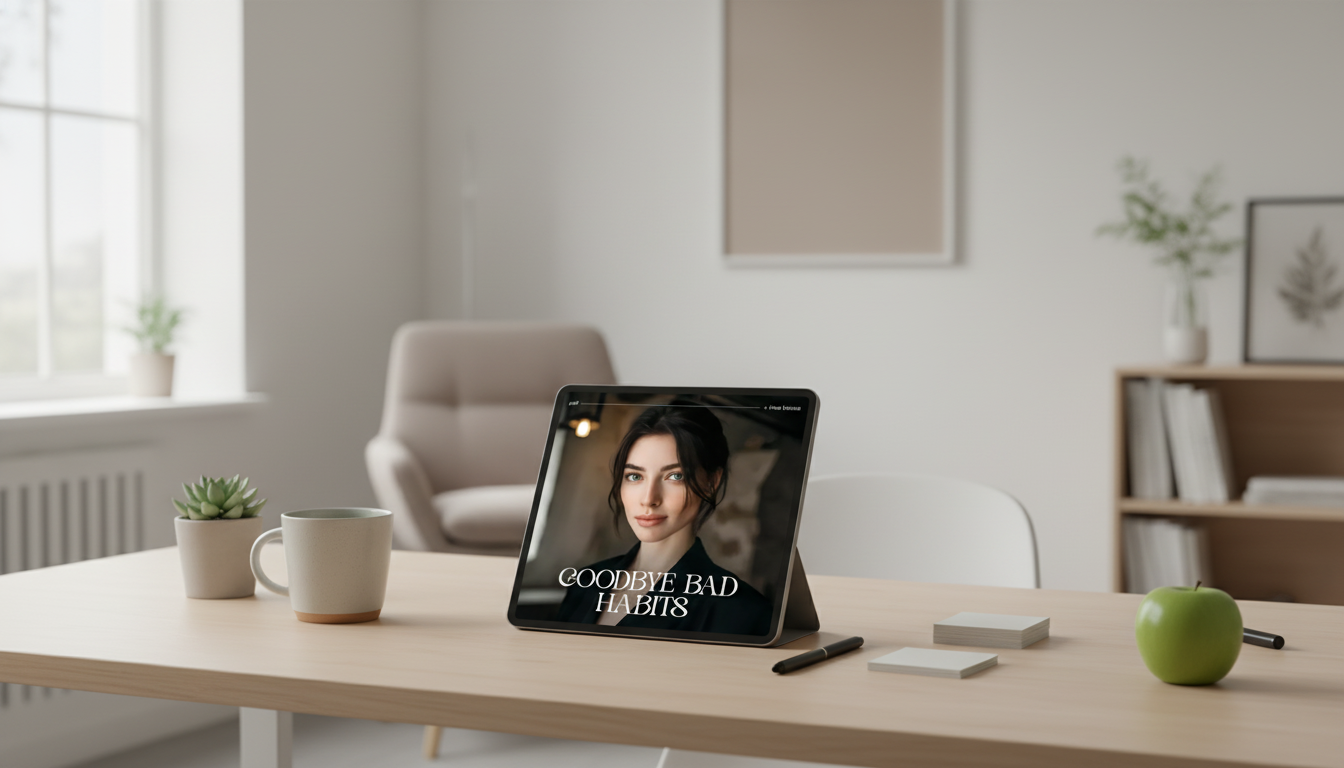
Goodbye Bad Habits: An Action Checklist to Replace Old Patterns With Better Ones
Breaking a bad habit rarely fails because of lack of willpower—it fails because the habit loop stays intact. A clear checklist plus simple tracking can make the loop visible, interrupt it at the right moment, and replace it with a healthier routine that actually sticks. This guide walks through a practical, repeatable process and shows how a digital habit tracker can turn small daily wins into lasting change.
Start with one habit and define the “when–where–why”
Focus beats force. Instead of trying to overhaul everything at once, pick one habit to change for the next 14–30 days. That time window is long enough to spot patterns, but short enough to stay mentally fresh.
- Choose one target habit so you don’t burn out from decision fatigue.
- Define it precisely: what counts as “doing it” and what counts as “not doing it.” (Example: “No phone in bed” is clearer than “Use my phone less.”)
- Pinpoint the setup: the common time, place, emotional state, and situation that show up right before the behavior.
- Name the payoff the habit provides (comfort, distraction, stimulation, connection). Replacements work best when they deliver a similar payoff.
Map the habit loop: cue → craving → response → reward
Most habits follow a predictable loop. When you can describe your loop, you can change it. The American Psychological Association notes that habits are often automatic responses shaped by context and repetition, not just conscious decisions (APA: The power of habit).
- List the top cues that trigger the habit (stress, boredom, notifications, certain rooms or people).
- Name the craving underneath (relief, novelty, control, belonging).
- Measure the response in concrete terms: minutes, frequency, money spent, or impact.
- Identify the reward and how fast it hits. Immediate rewards tend to beat long-term goals.
- Target the easiest lever: make bad cues harder to encounter and good rewards easier to access.
Habit loop worksheet
| Cue (what happens first) | Craving (what is wanted) | Response (what is done) | Reward (what is gained) |
|---|---|---|---|
| Example: late-night scrolling | Escape/relaxation | Scroll 30–60 minutes in bed | Numbs stress; feels easy |
| Your habit: | |||
| Top cue #1: | |||
| Top cue #2: | |||
| Top cue #3: |
Choose a replacement that satisfies the same need
Replacing a habit works better than “just stopping,” because your brain is still seeking the original payoff. The National Institutes of Health emphasizes building healthy habits through realistic steps and repetition (NIH: How to Build Healthy Habits).
- Swap, don’t void: choose a new behavior that delivers a similar reward with less downside.
- Make it smaller than you think (2 minutes, one page, one glass of water, one tidy surface). Small wins keep you consistent.
- Use a clear trigger: “When X happens, then I will do Y.”
- Create two backups for low-motivation days (a tiny version and a “no-friction” alternative).
Change the environment so the default becomes the better choice
Environment design is often the fastest way to reduce slip-ups because it changes what you do on autopilot. Instead of “trying harder,” adjust what’s easy.
- Reduce friction for the new behavior: put tools in sight, pre-plan the first step, set things up before you need willpower.
- Increase friction for the old behavior: log out, remove apps, move items out of the room, or add a time delay.
- Follow “visible = available” rules: keep cues for the old habit out of sight and out of your usual pathways.
- Create a reset zone (desk, bedside table, entryway) where you keep the space clean so your day starts with fewer triggers.
Use a daily action checklist (simple, repeatable, non-negotiable)
A good checklist turns intentions into something you can complete even when the day goes sideways. Keep it short: 3–5 items max.
- Include prevention (avoid the cue), replacement (do the new action), and recovery (what you do after a slip).
- Create two versions: a “minimum win” and an “ideal day” to avoid all-or-nothing thinking.
- Do a 2-minute nightly check-in: mark progress, note triggers, and decide one friction change for tomorrow.
Daily action checklist (example template)
| Category | Minimum win | Ideal day |
|---|---|---|
| Prevention | Remove cue for 10 minutes | Remove cue for the whole evening |
| Replacement | Do 2 minutes of the new habit | Complete the full planned session |
| Recovery | If I slip, restart within 10 minutes | Review trigger + adjust environment |
| Tracking | Mark tracker once | Add a quick note on what worked |
Track progress the right way: consistency beats intensity
Tracking works best when it’s fast and specific. Aim to track the behavior daily (what you did), not the outcome (what you hope happens later). Public health guidance also highlights setting practical goals and sticking with repeatable changes (CDC: Behavior change—setting goals and making changes stick).
Plan for slips without losing momentum
A ready-to-use digital checklist and habit tracker
- Goodbye Bad Habits: Your Action Checklist (digital habit tracker & guide) for daily check-ins, trigger notes, and weekly system upgrades.
- Social Confidence in Any Situation (printable checklist) if your habit loop is fueled by social stress and you want a simple plan for calmer conversations and better follow-through.
FAQ
How long does it take to break a bad habit?
It varies widely based on the habit, your environment, and how automatic the behavior is. A practical approach is to focus on daily repetitions plus a weekly review, rather than aiming for a single magic number of days.
What should be tracked: streaks, urges, or both?
Track the behavior daily, then add a quick note about urges or triggers when they show up. Those context notes make patterns easier to spot and help you adjust cues, environment, and replacements.
What if a slip happens—does that reset progress?
A slip (lapse) is not the same as a relapse. Restart within minutes if possible, note the trigger, return to your minimum-win checklist, and keep tracking so the momentum stays intact.
















Leave a comment