-
Shop
- Adidas
- Advanced Technologies
- Bathroom
- Best-Sellers
- Car Accessories
- Dating & Social Skills
- Digital Resources
- AI & Technology
- AI Skills
- Beauty
- Budgeting & Saving
- Car Buying & Ownership
- Cozy Feast Collection
- Electronics & Technology
- Emotional Intelligence
- Entrepreneurship & Business Growth
- Financial Education
- Financial Independence
- Financial Mindset & Psychology
- Goal Setting
- Home Styling & Organization
- Kitchen & Recipes
- Leadership
- Mindfulness
- Mindset
- Motivation
- Online Business
- Parenting & Child Development
- Personal Style & Fashion
- Pet Lifestyle & Wellness
- Positive Thinking
- Productivity
- Self Confidence
- Sleep Improvement
- Smart Life with AI
- Stress Management & Relaxation
- Travel Planning
- Wellness
- Yoga & Fitness
- Yoga & Mind-Body Practices
- Easter Products
- Education & Learning
- Family & Parenting
- Fashion
- Alexander McQueen
- Bags
- Bags & Wallets
- Balenciaga
- Belts
- Blazers
- Bottega Veneta
- Brunello Cucinelli
- Burberry
- Chanel
- Chloé
- Dior
- Dolce & Gabbana
- Dresses
- Etro
- Fendi
- Gucci
- Hats & Hair Accessories
- Jewelry
- Jil Sander
- Keychains
- Kiton
- Luggage
- Miu Miu
- Off-White
- Outerwear
- Prada
- Rick Owens
- Saint Laurent
- Shoes
- Socks & Tights
- The Row
- Tom Ford
- Valentino
- Valentino Garavani
- Versace
- Vivienne Westwood
- Watches
- Furniture
- Gadgets
- Health & Beauty
- Health & Wellness
- Home & Garden
- Home Electronics
- Kids & Babies
- Kitchen
- Lighting
- Patio, Lawn & Garden
- Personal Growth
- Pet Care
- Pet Supplies
- Pets
- Smart Home Living Guides
- Sport & Outdoors
- Stress Relief & Relaxation
- TikTok Growth & Monetization Mastery
- Travel
- Wealth
- Wealth Building
- Popular
- Best deals
Solid Wood Cat Tree: Stable Scratcher + Nest Home Base
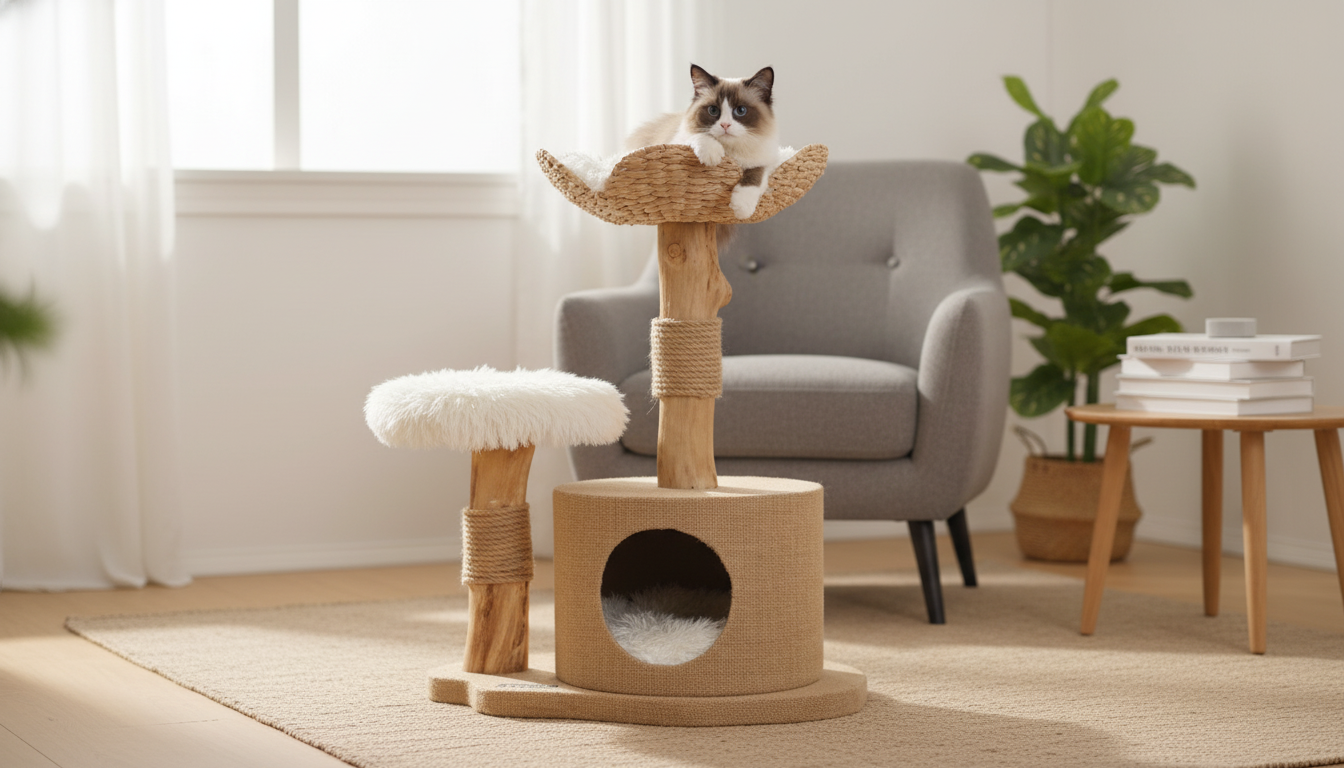
Solid Wood Cat Tree with Scratcher, Nest, and Multifunctional Design: A Calm, Durable Home Base for Cats
A well-built cat tree can reduce furniture scratching, support healthy climbing, and give cats a predictable place to rest. This solid wood design pairs a scratcher with a nest and multiple activity zones to suit daily routines—play, perching, grooming, and downtime—while keeping the footprint organized. For many homes, a single sturdy station also makes it easier to guide behavior toward “yes” surfaces instead of couches, rugs, and door frames.
What makes this cat tree different from standard carpeted towers
Many common towers rely on lightweight particleboard and plush wrap, which can feel cozy but may loosen, wobble, or fray after repeated sprints and leaps. A solid wood-forward build emphasizes rigidity and long-term stability—especially helpful for energetic cats that launch onto platforms with no warning.
This design also focuses on function over fluff: a dedicated scratch surface gives cats a consistent, approved target, while a nest-style resting area adds a covered (or semi-enclosed) retreat for naps and stress relief. With multiple zones—scratching, climbing, perching, and lounging—cats can cycle through natural behaviors without needing separate items scattered around the room. And visually, wood often blends more cleanly into many interiors than bulky, plush-only towers, depending on your room style.
Key features to look for in a solid wood cat tree setup
How the scratcher and nest support daily cat behavior
Scratching isn’t “bad behavior”—it’s routine maintenance and communication. Cats scratch to condition claws, stretch shoulders and back, and leave visual/scent markers. A built-in scratcher creates a reliable “yes” location, which is often more effective than simply blocking the “no” locations. For evidence-based behavior guidance, see the ASPCA’s overview of scratching and redirection techniques: https://www.aspca.org/pet-care/cat-care/common-cat-behavior-issues/scratching.
Because this type of station integrates scratcher + bed + perch, it can replace multiple items and reduce clutter. Many cats naturally rotate zones (scratch, climb, perch, rest), and that variety helps keep indoor life engaging, especially when outdoor time isn’t an option. For a deeper look at why cats scratch and how to support the behavior appropriately, International Cat Care provides a practical guide: https://icatcare.org/advice/scratching-behaviour/.
It’s also worth noting that scratching support pairs well with humane alternatives to declawing. The AVMA outlines welfare concerns and recommends considering behavior and environmental management first: https://www.avma.org/resources-tools/avma-policies/declawing-domestic-cats.
Sizing and placement: getting the benefits without taking over the room
Care and upkeep: keeping wood, scratch surfaces, and fabric in good shape
Quick comparison: solid wood multifunctional tree vs common alternatives
| Option | Typical strengths | Typical trade-offs | Best for |
|---|---|---|---|
| Solid wood cat tree with scratcher + nest | Strong stability, multi-zone routine support, cleaner look | Often heavier and higher priced; may need more deliberate placement | Active cats, multi-cat homes, long-term setup |
| Carpeted cat tower | Soft feel, widely available, many height options | Carpet can hold odors and fray; some models wobble over time | Cats that prefer plush surfaces |
| Standalone scratching post | Small footprint, focused training tool | No perch or rest area; may not satisfy climbing needs | Apartments, scratch training on a budget |
| Cat bed or covered cave | Comfort and security for naps | No scratch zone or vertical space | Shy cats, rest-first households |
Product snapshot: Solid Wood Cat Tree with Scratcher, Nest, and Multifunctional Design
If the goal is one dedicated “home base” that supports scratch training and daily routines, Solid Wood Cat Tree with Scratcher, Nest, and Multifunctional Design is built as an all-in-one station combining scratching, resting, and climbing/perching zones. The solid wood structure prioritizes stability for jumping and play, while the built-in nest supports quiet downtime and retreat behavior. It’s also a strong fit for households aiming to consolidate cat furniture into one organized area. Current price and availability may change; confirm details on the product page before purchase.
For owners who like having a simple routine checklist on hand (especially during the first week of scratch training), a printable guide can help keep reinforcement consistent: Motivation Magic: Your Easy-Do Checklist to Spark Drive & Get Stuff Done – Digital Guide on How to Motivate Someone Who Doesn’t Want to Work.
And if your cat tends to hide when guests arrive, improving household flow and calm handling can make enrichment areas (like a cat tree) more usable during social activity: Social Confidence in Any Situation | Printable Checklist for Self-Assurance and Communication Skills.
FAQ
Will a solid wood cat tree be stable enough for an active or larger cat?
It can be, as long as the base is wide, the overall unit is weighty, and the fasteners are secure. After assembly, test for wobble on a level surface and add a non-slip mat if the floor is slick.
How can scratching be redirected from furniture to the built-in scratcher?
Start by placing the tree near the current scratching spot and make the scratch area “interesting” with catnip or a pet-safe pheromone spray. Praise and reward use, keep nails trimmed, and temporarily protect the furniture while the new habit forms.
How often should the nest and platforms be cleaned?
Vacuum weekly to manage fur and dander, spot-clean as needed, and do a deeper clean about once a month. Always use pet-safe cleaners and let fabric fully dry to prevent mildew and lingering odor.













Leave a comment