-
Shop
- Adidas
- Advanced Technologies
- Bathroom
- Best-Sellers
- Car Accessories
- Dating & Social Skills
- Digital Resources
- AI & Technology
- AI Skills
- Beauty
- Budgeting & Saving
- Car Buying & Ownership
- Cozy Feast Collection
- Electronics & Technology
- Emotional Intelligence
- Entrepreneurship & Business Growth
- Financial Education
- Financial Independence
- Financial Mindset & Psychology
- Goal Setting
- Home Styling & Organization
- Kitchen & Recipes
- Leadership
- Mindfulness
- Mindset
- Motivation
- Online Business
- Parenting & Child Development
- Personal Style & Fashion
- Pet Lifestyle & Wellness
- Positive Thinking
- Productivity
- Self Confidence
- Sleep Improvement
- Smart Life with AI
- Stress Management & Relaxation
- Travel Planning
- Wellness
- Yoga & Fitness
- Yoga & Mind-Body Practices
- Easter Products
- Education & Learning
- Family & Parenting
- Fashion
- Alexander McQueen
- Bags
- Bags & Wallets
- Balenciaga
- Belts
- Blazers
- Bottega Veneta
- Brunello Cucinelli
- Burberry
- Chanel
- Chloé
- Dior
- Dolce & Gabbana
- Dresses
- Etro
- Fendi
- Gucci
- Hats & Hair Accessories
- Jewelry
- Jil Sander
- Keychains
- Kiton
- Luggage
- Miu Miu
- Off-White
- Outerwear
- Prada
- Rick Owens
- Saint Laurent
- Shoes
- Socks & Tights
- The Row
- Tom Ford
- Valentino
- Valentino Garavani
- Versace
- Vivienne Westwood
- Watches
- Furniture
- Gadgets
- Health & Beauty
- Health & Wellness
- Home & Garden
- Home Electronics
- Kids & Babies
- Kitchen
- Lighting
- Patio, Lawn & Garden
- Personal Growth
- Pet Care
- Pet Supplies
- Pets
- Smart Home Living Guides
- Sport & Outdoors
- Stress Relief & Relaxation
- TikTok Growth & Monetization Mastery
- Travel
- Wealth
- Wealth Building
- Popular
- Best deals
Water Plants Right: Soil-Type Watering That Works
Healthy Watering Starts With Soil, Not a Schedule
Plants thrive when roots get two things in the right balance: moisture and oxygen. That balance depends far more on how your soil holds and releases water than on any rigid “water every Tuesday” routine. A cactus in a gritty mix might need a full soak and then nothing for weeks, while basil in a lightweight container can go from moist to stressed in a day. Once you understand your soil type—and how it behaves in your specific pot, bed, light, and airflow—you can water with confidence and fix the real causes behind soggy roots or constant wilting.
Start With the Soil: Why Texture and Structure Change Everything
Soil texture is the proportion of sand, silt, and clay. Sandy soils drain fast and don’t hold much water; clay holds water tightly and drains slowly; loam is the “middle path” that’s often easiest to manage. Soil structure is how those particles clump together into aggregates. Good structure creates pores that store water while also leaving air channels for roots.
Even with the same plant and soil, containers can dry at very different rates depending on pot size, pot material (terracotta dries faster than plastic), drainage holes, and indoor airflow. Watering success comes from matching water volume and frequency to soil behavior—then adjusting as seasons, light, and plant size change.
Quick Soil-Type Checks at Home (No Lab Needed)
1) Jar test (best for outdoor soil)
Put soil in a jar, add water, shake hard, and let it settle. Sand drops first, then silt, then clay. The layers give a rough estimate of your texture mix. For a more detailed reference, the USDA NRCS Soil Texture Calculator explains how the proportions map to texture names.
2) Feel test (fastest)
Moisten a handful of soil and rub it between your fingers. Sandy soil feels gritty and won’t form a ribbon. Loam feels crumbly yet slightly cohesive. Clay feels sticky and forms a long ribbon when pressed between thumb and forefinger.
3) Drainage timing
Water thoroughly and time what happens. If water pools on top or drains very slowly, you’re dealing with compaction, clay-heavy texture, or a collapsed potting mix. If water shoots through instantly, expect quick dry-down and higher nutrient leaching.
4) Check moisture at root depth
Surface dryness is unreliable. Use a finger test for the top 1–2 inches, a wooden skewer pushed into the root zone, or a moisture meter for deep containers—then decide whether to water.
Watering Rules by Soil Type
Use these as starting points, then refine based on how long the root zone takes to move from “wet” to “barely moist.” Containers dry faster at the edges, so prioritize the middle/root zone over what the surface looks like.
| Soil type | Drainage & retention | Watering approach | Common problems | Fast improvements |
|---|---|---|---|---|
| Sandy | Fast drainage, low retention | Water more often in smaller doses; soak thoroughly until water exits | Wilting between waterings; nutrients leach | Add compost; mulch; consider wetting agents for very hydrophobic mixes |
| Loam | Balanced | Deep watering, then wait for partial drying at root zone | Overwatering from habit | Maintain with compost top-dressing; consistent mulch layer |
| Clay | Slow drainage, high retention | Water less often; avoid daily small watering | Root rot, fungus gnats, standing water | Add compost; increase drainage; raised beds; avoid working wet soil |
| Silt | Moderate drainage, can compact | Moderate frequency; water gently to prevent crusting | Compaction; surface sealing | Add organic matter; use mulch; avoid heavy foot traffic |
| Container potting mix | Variable; dries faster than ground | Check mid-pot moisture; water until runoff, then empty saucers | Dry edges/wet center; salt buildup | Bottom-water occasionally; flush salts monthly; repot if mix collapses |
Smart Moisture Habits That Work Across Soil Types
Water early and water slowly
Morning watering reduces evaporation and helps foliage dry sooner, lowering disease risk. Apply water steadily—fast pours can cause runoff outdoors and uneven wetting in pots.
Wet the full root zone
Shallow watering encourages shallow roots and makes plants more drought-sensitive. In containers, water until you get steady runoff, then empty saucers after 10–20 minutes so roots don’t sit in stagnant water.
Mulch for stability
Adjusting Soil for Better Watering (Without Overcorrecting)
For practical watering technique guidance, the University of Minnesota Extension has clear, plant-safe fundamentals that pair well with soil-based adjustments.
Warning Signs: Overwatering vs Underwatering by Soil Behavior
Overwatering tends to look like “stalled and soft”
Underwatering tends to look like “dry and sharp”
Soil-Based Care for Common Plant Groups
Succulents and cacti
Tropical foliage (pothos, philodendron, monstera)
Herbs and vegetables
Orchids and epiphytes
A Simple Routine: Calibrate Once, Then Maintain
Helpful Downloads for Building a Consistent Routine
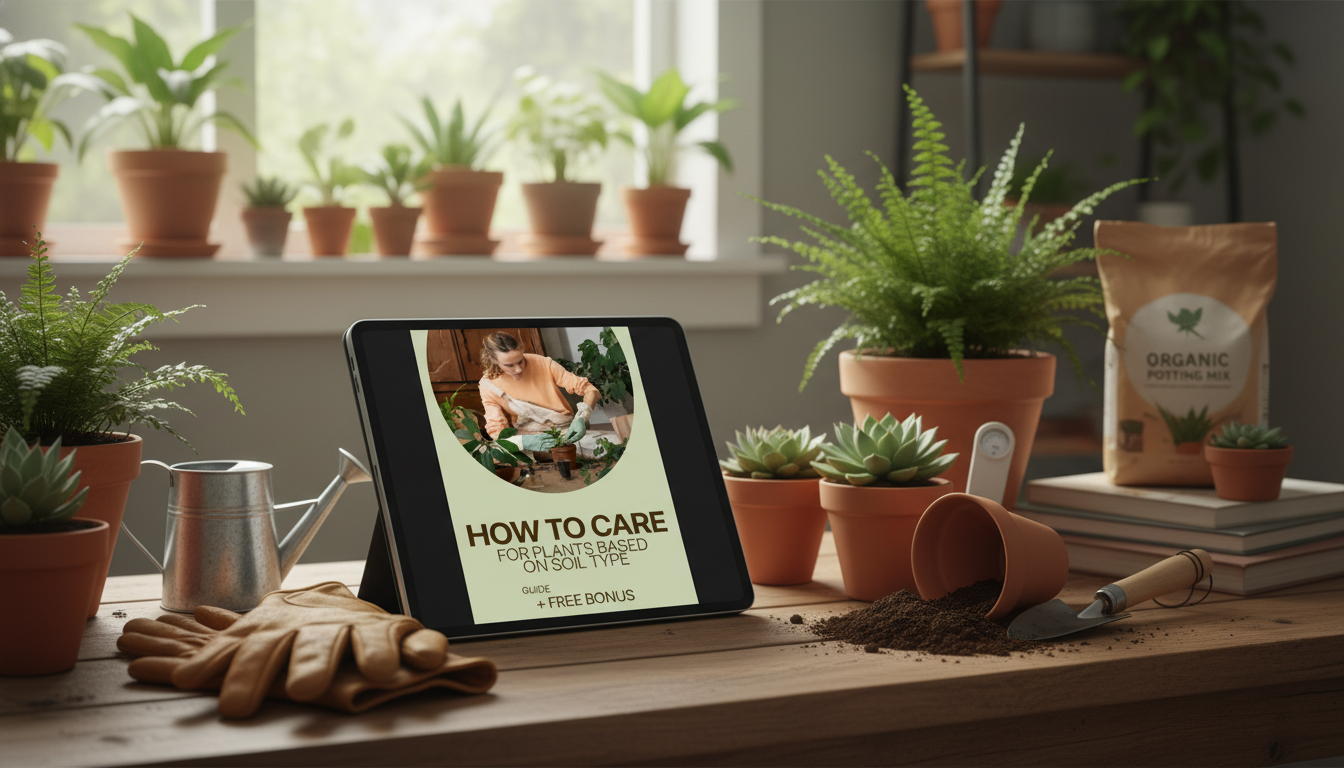
- How to Care for Plants Based on Soil Type – Expert Guide to Watering Plants by Soil Type, Smart Moisture Tips, and Soil-Based Plant Care (digital reference for soil-type watering, moisture checks, and troubleshooting)
- Motivation Magic: Your Easy-Do Checklist to Spark Drive & Get Stuff Done (a simple checklist format that can be repurposed to track plant check-ins and weekly care tasks)
FAQ
How can soil type be identified quickly without special tools?
Use a feel test with moist soil (gritty vs. sticky) and back it up with a jar test to estimate sand/silt/clay layers. Then confirm with a simple drainage timing test after a thorough watering.
Why does clay soil cause root rot even when watering isn’t frequent?
Clay holds water and limits oxygen in the root zone, especially when it’s compacted. Even infrequent watering can keep roots wet for too long, so improving structure and watering less often are both important.
Is watering a little every day better than watering deeply less often?
Deep watering is usually better because it wets the full root zone and supports stronger roots. Small daily watering often leaves deeper roots dry while keeping heavy soils constantly soggy.
Recommended for you



Cashback System: Stack Rewards Without Overspending
May 24, 2026













Leave a comment